
The CH-7 Rainbow: China’s Stealth UCAV and the Future of Contested Airspace
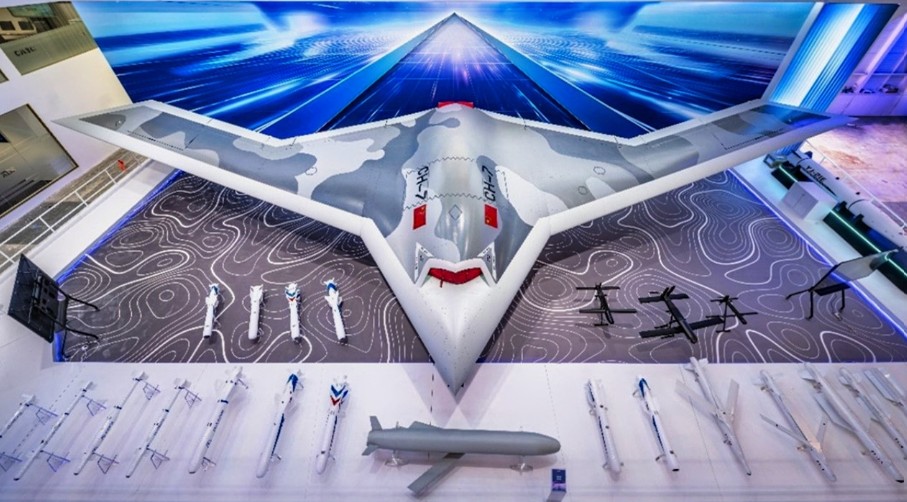
Developed by the China Academy of Aerospace Aerodynamics (CAAA), the CH-7 “Rainbow” represents a significant leap in high-altitude, long-endurance (HALE) unmanned combat aerial vehicles. First unveiled at the Zhuhai Airshow, the platform firmly positions China among an elite tier of nations capable of fielding advanced flying-wing stealth drones.
Visually and conceptually, the CH-7 adopts a tailless flying-wing planform, drawing immediate architectural comparisons to American platforms like the RQ-180 and Northrop Grumman X-47B. This aerodynamic profile is meticulously optimized for low observability, designed to minimize its radar cross-section across multiple bands. With a commanding wingspan of 22 meters, the drone is built for endurance and reach. It boasts a top speed of approximately 920 km/h, an operational ceiling exceeding 13,000 meters, and the ability to loiter in operational theaters for up to 15 hours.
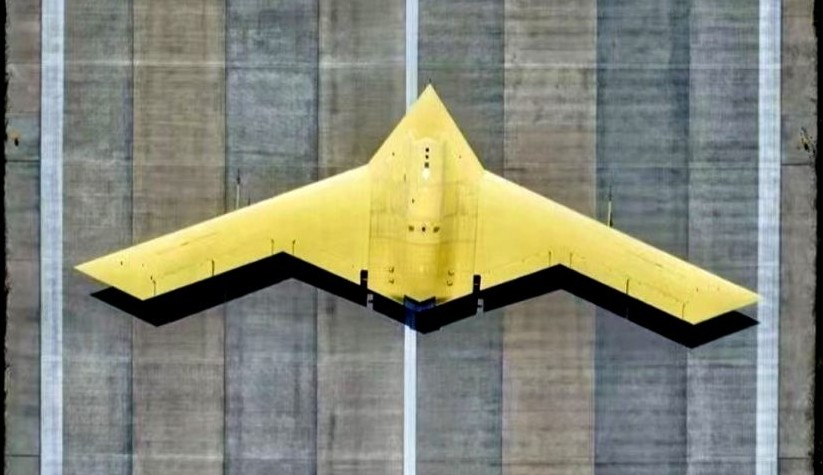
Beyond its impressive flight metrics, the CH-7 is engineered specifically for highly contested environments. Its primary mission set encompasses high-risk Intelligence, Surveillance, and Reconnaissance (ISR), the Suppression of Enemy Air Defenses (SEAD), electronic warfare, and deep precision strikes. To maintain its stealth profile while heavily armed, the UCAV utilizes internal weapons bays capable of housing anti-radiation missiles and precision-guided munitions.
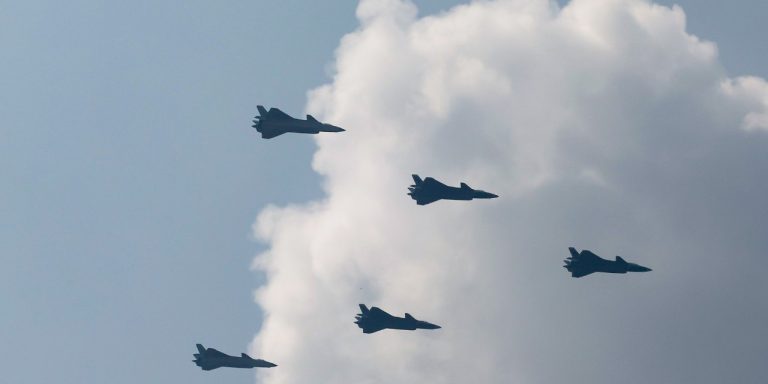
Strategically, the introduction of the CH-7 provides the People’s Liberation Army with a penetrating, unmanned vanguard. Operating as a force multiplier, it is designed to seamlessly complement manned fifth-generation stealth fighters like the J-20, as well as the anticipated next-generation J-36. Ultimately, the Rainbow underscores the rapid maturation of China’s unmanned aerospace industry and signals a distinct shift in its capacity for long-range power projection.
Performance
It has a reported wingspan of 22 meters, a top speed of around 920 km/h, an operational ceiling above 13,000 m, and an endurance of approximately 15 hours.
Mission Set
The CH-7 is intended for high-risk ISR, SEAD (suppression of enemy air defenses), electronic warfare, and precision strike inside contested airspace. It can carry anti-radiation missiles and precision-guided bombs in internal weapons bays.
Strategic Implications
By fielding a stealth UCAV, China gains a penetrating, attritable platform to complement manned fighters such as the J-20 and the rumored next-generation J-36.
Conclusion
The CH-7 underscores the rapid sophistication of China’s unmanned aerospace industry and its expanding role in Far East power projection.