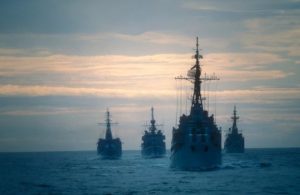

Iran Reacts to the UK and France Over Warships: Will the War Spread to Europe?
GLOBAL STRATEGY DESK — Just as the fragile ceasefire in the Middle East hangs by a thread, a new and deeply destabilizing variable has entered the Persian Gulf. Iranian Deputy Foreign Minister Kazem Gharibabadi has issued a stark ultimatum to the United Kingdom and France following their announcements to deploy naval strike groups—including the French aircraft carrier Charles de Gaulle—to the Strait of Hormuz.
Tehran’s message is unequivocal: the presence of extra-regional destroyers under the guise of “protecting shipping” is an illegal militarization of the waterway, and any foreign warships will be met with a “decisive and immediate response.”
This sudden European intervention forces defense analysts to ask a critical question: Why are London and Paris deliberately stirring the pot at the exact moment the region is standing on the edge of the abyss? The answer to that question becomes exponentially more dangerous when factoring in a shocking new intelligence revelation that has fundamentally rewritten the strategic map.
The Diego Garcia Shockwave: The End of the “2,000 km” Myth
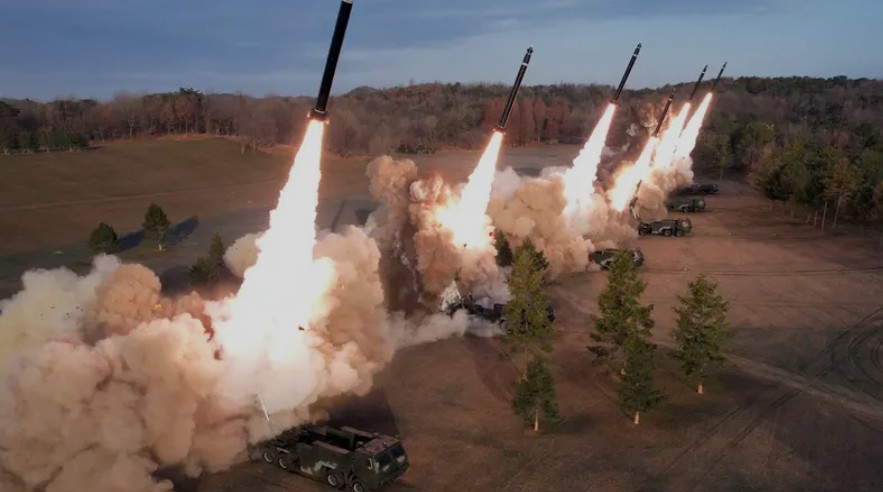
The UK and France are sailing into a threat matrix that is vastly more sophisticated than previously assessed. A startling report by The Wall Street Journal confirms that Iran launched two medium-range ballistic missiles targeting the joint US-UK military base at Diego Garcia in the Indian Ocean. While one missile failed in flight and the other was successfully intercepted by a US warship’s SM-3 missile, the tactical success of the interception is overshadowed by a much more alarming strategic reality: the distance.
Diego Garcia is approximately 4,500 kilometers from Iranian launch sites. This operational reality officially shatters the long-held assumption that Tehran’s conventional missile reach is limited to 2,000 kilometers. The use of SM-3 interceptors—designed for exo-atmospheric interception—confirms that Iran’s missile technology, likely leveraging advancements from its Space Launch Vehicle (SLV) programs, has graduated to a tier previously thought to be years away.
The Vulnerability Paradox: London and Paris in the Crosshairs
Unlike the United States, which is shielded by two oceans, European powers operate under a drastically different geographic reality. If Iranian missile systems can reach the heart of the Indian Ocean, they can strike the major capitals of Western Europe with equal or greater ease.
From Iranian territory:
Paris is approximately 4,200 km away.
London is approximately 4,400 km away.
By targeting Diego Garcia, Tehran has sent a clear, kinetic message to Europe: the “safe distance” is gone. Furthermore, as previously analyzed regarding “unconventional warfare,” Iran does not rely solely on ballistic missiles. Through a sophisticated network of asymmetric maritime capabilities, proxy deployments, and advanced drone swarms, the strategic distance between the Persian Gulf and European capitals has effectively shrunk to zero.
Motivations: Strategic Autonomy or Calculated Sabotage?
Knowing that their own skylines are now within the direct retaliation envelope of a 4,500 km missile capability, why are London and Paris taking this catastrophic risk? The European deployment appears to be driven by three dangerous geopolitical calculations:
Energy Desperation: The U.S. naval blockade and the militarization of the Strait by Iran have choked off vital energy supplies to Europe. Rather than relying entirely on Washington’s timeline for a diplomatic resolution, London and Paris are attempting a show of force to independently pry open the commercial shipping lanes.
The “Relevant Power” Syndrome: In a rapidly shifting multipolar world, France and the UK are desperate to project relevance. By deploying high-value assets like the Charles de Gaulle, they are attempting to signal that Europe remains a premier security guarantor, not just a spectator to U.S.-Iran negotiations.
The “Bad Cop” Dynamic: There is also a strong possibility that this deployment is a coordinated effort with Washington. While the U.S. tentatively navigates a ceasefire and hostage exchanges, deploying European navies acts as a secondary pressure valve—a way to threaten Iranian assets without directly breaking the U.S.-brokered truce.
A Fatal Miscalculation?
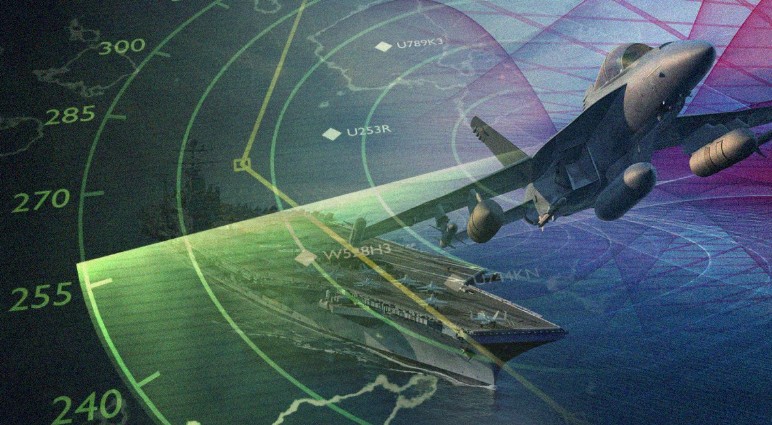
Whatever the underlying motive, the tactical reality is grim. The Strait of Hormuz is not the open ocean; it is a claustrophobic, highly contested chokepoint heavily saturated with Iranian anti-ship cruise missiles (ASCMs) and fast attack craft.
By inserting European carrier strike groups into this powder keg, the UK and France are not just providing Tehran with high-profile, multi-billion-dollar naval targets. They are actively antagonizing an adversary that has just proven it can launch ballistic missiles straight into the heart of Europe. The “3-minute” doomsday scenarios are no longer confined to the Middle East. In their rush to assert geopolitical relevance, London and Paris may have just volunteered to be the spark that ignites a global war.