

What is Electromagnetic Warfare? The Invisible Battlefield
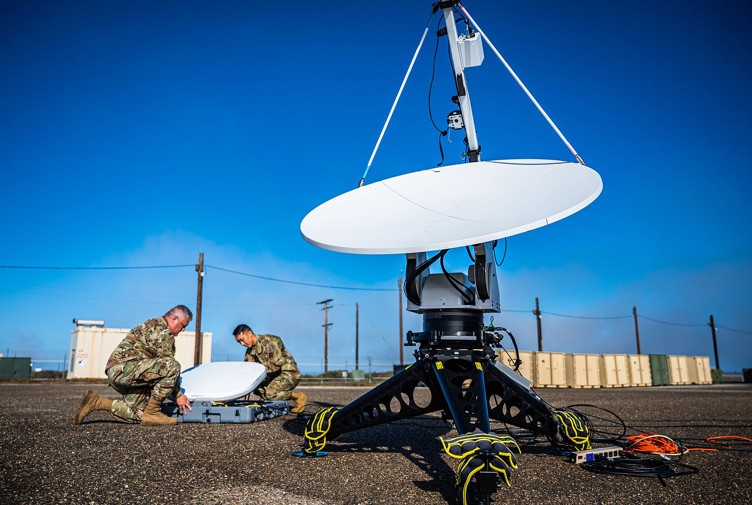
When visualizing modern warfare, most people picture supersonic fighter jets, armored columns, and precision-guided missiles. However, before a single kinetic weapon is fired, a silent, invisible battle has already begun. If a military force loses this invisible battle, their fighter jets are blinded, their missiles miss their targets, and their drones fall from the sky.
This is the realm of Electromagnetic Warfare (EW)—the most critical and fiercely contested domain in 21st-century military operations. But what exactly is it, and why is “spectrum dominance” the ultimate goal of every modern military?
Defining Electromagnetic Warfare
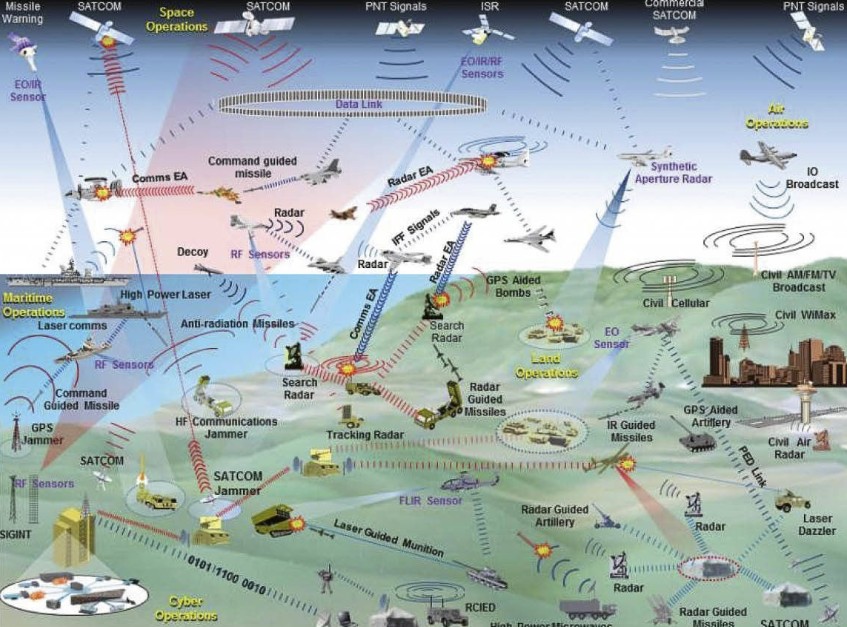
Electromagnetic Warfare (historically referred to as Electronic Warfare) involves the use of electromagnetic and directed energy to control the electromagnetic spectrum or to attack the enemy.
The electromagnetic spectrum encompasses everything from radio waves and microwaves (used for radar and communications) to infrared light (used for heat-seeking missiles) and visible light. In modern combat, almost every piece of technology relies on this spectrum. GPS satellites, military radios, drone data links, and early-warning radars all transmit and receive electromagnetic signals.
The objective of EW is simple: Control the spectrum so your forces can communicate and navigate freely, while simultaneously denying the enemy the ability to do the same.
The Three Pillars of Electromagnetic Warfare
Military strategists divide EW into three distinct but deeply interconnected tactical divisions:
1. Electronic Attack (EA)
This is the offensive arm of EW. EA involves using electromagnetic energy to disrupt, degrade, or destroy enemy combat capabilities.
Jamming: Flooding an enemy’s radio frequency or radar receiver with “noise” so they cannot hear the actual signal. It is the equivalent of shining a massive flashlight directly into someone’s eyes so they cannot see their surroundings.
Spoofing: Sending fake signals to deceive the enemy. For example, GPS spoofing can feed false coordinates to an enemy drone, causing it to fly in the wrong direction or crash.
Directed Energy Weapons (DEW): Using high-powered microwaves or lasers to physically fry the internal electronics of incoming missiles or swarm drones.

2. Electronic Protection (EP)
If the enemy is using Electronic Attack, you must use Electronic Protection to defend your systems. This ensures friendly forces can still use the spectrum even in a hostile, jammed environment.
Frequency Hopping: Military radios do not stay on one channel. They “hop” across hundreds of different frequencies every second in a pre-programmed sequence. If an enemy tries to jam one frequency, the radio has already moved to another.
EMCON (Emission Control): Turning off radars and radios entirely to maintain “radio silence,” preventing the enemy from detecting your position.
3. Electronic Warfare Support (ES)
Before you can attack or protect, you need intelligence. ES is the act of listening, intercepting, and identifying enemy electromagnetic emissions.
SIGINT (Signals Intelligence): Using highly sensitive antennas to intercept enemy radio chatter or radar pulses. If an enemy turns on an air defense radar, an ES aircraft (like the EA-18G Growler) can instantly detect the signal, geolocate the radar site, and feed those coordinates to friendly bombers for a kinetic strike.
Why EW Dictates the Future of Conflict
The concept of Asymmetric Warfare, which we analyzed previously, relies heavily on commercial drones and decentralized communication. Electromagnetic Warfare is the ultimate countermeasure.
In recent global conflicts, particularly in Eastern Europe and the Middle East, we have witnessed the devastating reality of EW. Multi-million-dollar precision artillery shells have missed their targets entirely because their GPS guidance was jammed. Swarms of kamikaze drones have been forced out of the sky without a single bullet being fired, their control signals severed by invisible microwave blasts.
In the modern era, combat power is no longer just about the size of the warhead; it is about the resilience of the data link. As militaries transition toward Artificial Intelligence and fully networked battlefields, the rule of engagement is absolute: He who controls the electromagnetic spectrum controls the war.


