

The most detailed 3D map of the universe has been created.
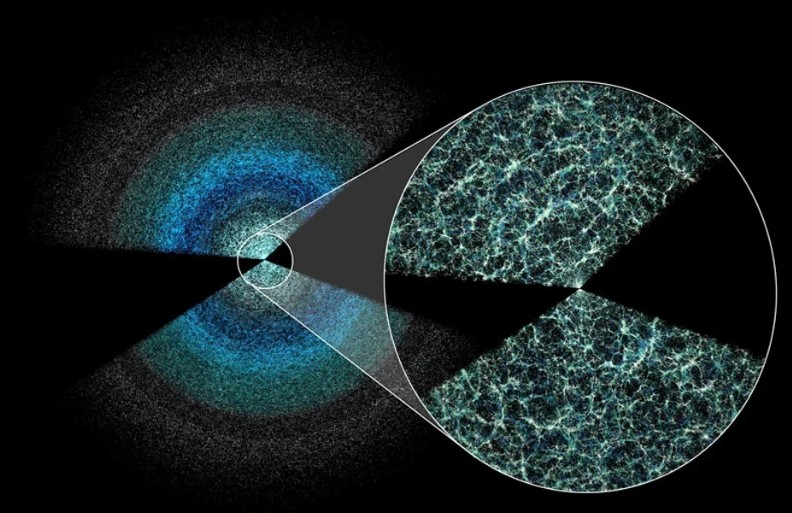
For over a century, the standard model of cosmology has rested on a terrifyingly vast but stable foundation: the universe is expanding, and a mysterious force known as “dark energy” is driving this acceleration at a constant rate. It was a mathematical certainty, famously linked to Albert Einstein’s cosmological constant.
However, in a paradigm-shifting breakthrough that has sent shockwaves through the astrophysics community, the most detailed 3D map of the universe ever created suggests we might have been wrong. After five years of unprecedented observation, scientists have compiled a dataset so massive it threatens to rewrite the fundamental laws of physics: dark energy might not be constant after all. It may be evolving.
Here is an exclusive look into the technology behind the breakthrough and what it means for the future of our universe.
The Instrument: 5,000 Robotic Eyes on the Cosmos
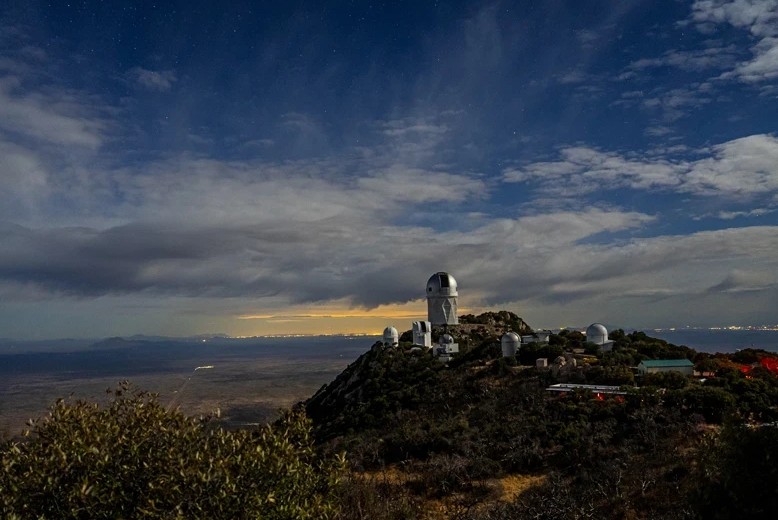
To map the infinite, you need unparalleled technology. Enter DESI—the Dark Energy Spectroscopic Instrument. Managed by the U.S. Department of Energy’s Berkeley Lab and situated at the Kitt Peak National Observatory in Arizona, DESI is a marvel of modern optical engineering.
Unlike traditional telescopes that capture flat images of the night sky, DESI operates more like an industrial data-mining machine. It is equipped with 5,000 individual fiber-optic “robotic eyes,” each as thin as a human hair and capable of positioning themselves with 10-micron precision. Every 20 minutes, these robotic positioners lock onto a new slice of the sky, capturing the ancient light of distant galaxies.
Generating a staggering 80 gigabytes of cosmological data per night, DESI allows scientists to look back through 11 billion years of cosmic history, capturing the exact coordinates of celestial bodies as they existed near the dawn of time.
A Record-Breaking Dataset: 47 Million Galaxies
The sheer scale of the DESI project dwarfs all previous cosmological surveys combined. Completed ahead of its original schedule, the project mapped:
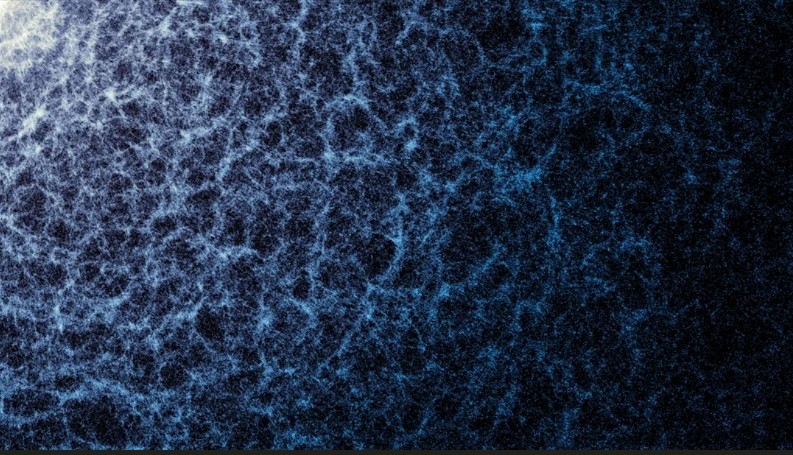
Over 47 million galaxies and quasars, stretching across the observable universe.
More than 20 million stars within our own Milky Way, providing a granular look at local galactic structures.
This dataset is not just a map; it is a time machine. By analyzing the “redshift” of the light—how much the light stretches as it travels across the expanding universe—researchers can precisely calculate how fast the universe was expanding at different epochs in its 11-billion-year history.
The Anomaly: Is Dark Energy Losing Power?
The primary mission of DESI was to measure the effects of dark energy, the invisible force that makes up roughly 70% of the universe. According to the established standard model of cosmology (Lambda CDM), the density of dark energy remains completely constant as the universe expands.
However, when scientists ran the first year of DESI data through supercomputers, a startling anomaly emerged. The measurements suggest that the expansion history of the universe does not perfectly align with a constant force. Instead, the data hints that dark energy is weakening or evolving over time. If these initial findings are verified by subsequent datasets, the implications are profound. A changing dark energy means the cosmological constant is not a constant at all. This would force a total overhaul of modern theoretical physics and change our ultimate predictions regarding the fate of the universe. Instead of a “Big Rip” (where accelerating expansion tears atoms apart) or an eternal, freezing expansion, an evolving dark energy could lead to entirely new end-of-universe scenarios, such as a “Big Crunch.”
A New Era of Astrophysics
The DESI 3D map of the universe marks the beginning of a new era in precision cosmology. As global space agencies and defense technology sectors continue to push the boundaries of optical sensors and supercomputing, the line between theoretical physics and observable reality is blurring.
For decades, dark energy has been the ultimate ghost in the machine of the cosmos. Now, thanks to 5,000 robotic eyes scanning the deep dark of space, we are finally forcing that ghost into the light.