India Orders $211M Barak-1 Missile Upgrade for Navy Warships

Lead
India’s Ministry of Defence signed a contract worth Rs 1,976.40 crore (approximately $211 million) with Israel Aerospace Industries (IAI) on November 18, 2026, to overhaul the Indian Navy’s Barak-1 point-defense missile systems. The agreement, signed in New Delhi in the presence of Defence Secretary Rajesh Kumar Singh, covers a comprehensive hardware and software upgrade and obsolescence management for a missile system that has protected Indian warships since 2000. The deal was processed under India’s Other Capital Procurement Procedure and follows an August 2025 clearance by the Defence Acquisition Council as part of a broader package of military modernization proposals worth roughly Rs 67,000 crore.
What Happened
India’s Ministry of Defence announced the signing in a statement describing a “comprehensive upgrade of the hardware and software” of the Barak-1 system, intended to extend the missile’s service life and improve its ability to intercept incoming aircraft, anti-ship missiles and drones. Obsolescence management is a central part of the contract, addressing components and subsystems that have become difficult to source or maintain since the system first entered Indian Navy service more than two decades ago.
The ministry said the upgrade would deliver “enhanced features” and a more capable anti-air defense envelope for the naval platforms that carry the system, though it did not specify the revised intercept range, reaction time or against which threat types the improvements are most significant. IAI, as the original equipment manufacturer, will carry out the modernization work.
Indian opposition leader Rahul Gandhi, asked about continuing defense trade with Israel the same day the contract was announced, said India’s relationship with Israel included weapons purchases and defended the ties, a reminder that India’s growing defense-industrial relationship with Israel remains a live domestic political topic even as it deepens.
The Product/System
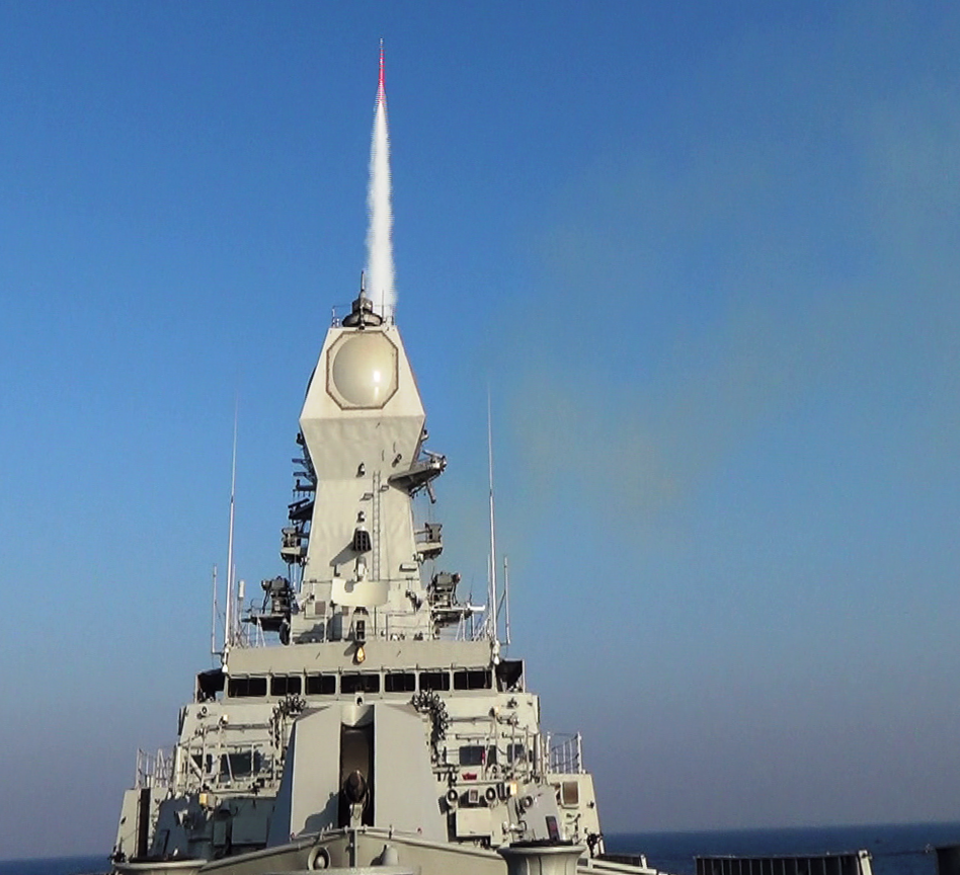
Barak-1 is a short-range, ship-based point-defense missile system designed to give warships a last-layer defense against sea-skimming anti-ship missiles, aircraft and, increasingly, drones. It was developed jointly by Israel Aerospace Industries and Rafael Advanced Defense Systems, combining a vertical-launch missile with a fire-control radar intended for rapid-reaction, close-in engagements rather than long-range area air defense.
India contracted for its first Barak-1 systems in October 2000 and subsequently fitted them to several frontline surface combatants. Reporting on the November 2026 contract identifies the carrier INS Vikramaditya, the Delhi-class destroyers, the Shivalik-class frigates and the Brahmaputra-class frigates among the platforms carrying the system; earlier accounts of the Indian inventory also list the now-decommissioned Godavari-class frigates among past hosts. On the Delhi-class destroyers, the system has previously been retrofitted with additional eight-cell vertical launch modules, raising per-ship missile capacity.
Barak-1 should not be confused with Barak-8, the longer-range, medium-to-long-range air defense missile India and Israel developed together and which equips the Indian Navy’s newer Visakhapatnam-class destroyers and Nilgiri-class frigates as the LR-SAM variant, with a reported range extending well beyond Barak-1’s close-in envelope. The November 2026 contract upgrades the older, shorter-range system rather than replacing it with Barak-8 hardware, and industry reporting frames it as a bridge: the Navy’s longer-term plan is to eventually replace Barak-1 with the indigenous VL-SRSAM, a quick-reaction surface-to-air missile under development by India’s Defence Research and Development Organisation (DRDO), but that transition has not yet reached the point of retiring the Israeli-made system.
Who Uses It
India is Barak-1’s largest operator, having fielded the system across multiple ship classes for more than two decades. Israel’s own navy operates the system it co-developed. Historical export reporting — some of it dating to the 2000s and not independently re-confirmed here — has listed Chile (aboard the frigate Almirante Williams) and Singapore (aboard Victory-class corvettes) as additional Barak-1 operators; a Venezuela listing appears in at least one older industry source but could not be independently corroborated and should be treated with caution. IAI’s newer Barak MX and Barak-8 family has since gone on to additional customers, including a Royal Thai Air Force contract confirmed in late 2025 and reported naval or air-defense interest from Morocco, Azerbaijan and Cyprus, though those later sales involve different missile variants than the system covered by this contract.
Export/Procurement History
India’s Barak-1 acquisition dates to a 2000 contract for an initial batch of systems, procured in the aftermath of the 1999 Kargil conflict as the Navy sought to close gaps in close-in air defense. The system has since undergone incremental upgrades, including the expanded vertical-launch fit on the Delhi-class destroyers. The November 18, 2026 contract is the latest and largest publicly disclosed step in sustaining the system, following the Defence Acquisition Council’s in-principle approval in August 2025. No completion date for the upgrade work has been disclosed.
Global Competitors
In the point-defense and close-in naval air-defense category, Barak-1 competes conceptually with systems such as the US-origin RIM-116 Rolling Airframe Missile (RAM), the NATO Sea Sparrow family (RIM-7/ESSM), France’s Crotale Naval, and Russia’s Palma and Pantsir-M close-in weapon systems, all of which are designed to intercept short-range, fast-reacting threats including anti-ship missiles and drones. European navies have increasingly paired missile-based point defense with gun-based close-in weapon systems and counter-drone sensors as the threat picture has shifted toward swarming uncrewed systems, a trend the Indian Navy’s own modernization plans — including the DRDO VL-SRSAM program — are also designed to address.
Why It Matters
The contract illustrates two patterns in Indian defense procurement that extend beyond this single system. First, it shows New Delhi continuing to sustain legacy Israeli-sourced hardware rather than retiring it outright, even as India develops indigenous alternatives such as the VL-SRSAM — a reflection of how long warship-integrated weapon systems remain in frontline service once installed, and of the cost and risk of ripping out and replacing deeply embedded combat systems ahead of a proven domestic substitute. Second, it reinforces the depth of the India-Israel defense relationship, which officials and industry trackers have put in the range of $8-10 billion in cumulative deals, spanning missile defense, precision-guided munitions, air-to-ground weapons and naval cruise missiles, and which has remained largely insulated from the political controversy surrounding the war in Gaza.
For IAI, the deal secures sustainment revenue on a system it sold decades ago and underscores how upgrade and obsolescence-management contracts have become as commercially important to foreign missile suppliers as new-build sales, particularly in markets like India where large fleets of legacy systems remain in service for decades.
What Happens Next
Neither India’s Ministry of Defence nor IAI has published a timeline for completing the upgrade work or a ship-by-ship fitting schedule. The Indian Navy’s parallel VL-SRSAM program, intended as Barak-1’s eventual indigenous successor, continues development and testing separately; this contract does not indicate a near-term retirement date for the Israeli-made system it is upgrading.
FAQ
What is the Barak-1 missile system?
Barak-1 is a short-range, ship-launched point-defense missile developed by Israel Aerospace Industries and Rafael Advanced Defense Systems to intercept incoming anti-ship missiles, aircraft and drones at close range.
How much is India’s new contract with Israel Aerospace Industries worth?
The contract, signed November 18, 2026, is valued at Rs 1,976.40 crore, or approximately $211 million.
Which Indian Navy ships carry the Barak-1 system?
Reporting on the contract identifies the carrier INS Vikramaditya, Delhi-class destroyers, Shivalik-class frigates and Brahmaputra-class frigates as current Barak-1 platforms.
Is Barak-1 the same as Barak-8?
No. Barak-1 is a shorter-range point-defense system, while Barak-8 (fielded by India as the LR-SAM) is a longer-range air defense missile jointly developed by India and Israel for different, newer ship classes.
Why is India upgrading a system it eventually plans to replace?
India’s indigenous VL-SRSAM, under development by DRDO, is intended as Barak-1’s long-term successor, but it has not reached a stage where the Navy is retiring Barak-1 outright, making a hardware and software overhaul, including obsolescence management, necessary to keep the existing fleet-wide system reliable in the meantime.
Sources
- Reuters / Jerusalem Post, “India signs $211m deal with Israel Aerospace Industries to upgrade Barak naval defense system,” published November 18, 2026 — contract value, date, ministry statement.
- WION, “India inks $211 million contract with Israel Aerospace Industries for upgradation of Navy’s Barak missiles,” published November 18-19, 2026 — contract scope and ministry quotes.
- Marine Insight, “India Signs ₹1,976 Crore Deal With Israel To Upgrade Indian Navy’s Barak Missile Systems” — platform list (INS Vikramaditya, Delhi-class, Shivalik-class, Brahmaputra-class), Defence Acquisition Council timeline, procurement procedure.
- Middle East Eye, live coverage of the contract announcement, November 18, 2026 — independent confirmation of value and parties.
- Background reporting on Barak-1/Barak-8 history and operators via Wikipedia, Defense Industry Daily and SeaForces.org — used only for established historical background (2000 induction date, co-development with Rafael, Barak-8 distinction), cross-checked across multiple sources; export-customer claims beyond India and Israel are flagged as unconfirmed in the text above.
- Related Defense & Tech coverage: Mission Sudarshan Chakra Explained: India’s Plan for a National Air Defence Shield by 2035, India Orders BrahMos Fire-Control Systems for Navy Ships, and Arrow 3 Explained: How Israel’s Space Interceptor Works.