Saronic Wins DIU Prototype Award for Marine Corps Resupply Vessel

Saronic Technologies has won a prototype contract from the Defense Innovation Unit (DIU) to deliver its Autonomous Low Profile Vessel (ALPV), a crewless resupply boat for dispersed US Marine Corps forces. The Austin, Texas company announced the award on November 16, 2026.
The agreement is an Other Transaction prototype deal. Saronic did not disclose the value, the number of vessels or a delivery schedule, so this is a development award rather than a production order.
Saronic Wins DIU Prototype Award for Marine Corps Resupply Vessel
Saronic describes the ALPV as a long-range autonomous logistics connector that can move supplies ship-to-ship and ship-to-shore without putting a crew at risk. The company said the vessel pairs its autonomy software and passive perception with a hull built for manoeuvrability, beaching and production at scale.
| Item | Detail |
|---|---|
| Customer | Defense Innovation Unit, for the US Marine Corps |
| Contractor | Saronic Technologies |
| Contract type | Prototype Other Transaction agreement |
| Value | Not disclosed |
| Scope | Deliver the Autonomous Low Profile Vessel for Marine Corps resupply; support government testing and Marine Corps planning on operation, staffing, training and support |
| Other awardees | Rudder Industries and Sea Machines Robotics (DIU, reported by Ocean News on November 10) |
| Saronic announcement | November 16, 2026 |
Saronic’s co-founder and chief commercial officer Rob Lehman said the award recognises that winning in contested waters starts with keeping forces supplied. He described the ALPV as a low-signature, autonomous way to move cargo across contested seas.
Saronic is one of three companies DIU picked. Ocean News reported on November 10 that Rudder Industries, a first-time Defense Department partner, and Sea Machines Robotics also received prototype awards, with the stated goal of rapid prototyping and fielding at scale.
What the Marine Corps Wants From an Autonomous Resupply Boat
The Marine Corps is testing ALPV concepts to sustain units spread across island and coastal areas, where trucks and large ships cannot reliably reach them. The vessels are uncrewed, so they can carry food, fuel and equipment into range of enemy weapons without risking Marines. Officials have said the design drew on boats used by drug traffickers, which earned the type the nickname “narco boat.”
DIU set out the requirement in a solicitation issued on March 3, 2026, according to DefenseScoop. It called for a stealthy autonomous vessel able to carry at least 18,000 pounds of cargo up to 2,000 nautical miles in moderately rough seas. The boat must navigate autonomously, including in congested ports and when communications are down, while allowing a human to take control. Developers were to demonstrate their solutions within six months of award.
Saronic said its ALPV will carry any class of supply and rely on assured navigation, collaborative teaming and a modular open systems architecture for rapid integration of new equipment. The company said the work will also feed Marine Corps planning on how the vessel would be operated and supported once fielded.
DIU’s New Requirement Compared With the Earlier Leidos Boat
| Feature | Leidos ALPV (2024) | DIU requirement (2026) |
|---|---|---|
| Cargo | Five tons, per Leidos | At least 18,000 lb (about nine short tons) |
| Range | 2,000 nautical miles, per Leidos | Up to 2,000 nautical miles |
| Length | 55 ft, per Brig. Gen. Simon Doran (2024) | Not specified |
| Navigation | Fully autonomous, per Doran | Autonomous with human takeover, including when comms are down |
| Transport | Not stated | Commercial means or Marine-specific trailers |
The comparison suggests the Marine Corps is asking for roughly double the payload at the same range. That reading is analysis, not a DIU statement. Earlier ALPV variants were evaluated in California and in Okinawa, Japan, but the new Saronic vessel has not been shown publicly.
Saronic’s Navy Contracts Behind the ALPV Bid
Saronic points to existing work for the US Navy. It holds a production contract for Corsair, its 24-foot autonomous surface vessel, and one for Marauder, its 180-foot autonomous ship. It has also been selected to build Landing Craft Utility vessels at Port Alpha, its planned shipyard in Brownsville, Texas.
The company said its autonomy has been validated across more than 350,000 nautical miles and 55,000 hours of operation. That figure is Saronic’s own and was not independently verified. For context on a similar effort, see the recent report on HD Hyundai and Anduril’s autonomous vessel launch.
Saronic Technologies Company Profile
| Item | Detail |
|---|---|
| Headquarters | Austin, Texas, United States |
| CEO | Dino Mavrookas, co-founder |
| Funding | $1.75 billion Series D at a $9.25 billion valuation (March 31, 2026) |
| Previous round | $600 million Series C at a $4 billion valuation (2025) |
| Segments | Autonomous surface vessels and ships; shipbuilding |
| Known programs | Corsair (24 ft), Marauder (180 ft), Landing Craft Utility, ALPV |
Saronic ALPV Contract FAQ
What is the Autonomous Low Profile Vessel?
An uncrewed, low-signature boat designed to deliver cargo to Marine Corps forces in contested coastal waters, ship-to-ship and ship-to-shore.
How much is the Saronic ALPV contract worth?
Saronic did not disclose the value, the vessel count or the delivery schedule.
Who else won ALPV prototype awards?
Rudder Industries and Sea Machines Robotics, according to Ocean News on November 10, 2026.
What cargo and range did DIU ask for?
At least 18,000 pounds over up to 2,000 nautical miles in moderately rough seas, according to the March solicitation reported by DefenseScoop.
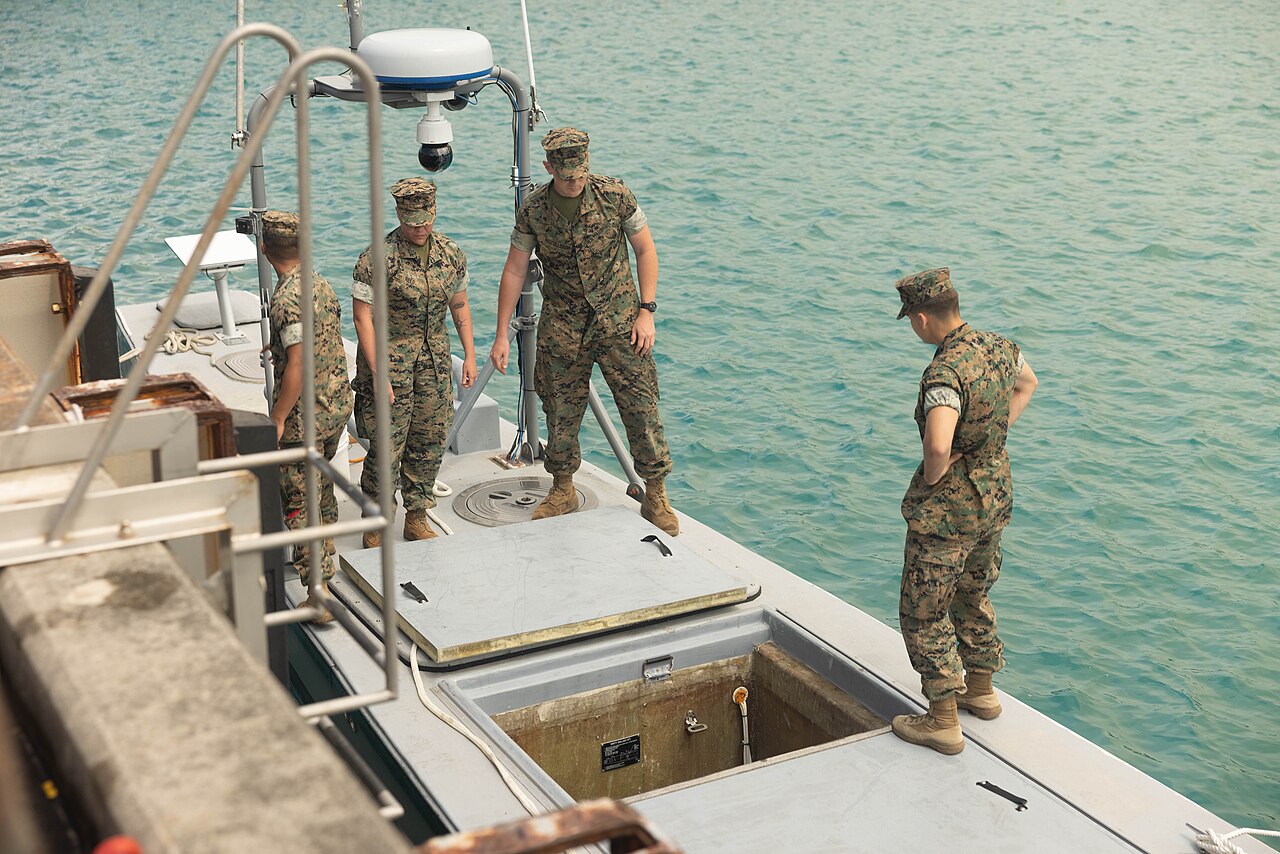
Is the photo above Saronic’s vessel?
No. It shows an earlier Marine Corps ALPV during a May 2025 class at Naval Base White Beach, Okinawa.
- Naval News – “DIU Awards Saronic Contract to Deliver Autonomous Low Profile Vessel for USMC Contested Logistics” (reproducing the Saronic press release, November 2026): navalnews.com
- Saronic Technologies – newsroom announcement, November 2026: saronic.com
- WorkBoat – “Saronic wins Marine Corps autonomous logistics vessel contract” (November 16, 2026): workboat.com
- Ocean News – “DIU Awards Three Prototype Contracts for Autonomous Low Profile Vessel Program” (November 10, 2026): oceannews.com
- DefenseScoop – ALPV solicitation (March 4, 2026): defensescoop.com
- Saronic Series D announcement (March 31, 2026), via PR Newswire and GovConWire