India Orders BrahMos Fire-Control Systems for Navy Ships

Lead
India’s Ministry of Defence signed a ₹661.50 crore (roughly $79 million) contract with BrahMos Aerospace on October 6, 2026, for fire-control systems and missile launchers to equip Indian Navy warships with the supersonic BrahMos anti-ship and land-attack cruise missile. The deal, concluded in New Delhi under the “Buy (Indian-IDDM)” procurement category, covers the shipborne electronics and launch hardware that fire BrahMos missiles rather than the missiles themselves, and carries a minimum indigenous-content requirement of 68 percent.
What Happened
According to India’s Ministry of Defence, the contract was signed in the presence of Defence Secretary Rajesh Kumar Singh and covers two launcher types: the Universal Vertical Launcher Module (UVLM) and the Quadruple Canisterised Inclined Launcher (QCIL), along with the associated fire-control systems that aim and fire BrahMos missiles from Indian Navy ships. Multiple Indian outlets, including The Week, Business Today and PSU Connect, reported the same figures and procurement category without contradiction.
The ministry classified the deal under “Buy (Indian-IDDM)” — Indigenously Designed, Developed and Manufactured — which requires a minimum 68 percent domestic content and is intended to draw in India’s wider industrial base, including small and medium enterprises, rather than rely on a single prime contractor.
The contract addresses hardware, not munitions: it does not add new missiles to the Navy’s stocks but equips additional ships with the launchers and fire-control suites needed to employ BrahMos missiles the Navy already holds or will receive separately. Indian defence media reported that the procurement is intended to extend BrahMos integration to more of the fleet, though the ministry’s own announcement did not name specific ship classes receiving the new hardware, and that detail should be treated as reporting rather than confirmed official scope.
The Product/System
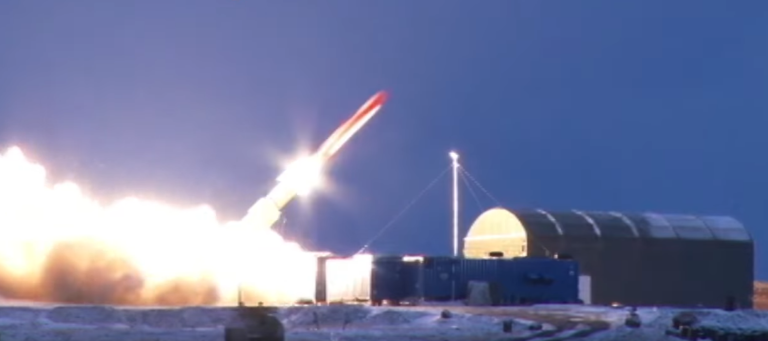
BrahMos is a supersonic cruise missile developed jointly by India’s Defence Research and Development Organisation (DRDO) and Russia’s NPO Mashinostroyeniya through the joint venture BrahMos Aerospace, formed in 1998. The missile flies at roughly Mach 2.8–3 and is fielded in ship-launched, submarine-launched, air-launched and land-based variants, giving the Indian armed forces a common strike weapon across services.
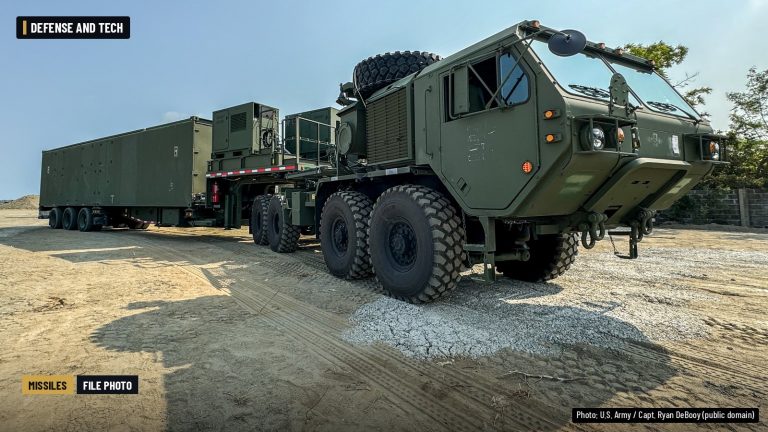
The October 6 contract concerns the “front end” of that capability at sea: the fire-control system that integrates with a ship’s combat management system to track targets and compute firing solutions, and the UVLM and QCIL launcher assemblies that physically house and fire the missiles from the deck or hull of a warship. BrahMos Aerospace and Indian private-sector firms such as Larsen & Toubro Defence have historically supplied structural and launcher components for the naval variant, reflecting the Buy (Indian-IDDM) category’s emphasis on domestic manufacturing.
Who Uses It
Confirmed operator: the Indian Navy fields BrahMos on multiple destroyer and frigate classes, including Rajput-class destroyers, Delhi- and Kolkata-class destroyers, and Shivalik-class and newer Nilgiri-class (Project 17A) frigates, according to Indian Navy and shipbuilder statements. The Indian Army and Indian Air Force separately operate land-based and air-launched BrahMos variants. One Indian defence-media report put the number of frontline Navy ships currently fitted with BrahMos at around 20, a figure that comes from a single trade outlet and has not been independently corroborated by the Navy.
Confirmed export operator: the Philippines, which became BrahMos’s first foreign customer under a 2022 agreement reported at roughly $375 million for three shore-based anti-ship missile batteries operated by the Philippine Marine Corps’ Coastal Defense Regiment. Deliveries have proceeded in stages, with the first battery reported delivered in 2024 and the second in 2025; the status of the third battery as of late 2026 varies by source and is not fully confirmed in open reporting.
Reported prospective buyers, not confirmed as customers: Vietnam and Indonesia have been named in regional and Indian press as having expressed interest in BrahMos variants, but neither government has confirmed a signed contract as of this writing.
Export/Procurement History
The October 6 fire-control and launcher contract follows a series of BrahMos-related Indian Navy procurement actions in 2026, including an earlier ₹5,083 crore package covering ALH Mk-III helicopters and Shtil missiles signed with HAL and Russia’s Rosoboronexport, and a separate ₹858 crore contract for Tunguska air-defence system and P-8I aircraft maintenance support. Those are distinct programmes and should not be conflated with the BrahMos fire-control deal.
On the export side, India’s pursuit of BrahMos sales abroad has centered on the Philippines contract, with New Delhi reportedly having offered an extended-range BrahMos-ER variant, said in trade reporting to exceed 400 km, to Manila as it nears full operationalization of its initial batteries. India’s wider push to position itself as a cruise-missile exporter, including BrahMos, is addressed in Defense & Tech’s coverage of India’s defence export strategy.
Global Competitors
BrahMos’s closest technical relative is Russia’s P-800 Oniks, from which it was derived, and its export variant Yakhont. China fields the YJ-12 and the newer, shorter-range CM-401 anti-ship ballistic/cruise hybrid for similar roles. Western navies rely on subsonic systems such as the US-made Harpoon and the emerging Lockheed Martin AGM-158C LRASM — whose sensor production Defense & Tech has covered separately — and France’s MBDA Exocet. BrahMos is marketed on its supersonic speed, which compresses an adversary’s reaction time compared with subsonic rivals, though it carries a shorter range than some long-range subsonic alternatives in its baseline configuration.
Why It Matters
The contract is modest in value compared with India’s larger 2026 naval procurement announcements, such as the ₹53,866.50 crore Next Generation Corvette contracts signed with GRSE and Goa Shipyard on November 2. Its significance lies instead in what it signals about India’s approach to fielding an already-developed weapon: rather than treating BrahMos as a finished programme, the Navy is incrementally funding the launcher and fire-control hardware needed to extend the missile’s reach across more of its surface fleet, under a procurement category designed to deepen domestic manufacturing rather than import complete systems.
It also illustrates how BrahMos integration proceeds as a series of discrete, ship-system-level contracts — fire control here, launchers there, helicopters and other missiles in parallel deals — rather than a single large acquisition, which is a pattern likely to continue as more Indian Navy classes are built or retrofitted to carry the missile.
What Happens Next
Indian defence reporting has not specified a delivery timeline, the ships that will receive the new fire-control systems and launchers, or whether this contract is linked to a specific shipbuilding programme such as the Next Generation Corvettes or further Nilgiri-class frigates. Those details would typically emerge through subsequent Ministry of Defence statements, parliamentary disclosures, or shipyard announcements as the systems are installed and tested at sea.
FAQ
What exactly did India’s Ministry of Defence buy on October 6, 2026?
Fire-control systems and two launcher types — the Universal Vertical Launcher Module and the Quadruple Canisterised Inclined Launcher — for firing BrahMos missiles from Indian Navy ships. The contract does not cover the missiles themselves.
How much is the BrahMos fire-control and launcher contract worth?
₹661.50 crore, or approximately $79 million at prevailing exchange rates, according to the Ministry of Defence and multiple Indian defence outlets.
Which ships will get the new BrahMos fire-control systems?
The Ministry of Defence’s announcement did not name specific vessels. Indian media reports have linked BrahMos integration broadly to Shivalik-class and newer Project 17A frigates, but no ship list for this specific contract has been officially confirmed.
Does the Philippines use the same BrahMos variant as the Indian Navy?
No. The Philippines operates a shore-based anti-ship version delivered under a 2022 export agreement, while the Indian Navy’s ship-launched variant covered by this contract is integrated into shipboard combat systems via the UVLM and QCIL launchers.
What is the “Buy (Indian-IDDM)” category?
It is an Indian defence-procurement classification for equipment that is Indigenously Designed, Developed and Manufactured, requiring a minimum domestic content threshold — 68 percent in this contract — to qualify.
Sources
- The Week, “₹661-crore BrahMos deal to strengthen Indian Navy’s long-range maritime strike capability,” October 6, 2026 — contract value, signing details, category. https://www.theweek.in/news/defence/2026/10/06/661-crore-brahmos-deal-to-strengthen-indian-navys-long-range-maritime-strike-capability.html
- Business Today, “Defence ministry signs Rs661 crore contract for BrahMos fire control systems, launchers for Navy ships,” October 6, 2026 — launcher types, indigenous content requirement. https://www.businesstoday.in/india/story/defence-ministry-signs-rs661-crore-contract-for-brahmos-fire-control-systems-launchers-for-navy-ships-559851-2026-10-06
- PSU Connect, “MoD Signs ₹661 Crore BrahMos Contract for Indian Navy Ships” — confirms Defence Secretary’s presence at signing. https://www.psuconnect.in/ministry-of-india-news/mod-signs-661-crore-brahmos-contract-for-indian-navy-ships
- Swarajya, “Defence Ministry Signs Rs 6,615 Crore Deal For BrahMos Fire Control Systems And Launchers For Navy Warships” — corroborates figures and category. https://swarajyamag.com/news-brief/defence-ministry-signs-rs-6615-crore-deal-for-brahmos-fire-control-systems-and-launchers-for-navy-warships
- Naval News, “Indian Navy Places Orders for Eight Next Generation Corvettes,” November 2026 — background on parallel Indian Navy shipbuilding and BrahMos fit-out across surface combatants. https://www.navalnews.com/?p=92857
- USNI News, “Philippine Marine Corps Unveils First BrahMos Anti-Ship Missile Battery,” November 2025 — BrahMos export history to the Philippines. https://news.usni.org/2025/11/07/philippine-marine-corps-unveils-first-brahmos-anti-ship-missile-battery
- Naval News, “Philippines: The Coastal Defense Regiment 2026 BrahMos Update,” October 2026 — status of Philippine BrahMos battery deliveries. https://navalnews.com/naval-news/2026/10/philippines-the-coastal-defense-regiment-2026-brahmos-update