Can Europe Produce Enough Air Defence Missiles?
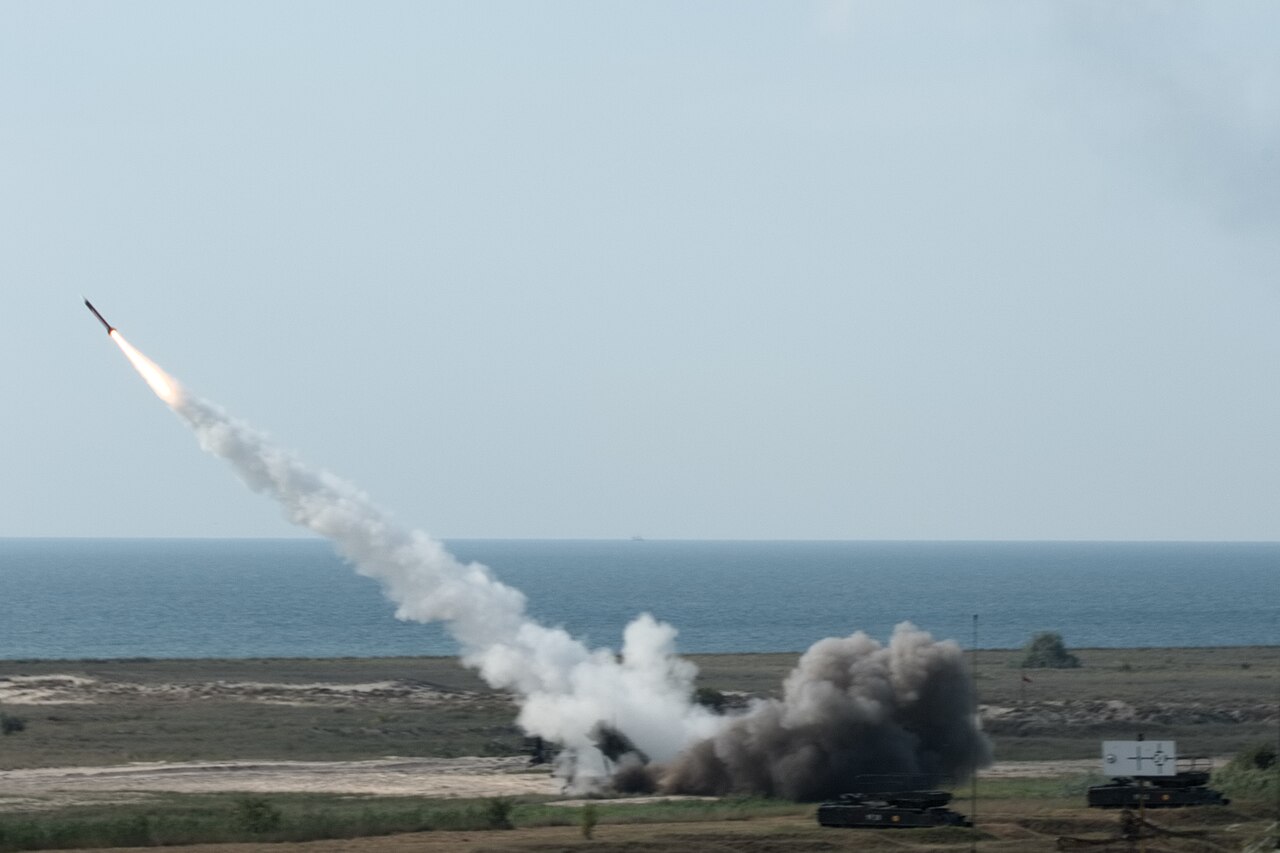
No, not yet, though the gap is closing fast. Europe’s three main air-defence missile makers, MBDA, Diehl Defence and the Raytheon-MBDA joint venture COMLOG, have all announced plans to double or near-double output between 2023 and 2026-2027, and a new Patriot missile plant is due to start production in Germany at the end of 2026. But those are company targets, not delivered rounds, and NATO and US officials said in August 2026 that Patriot interceptor stocks in Europe were “beyond critical” after the Iran war drew down shared stockpiles. Europe is building more air-defence missiles than at any point since the Cold War. It is still short of what a sustained high-intensity fight would use.
Why this matters
Air-defence missiles are the one category of European hardware that cannot simply be bought off a shelf in useful quantity. Fighter jets, tanks and artillery pieces last years in service; interceptors are consumed round by round, and Ukraine’s war and the 12-day Israel-Iran exchange in 2025 both showed how quickly stocks of Patriot, Aster and IRIS-T rounds can be drawn down against drones and ballistic missiles. For European governments rebuilding deterrence against Russia, the question is no longer which systems to buy but whether the factories behind them can keep the magazines full. That question now runs through almost every procurement decision in Berlin, Paris, Warsaw and Brussels.
European context
Most of Europe’s layered air-defence architecture sits inside or alongside the European Sky Shield Initiative (ESSI), which pools national purchases of IRIS-T SLM, NASAMS and Patriot across roughly two dozen European states. France and Italy sit outside ESSI and field SAMP/T on a national basis instead (see our SAMP/T vs Patriot comparison). Every one of those systems depends on a missile supply chain that, until 2022, was sized for peacetime training and occasional export orders, not for a land war in Europe plus Gulf demand plus restocking after the Iran war. Governments have responded with money: the EU’s European Defence Industry Programme (EDIP), adopted in March 2026, earmarked more than €700 million for expanding production of missiles, counter-drone systems and other components, on top of the earlier Act in Support of Ammunition Production (ASAP).
What “air defence missile production” actually covers
There is no single bottleneck. Three layers face different constraints:
- Long-range interceptors (Patriot PAC-2/PAC-3 MSE, Aster 30, SAMP/T NG) — expensive, built in low volumes historically, and the hardest to scale because of specialised seekers, divert-and-attitude-control motors and warheads.
- Medium-range interceptors (IRIS-T SLM, NASAMS/AMRAAM-ER) — closer to existing air-to-air missile production lines, which makes them easier to ramp.
- Short and very-short range (Stinger, IRIS-T SLS, Skyranger’s guided rounds) — simpler missiles, but still dependent on the same seeker and rocket-motor supply chain, including the solid rocket motor shortage we have covered in detail separately.
Who makes what, and how fast they say they are scaling
| Company | Missile | Country | 2026 target (company-stated) | Status |
|---|---|---|---|---|
| MBDA | Aster 30/15 | France / Italy | Aster output to double in 2026; overall MBDA output up ~40%; second Aster line being added at Fusaro, Italy | IN PROGRESS |
| Diehl Defence | IRIS-T SLM/SLS | Germany | 10 firing units in 2026, rising to up to 16/year within two years; missile output already up roughly 10-20x since 2022 on differing company figures | IN PROGRESS |
| COMLOG (MBDA Deutschland / Raytheon JV) | Patriot GEM-T | Germany (Schrobenhausen) | New plant, up to 1,000 missiles under contract options; production to start end-2026, first deliveries early 2027 | UNDER CONSTRUCTION |
| Raytheon (RTX) + Diehl + Dutch suppliers | Stinger | US / Germany / Netherlands | Global production capacity to double; Diehl builds the guidance section, Dutch firms build major assemblies | ANNOUNCED, Jul 2026 |
| Lockheed Martin | Patriot PAC-3 MSE | United States | 620 delivered in 2025; interim goal 750/year by 2027; long-term plan “more than triple” toward roughly 2,000/year by 2030 | IN PROGRESS (not EU-based) |
These figures come almost entirely from the companies themselves, in earnings calls and press statements, not from independently audited delivery data. Treat “doubling” and “40%” as targets the firms have committed to publicly, not confirmed output.
Industrial players and where the missiles are actually built
MBDA (France, UK, Italy, Germany, jointly owned by Airbus, BAE Systems and Leonardo) is Europe’s largest missile house and makes Aster, Meteor and, through COMLOG, the European-assembled Patriot GEM-T round. It booked a record €44.4 billion order backlog at the end of 2025, with Europe supplying 70% of 2025 order intake, and plans €5 billion of capital investment from 2026 to 2030, roughly double its previous plan, alongside hiring 2,800 extra staff in 2026 alone. Diehl Defence (Germany) builds the IRIS-T family and opened a new 3,400 m² missile integration centre at Nonnweiler, Saarland, in January 2026 as part of an €800 million expansion programme covering up to 15 new buildings across its sites. Rheinmetall, better known for 155 mm shells and armoured vehicles, is moving part of its Skyranger counter-drone system’s production to a new site in Neuss, Germany, with CEO Armin Papperger saying in September 2026 that missile stockpiles remain worryingly low and output needs to rise further. Kongsberg (Norway) and Raytheon jointly develop the AMRAAM-ER interceptor used on NASAMS; Norway’s own order for replacement NASAMS equipment, worth around NOK 1.4 billion, is scheduled for delivery in 2026-27. Saab (Sweden) and Nammo (Norway/Finland) sit further down the supply chain, the latter among Europe’s few rocket-motor producers.
Procurement status: where EU and national money is going
| Programme | Scope | Scale | Status |
|---|---|---|---|
| EDIP (European Defence Industry Programme) | EU-wide, successor to ASAP/EDIRPA | €1.5bn multiannual work programme adopted Mar 2026; over €700m earmarked for expanding production of missiles, counter-drone and other components; separate €240m joint-procurement wave covers air and missile defence | CONTRACTED |
| COMLOG Patriot plant | Germany (Schrobenhausen), national + NSPA-linked | Up to 1,000 GEM-T missiles, contract value reported up to €5.1bn / US$5.6bn | UNDER CONSTRUCTION |
| NSPA joint buy (Patriot GEM-T) | Germany, Netherlands, Romania, Spain | Up to 1,000 missiles, up to US$5.6bn, Jan 2024 | ORDERED |
| France OCCAR/DGA SAMP/T NG | National, multi-layer Aster/MICA VL | Development contract signed 30 Apr 2026; 8 batteries planned from 2030 under France’s 2024-2030 military programming law | CONTRACTED |
How fast is each system actually scaling? A measured comparison
Ranked only on the single public figure each manufacturer has committed to, not on any assessment of which missile is “better”:
| Rank | System | Stated increase | Baseline period |
|---|---|---|---|
| 1 | Patriot PAC-3 MSE (US, feeds European stocks) | “More than triple” by 2030 (Pentagon-Lockheed framework, Jan 2026) | From 2025 delivery rate of 620/year |
| 2 | IRIS-T SLM/SLS missiles (Diehl) | Company cites a roughly 10 to 20-fold rise since 2022, depending on source; firing units to rise from 10 (2026) toward 16/year | From pre-2022 output |
| 3 | Aster 30/15 (MBDA) | Output to double in 2026 alone; MBDA group output up ~40% in 2026 | From 2025 rate |
| 4 | Stinger (Raytheon/Diehl) | Global capacity to double; no date given | From current rate (not disclosed) |
Methodology: ranked by the size of the percentage or multiple increase each manufacturer has publicly committed to, using the company’s own stated baseline. This says nothing about absolute volumes, which remain undisclosed for most systems on security grounds.
Where this still falls short
Two sets of officials gave conflicting public accounts in August 2026. A US defence official and a NATO official told the Associated Press that American Patriot interceptor stocks in Europe were “beyond critical”, largely because roughly 65% of the US Patriot inventory, by the Center for Strategic and International Studies’ count around 1,500 of 2,330 interceptors, had been used during the Iran war. NATO’s senior military spokesperson, Colonel Martin O’Donnell, publicly disputed that characterisation, saying NATO could “block punches” and still had enough air-defence munitions to defend itself while continuing to supply Ukraine. Both statements can be true at once: production is rising sharply from a low base, while absolute stocks, drawn down by a war outside Europe, take years to rebuild. CSIS analyst Mark Cancian put total 2026 Patriot output, across all customers, at around 600 missiles, against a 2030 goal of roughly 2,000 a year.
Türkiye, South Korea and the US: alternative supply
Where European governments cannot wait for domestic lines to scale, they have bought in from allied industrial bases outside the big European primes. South Korea’s Hanwha Aerospace already supplies K239 Chunmoo rocket-artillery systems to Poland, Estonia, Norway and Croatia, a parallel track to European-made systems that several NATO members have used specifically because Korean production lines had spare capacity when European ones did not. Türkiye’s ASELSAN and ROKETSAN have built up a comparable domestic air-defence missile base of their own, the HİSAR-A+ and HİSAR-O+ short and medium-range interceptors, and SİPER, Türkiye’s long-range system now moving through serial production, developed with limited reliance on any single outside supplier. Türkiye is not an ESSI member and its SİPER programme is a national rather than EU-pooled effort, but it illustrates the same industrial question European governments are asking: whether a missile-production base can be built fast enough domestically, or whether gaps must be filled from allied production elsewhere, as Poland and the Baltic states have done with both Korean rocket artillery and German IRIS-T.
What changes next
- The Schrobenhausen Patriot plant starting production at the end of 2026 will be the first real test of whether COMLOG’s “up to 1,000 missiles” figure converts into delivered rounds on the stated early-2027 timeline.
- MBDA’s Fusaro, Italy, Aster line and its 2,800 new hires in 2026 should show up in order-fulfilment times reported in the company’s 2026 annual results, expected in spring 2027.
- EDIP’s next €240 million joint-procurement wave for air and missile defence, plus further national contracts under France’s 2024-2030 military programming law, will indicate whether EU-level funding is accelerating delivery or mainly underwriting capacity that governments would have funded nationally anyway.
- Whether NATO’s and the Pentagon’s public disagreement over how “critical” Patriot stocks are gets resolved with harder numbers, rather than dueling anonymous statements, will matter more than any single factory opening.
Frequently asked questions
Is Europe building enough air-defence missiles to replace what has been used since 2022?
Not yet on most accounts. Manufacturers have announced large percentage increases, Aster output doubling in 2026, IRIS-T missile output up roughly an order of magnitude since 2022, but US and NATO officials gave conflicting assessments in August 2026 of whether shared Patriot stocks in Europe were critically low or merely reduced.
Which European company makes the most air-defence missiles?
By order backlog and product range, MBDA (France/UK/Italy/Germany) is Europe’s largest air-defence missile maker, with a record €44.4 billion backlog at the end of 2025 and production of Aster, Meteor and the European-built Patriot GEM-T through its COMLOG joint venture with Raytheon.
Where is Europe’s new Patriot missile factory?
In Schrobenhausen, southern Germany, run by COMLOG, the Raytheon-MBDA Deutschland joint venture. It is contracted for up to 1,000 Patriot GEM-T missiles, with production due to start at the end of 2026 and first deliveries expected in early 2027.
How much is the EU spending on missile production?
Under the European Defence Industry Programme (EDIP), adopted in March 2026, the EU allocated a €1.5 billion multiannual work programme, of which more than €700 million targets expanded production of missiles, counter-drone systems and related components, plus a separate €240 million wave of joint procurement covering air and missile defence systems.
Why are air-defence missiles harder to scale up than artillery shells?
A 155 mm shell is largely a casting, an explosive fill and a fuze. An air-defence missile adds a guided seeker, a rocket motor (the subject of a persistent European shortage), guidance electronics and, for interceptors like Patriot PAC-3 MSE, a divert-and-attitude-control system, each with its own specialised supplier base that cannot be scaled as quickly as shell-casting foundries.
Did the Israel-Iran war affect European air-defence missile stocks?
Yes, according to US and NATO officials cited by the Associated Press in August 2026. Roughly 65% of the US Patriot interceptor inventory was used during the 2025 Iran conflict, drawing down stocks that would otherwise have supported allied and European reserves, a key reason officials gave for describing European Patriot stocks as critically reduced.
Does Türkiye make its own air-defence missiles instead of relying on European or US supply?
Türkiye’s ASELSAN and ROKETSAN produce the HİSAR-A+ and HİSAR-O+ short and medium-range interceptors domestically and are moving the longer-range SİPER system through serial production, a separate national industrial effort from ESSI or EU-pooled procurement, built specifically to reduce reliance on any single foreign supplier.
When will Europe’s missile shortfall be resolved?
Officials and manufacturers point to 2030 as the horizon for most stated targets, including Lockheed Martin’s roughly 2,000-a-year Patriot PAC-3 MSE goal and NATO and European officials’ expectation that Patriot stockpiles will have rebounded by the end of the decade, assuming announced investment and hiring plans are delivered on schedule.
Sources
- Defense News, “MBDA to double Aster air defense missile output in 2026”, 26 Mar 2026
- Reuters via Stockopedia, MBDA 2025 annual results coverage
- Migflug / company reporting, MBDA €5bn 2026-2030 investment plan and Fusaro, Italy line
- CSIS, “Winning the Salvo Competition: How to Rebuild the Air and Missile Defense Industrial Base”
- Euro-SD, “New Diehl production site”, Jan 2026
- Militarnyi, “IRIS-T Manufacturer Launches New Production Facility and Plans to Produce 10 Air Defense Systems in 2026”
- RTX (Raytheon) press release, “RTX’s Raytheon doubling global Stinger missile production”, 7 Jul 2026
- Shephard Media, “Pentagon’s 800% PAC-3 MSE surge faces production bottleneck as Patriot demand soars”
- The Aviationist, “Lockheed Martin to Bring PAC-3 MSE Interceptor’s Production to 2,000 per Year”, 6 Jan 2026
- Associated Press via PBS NewsHour, “AP Exclusive: US Patriot missile stocks in Europe ‘beyond critical’ due to Iran war, officials say”, 27 Aug 2026
- Euromaidan Press / Army Recognition, COMLOG Schrobenhausen Patriot GEM-T plant reporting
- Defence24 / Shephard Media / Euronews, Rheinmetall Skyranger production and Papperger comments, Sep 2026
- Janes, Kongsberg NASAMS order for Norway and AMRAAM-ER full-rate production contract
- European Commission, EDIP work programme adoption, Mar 2026
- Brussels Times, EU ammunition and missile production funding coverage, 2026
- Eurosam, France OCCAR/DGA SAMP/T NG multi-layer development contract announcement
Last updated: 28 October 2026.