Hegseth and Koizumi Meet to Advance U.S.-Japan ‘Denial Defense’ and Munitions Production
U.S. Secretary of War Pete Hegseth met Japan’s Minister of Defense Shinjiro Koizumi to advance what he called a shared vision of “peace through strength,” stressing that the two allies must build a credible denial defense backed by more investment, wider access, more realistic training and stronger munitions production. Hegseth announced the meeting on his official X account on October 28, 2026.
- Who: U.S. Secretary of War Pete Hegseth and Japanese Defense Minister Shinjiro Koizumi
- When: announced on Hegseth’s official X account on October 28, 2026 (UTC)
- Focus: a “credible denial defense” for the alliance
- Four priorities named: increased investment, greater access, more realistic training and stronger munitions production
What Hegseth said after the Koizumi meeting
In his post, Hegseth said U.S.-Japan “strategic alignment” is essential to building a credible denial defense. He listed four supporting lines of effort: higher defense investment, greater access for forces, more realistic training and expanded production of the munitions that U.S. and allied forces need. The post did not give further details of agreements reached, and no formal readout had been published at the time of writing.
A familiar agenda for the alliance
The themes echo earlier meetings between the two ministers in 2026. Koizumi was hosted at the Pentagon in January, and the pair met again on the sidelines of the Shangri-La Dialogue in Singapore in May. According to the Pentagon’s readout of the Singapore talks, they discussed Japan’s efforts to raise defense spending and review its strategic documents, cooperation on the defense industrial base including global munitions needs and expanded air-defense missile production, and Japan’s revised defense export rules.
The May readout also covered the temporary deployment of U.S. ground-based missile capabilities to a Japan Self-Defense Forces base, improved access to flexible air dispersal locations and a larger U.S. presence in Japan’s Southwest Islands, as well as trilateral work with Australia on air and missile defense data sharing.
Why munitions and denial defense matter
“Denial defense” refers to a posture designed to prevent an adversary from achieving its military objectives in the first place, rather than relying mainly on punishment after an attack. For the U.S.-Japan alliance, that places a premium on dispersed forces, resilient basing and deep stocks of precision munitions and air-defense interceptors along the First Island Chain.
Washington has repeatedly pressed allies to expand defense spending and help scale up missile production, while Tokyo has loosened export controls and moved to raise its defense budget. Further details of the latest Hegseth-Koizumi discussions may emerge if either ministry publishes a formal readout.
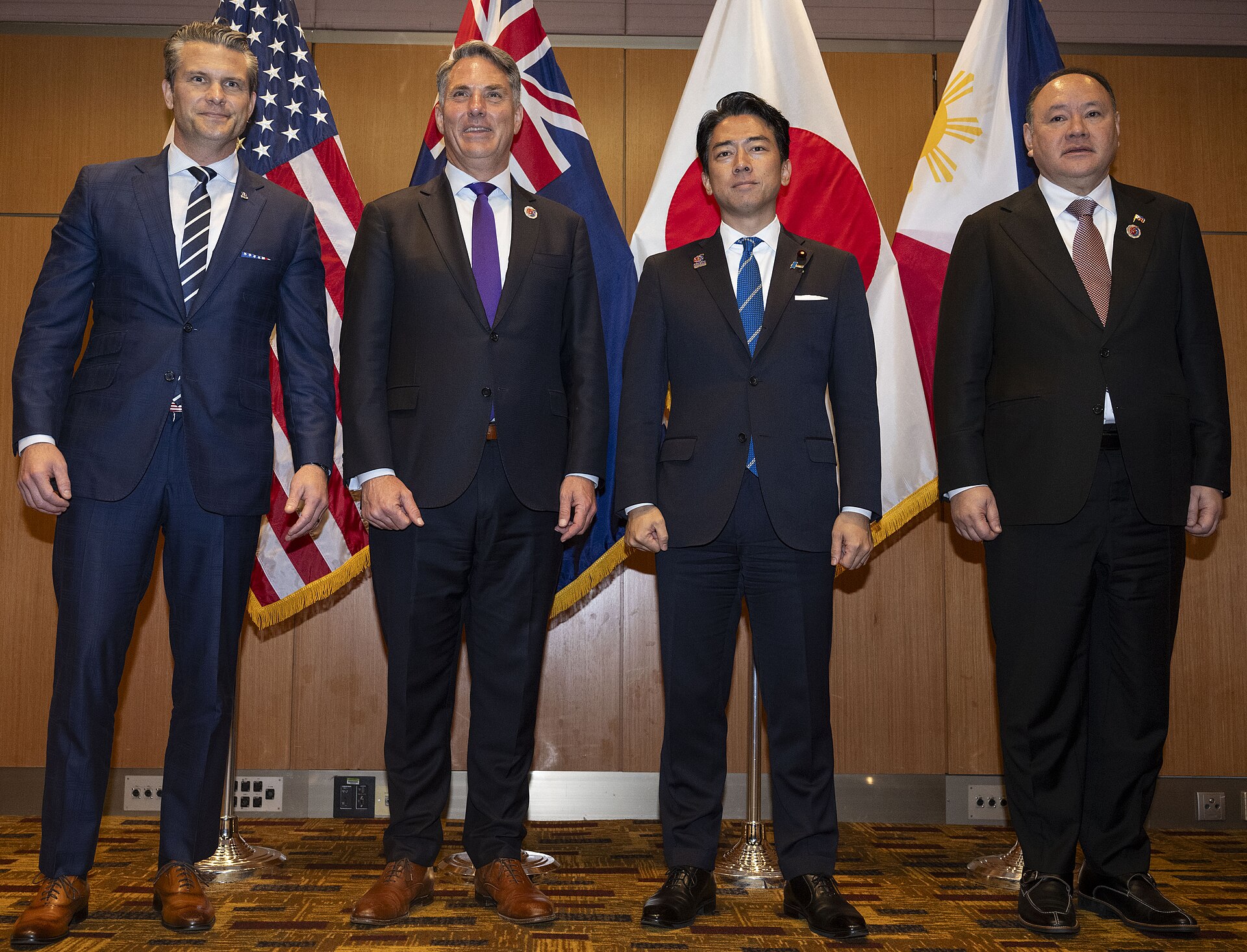
Featured image: U.S. Secretary of War / Public domain, via Wikimedia Commons (file photo: Hegseth hosts Koizumi and Australian and Philippine counterparts in Kuala Lumpur, November 2025)