Kazakhstan Weighs Su-57E as Russia and China Vie for Its Next Fighter
Lead
Kazakhstan is weighing a purchase of Russia’s export-grade Su-57E stealth fighter to replace its aging Su-27 interceptors, according to a cluster of Russian and regional defense reports published in late August and early September 2026. The same reports say China is pitching its own fifth-generation fighter, the J-35, for the same requirement. Neither Astana nor Moscow has confirmed a contract, a price, or a delivery date, and the story so far rests on unnamed “regional defense reports” rather than any on-record government statement. If it goes ahead, Kazakhstan would become the first Central Asian state to operate a fifth-generation jet, and the decision would be read across the region as a test of how much influence Moscow still has over the militaries of its former Soviet neighbors.
What Happened
Reports circulating since late August 2026, led by the Kuala Lumpur-based outlet Defence Security Asia and picked up by the Russian aviation site www1.ru and India’s idrw.org, say Kazakhstan is “on track” to take delivery of its first Su-57E fighters within roughly two years, with some accounts citing a target as early as 2028. The reporting is explicit that this is not a confirmed deal: no Kazakh or Russian official has gone on record to announce a signed contract, a quantity of aircraft, a price, or financing terms. Rosoboronexport chief Alexander Mikheev told reporters in September that the agency holds “several contracts for the supply of this aircraft” to unnamed foreign customers, with deliveries “planned to begin in 2026,” but he did not name Kazakhstan, Algeria, India, or any other country specifically. Algeria remains the only country widely assessed — based on geolocated video, not official confirmation — to have received the jet.
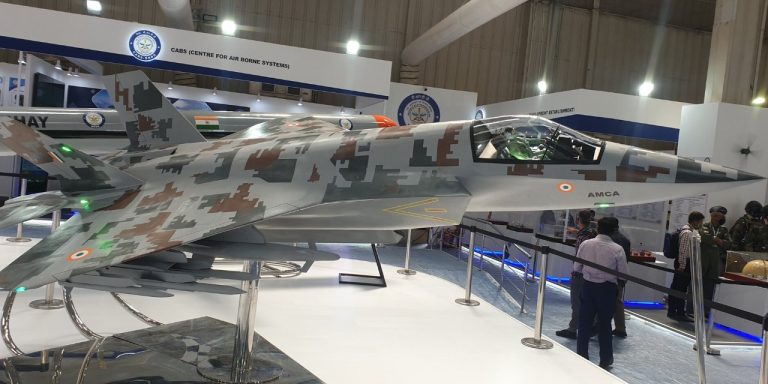
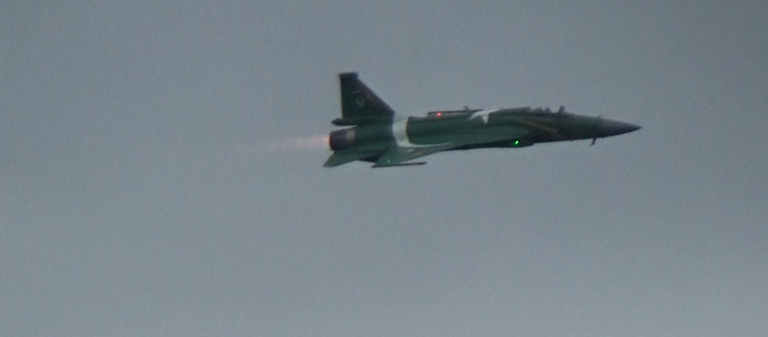
Alongside the Su-57E reports, the same outlets say China is marketing its J-35 stealth fighter to Kazakhstan as a competing option. No source has produced a Chinese price quote, a proposed delivery schedule, or evidence of a formal Kazakh request for the J-35. The claim rests on China’s broader, publicly stated push to sell the aircraft across Central Asia and on Kazakhstan’s recent purchases of other Chinese military hardware, including Wing Loong drones and K-8W trainers.
The Product/System
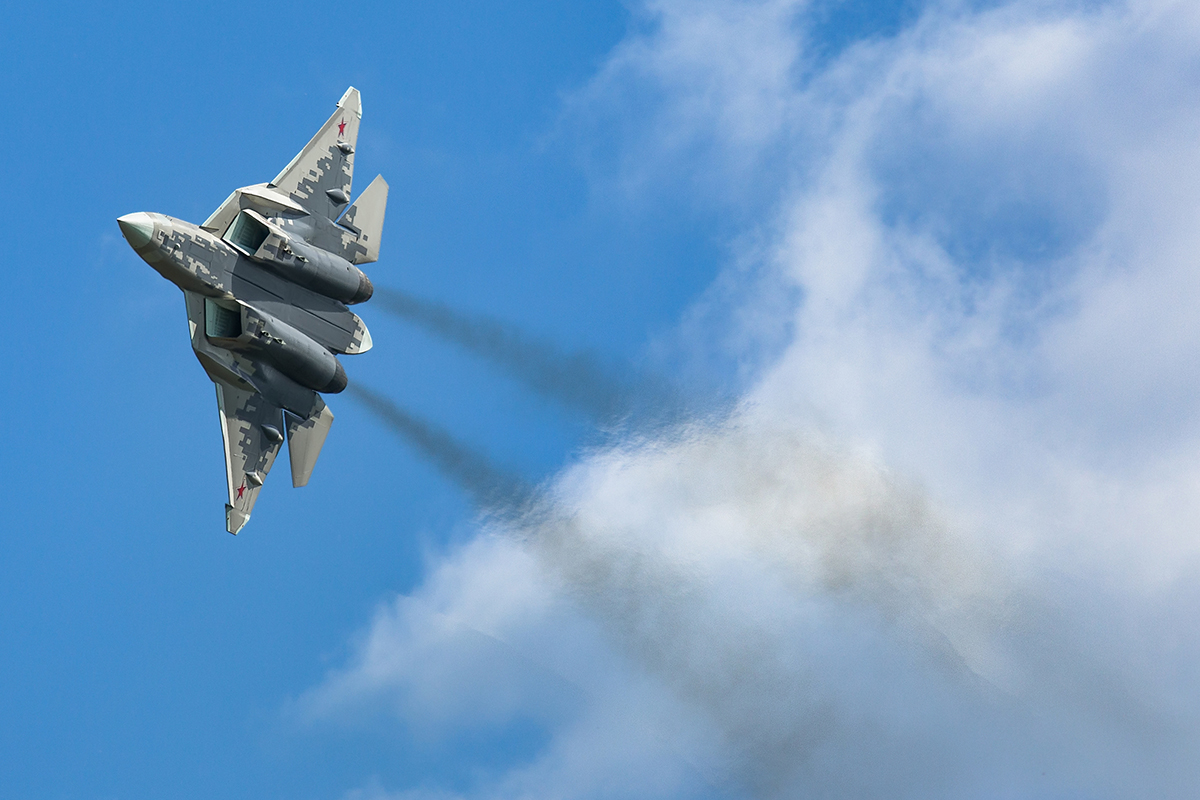
The Su-57E is the export variant of Russia’s Su-57 “Felon,” a twin-engine, single-seat aircraft developed by Sukhoi (part of Rostec’s United Aircraft Corporation) as Russia’s answer to the F-22 and F-35. It is built around internal weapons bays, radar-absorbent shaping, and the Izdeliye 30 engine program intended to eventually replace the current AL-41F1 powerplant. Open-source estimates put Russia’s total Su-57 inventory at roughly 30 to 44 aircraft as of mid-2026, including prototypes, with annual production estimated at 12 to 20 jets and a stated goal of 76 operational airframes by 2028. Export pricing is estimated in open sources at $80 million to $100 million per aircraft, though no package price has been disclosed for any specific buyer. China’s J-35, built by Shenyang Aircraft Corporation, is a twin-engine carrier- and land-based stealth fighter that Beijing has begun actively marketing abroad under the export designation J-35AE, positioning it as a lower-cost alternative to both the Su-57E and the F-35.
Who Uses It
The Su-57 is in limited service with the Russian Aerospace Forces. Algeria is widely assessed, though not officially confirmed by either government, to be the aircraft’s first foreign operator, based on open-source satellite and ground imagery rather than an announcement. India evaluated and then withdrew from the program years ago and has shown no recent interest in the export version despite renewed Russian pitches. Vietnam has been reported as weighing the Su-57E against Western alternatives, and leaked documents have named Iran and Ethiopia as possible future recipients, though both are unverified. No country has confirmed operating the J-35AE; Pakistan and others have been linked to Chinese interest in the aircraft, but Kazakhstan’s specific interest in it is, at this stage, an inference drawn by regional media rather than a confirmed request.
Export/Procurement History
Kazakhstan’s air force currently flies a Soviet- and Russian-legacy fleet: roughly 60 to 68 active combat aircraft, including about 30 to 36 operational Su-30SM multirole fighters (a batch of six arrived in 2024 for the 602nd Air Base at Shymkent, though one crashed near Balkhash in February 2026), some 20 to 24 Su-27/Su-27BM2 interceptors — the aircraft the Su-57E would reportedly replace — and a dwindling number of Su-25 ground-attack jets. Most of its MiG-29s and MiG-31s have reportedly been retired or put up for sale. Kazakhstan and Russia have a bilateral military-technical cooperation agreement dating to 2015 and a further cooperation plan covering 2026, and both countries sit inside the Russian-led Collective Security Treaty Organization, under which Kazakhstan hosted the CSTO’s Rubezh 2026 drills in September. Russian Defense Minister Andrei Belousov has described defense cooperation with Kazakhstan as “a key factor in maintaining stability in Central Asia,” though he has not been quoted on the Su-57E specifically. SIPRI data cited in regional reporting shows Russia’s share of Kazakhstan’s arms imports running as high as 88% in the most recent five-year period tracked, even as Russia’s global arms-export share has fallen sharply amid sanctions and the diversion of production to the war in Ukraine.
Global Competitors
Any Kazakh fifth-generation purchase would unfold against a broader regional contest. China has already sold J-10C fighters to Uzbekistan and is reported to be courting Kazakhstan with both conventional and stealth aircraft, while continuing to supply drones and trainers across Central Asia. The United States and European manufacturers have not been reported as contenders for this specific requirement, leaving the choice effectively bounded between Russia’s established but sanctions-constrained supply chain and China’s newer, less combat-tested export offering. Kazakhstan’s choice would also sit alongside Algeria’s unconfirmed Su-57E operation and India’s continued, so far unsuccessful, Russian courtship as a data point on how far Moscow can still move its flagship fighter in export markets while fighting a war that has strained its own production.
Why It Matters
A confirmed Kazakh order would be the first sale of a fifth-generation jet into Central Asia and a concrete test of Kazakhstan’s “multi-vector” foreign policy under President Kassym-Jomart Tokayev, which has sought to balance ties with Russia, China and the West simultaneously. Choosing the Su-57E would reaffirm Astana’s deep structural dependence on Russian hardware, training pipelines and maintenance networks at a moment when Moscow’s own export capacity is under strain. Choosing — or even seriously entertaining — the J-35 would mark a visible crack in that dependence and hand Beijing a symbolic win in a region Russia has long treated as its own security backyard. For Russia, landing the sale would help offset a reported 64% drop in major arms exports between 2016-2020 and 2021-2025 and a global market-share slide from 21% to roughly 6.8%, largely because front-line production is going to the Russian military itself. Any eventual Russian delivery could also raise questions under the U.S. Countering America’s Adversaries Through Sanctions Act (CAATSA), though no penalties or exemptions have been discussed publicly for Kazakhstan.
What Happens Next
Nothing here is settled. No quantities, financing structure, maintenance arrangements, or firm delivery dates have been published by either government, and the reporting chain so far traces back to a small number of regional outlets citing unnamed sources rather than independent confirmation from Astana, Moscow or Beijing. A first concrete marker to watch would be any statement from Kazakhstan’s Ministry of Defense or from Rosoboronexport naming Kazakhstan specifically as a Su-57E customer, or any visible Chinese J-35 demonstration or offer tied to a Kazakh air base. Until one of those happens, the choice between Moscow’s stealth jet and Beijing’s remains speculative.
FAQ
Has Kazakhstan confirmed it is buying the Su-57E?
No. Reports describe the purchase as “reportedly” in progress, and neither the Kazakh nor Russian government has announced a signed, funded contract, a quantity of aircraft, or a delivery date.
What fighter jets does Kazakhstan currently fly?
Its air force operates a mostly Soviet-legacy fleet of Su-30SM and Su-27 fighters, along with Su-25 ground-attack aircraft, after retiring or offering for sale most of its MiG-29s and MiG-31s.
Is China’s J-35 really competing for this contract?
Regional reports say China is “promoting” the J-35 across Central Asia and that Kazakhstan has shown interest, but no Chinese price, delivery schedule, or formal Kazakh request for the J-35 has been published.
When would Kazakhstan receive its first Su-57E jets if the deal proceeds?
Unconfirmed reports point to a window of roughly two years from late 2026, with some citing 2028, but these are estimates from regional media, not official timelines.
Why does this matter beyond Kazakhstan?
It would be the first fifth-generation fighter sale in Central Asia and a visible marker of whether Russia or China has more defense-industrial pull in a region Moscow has traditionally dominated militarily.
Sources
- Defence Security Asia, “Kazakhstan Eyes Su-57E as Russia and China Battle for Central Asia,” September 6, 2026 — primary regional report on the Su-57E/J-35 competition narrative, explicitly unconfirmed.
- www1.ru, “Су-57Э столкнулся с китайским J-35 за Казахстан” (“Su-57E clashes with Chinese J-35 over Kazakhstan”), September 6, 2026 — Russian-language translation/aggregation citing Defence Security Asia, no new named sourcing.
- www1.ru, “13 млрд долларов за полгода: Су-57Э, Су-35 и С-400 обеспечили Рособоронэкспорту рекордный темп новых заказов,” September 7, 2026 — covers Rosoboronexport CEO Alexander Mikheev’s statement on new, unnamed Su-57E buyers.
- idrw.org, “Kazakhstan Set to Acquire Russian Su-57 Fighter Jets in Major Air Force Overhaul,” August 30, 2026 — secondary aggregation, cites unnamed “regional defense reports.”
- Defense & Tech, “Rosoboronexport Signs $13 Billion in Weapons Deals, Confirms New Su-57E Buyers,” September 7, 2026 — background on Rosoboronexport’s unnamed new Su-57E customers; does not mention Kazakhstan.
- Defense & Tech, “Algeria’s Su-57E Program: What’s Confirmed and What’s Still Unverified,” October 23, 2026 — background on the only Su-57E operation assessed in open-source imagery.