Lockheed Martin Wins Army Milestone C Approval for 150-Kilometre ER GMLRS
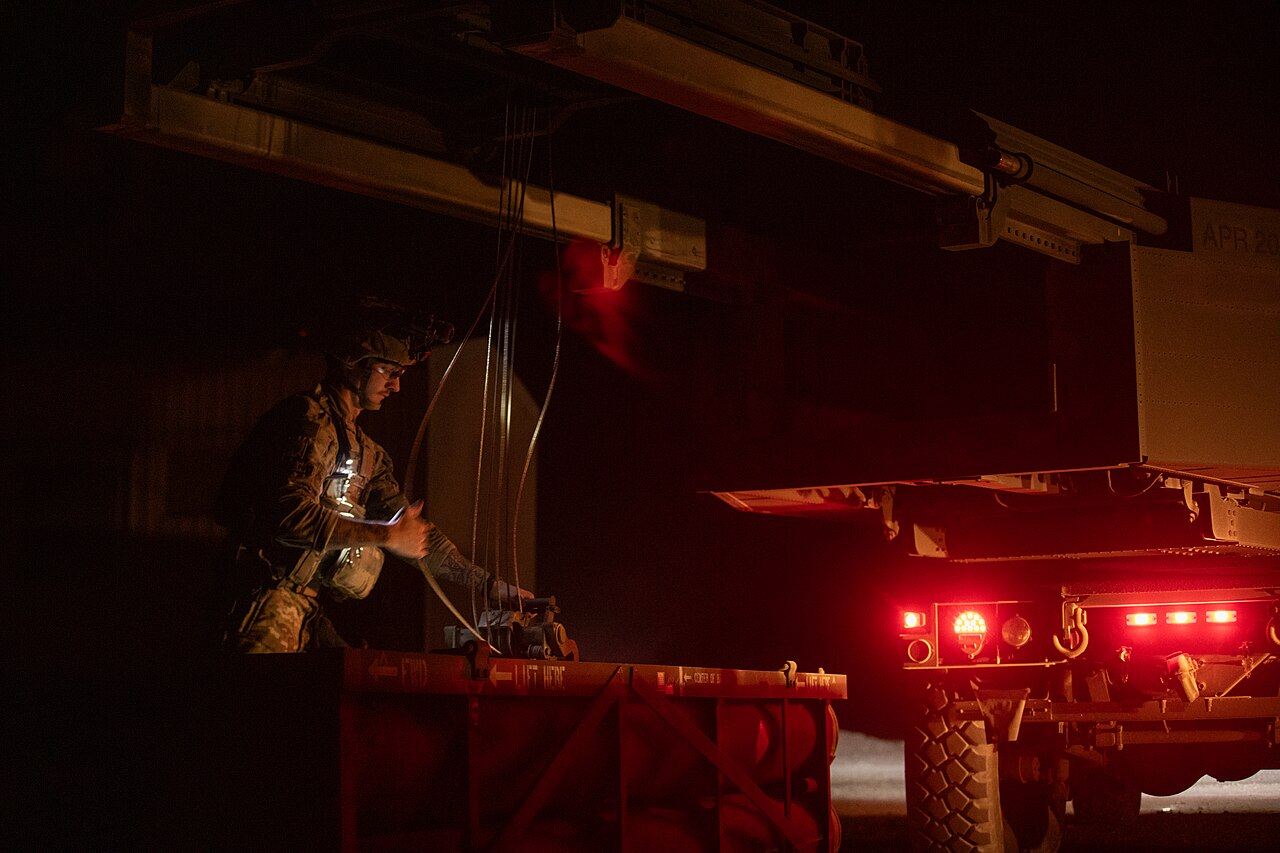
The US Army has approved Milestone C for Lockheed Martin’s Extended-Range GMLRS, clearing the 150-kilometre rocket for production and fielding. Lockheed Martin announced the decision on October 19, 2026. The approval follows two successful Soldier-led operational tests, with flights in September and October at White Sands Missile Range, New Mexico.
Both ER GMLRS variants, the Alternative Warhead and the Unitary Warhead, completed operational testing. Soldiers fired multiple rockets in succession from an M270A2 launcher.
ER GMLRS Clears Milestone C
| Item | Detail |
|---|---|
| Customer | US Army |
| Contractor | Lockheed Martin |
| Decision | Milestone C approval, signalling readiness for production and deployment |
| Weapon | Extended-Range Guided Multiple Launch Rocket System (ER GMLRS) |
| Range | Up to 150 km |
| Variants | Alternative Warhead and Unitary Warhead |
| Testing | Two Soldier-led operational tests; September and October 2026; M270A2 launcher; White Sands Missile Range |
| Not disclosed | Production targets, delivery schedules, fielding date and contract value |
| Announced | October 19, 2026 |
Sabrina Barnes, vice president of Precision Fires Rockets at Lockheed Martin, said “the value of ER GMLRS is not only the additional range.” She said the rocket’s compatibility with launchers already in service gives US and international operators a common foundation.
Lockheed Martin said its focus is shifting from proving the technology to manufacturing and fielding it at scale. The company said it is advancing production capability and strengthening its supply chain across its precision fires portfolio, which includes GMLRS, ATACMS and the Precision Strike Missile.
Standard GMLRS and ER GMLRS Compared
ER GMLRS keeps the same launcher interface as the standard rocket and trades some internal volume for a larger motor. Our guide to US artillery, from M777 to HIMARS and MLRS covers the launchers.
| Feature | Standard GMLRS | ER GMLRS |
|---|---|---|
| Maximum range | More than 70 km (Army and Lockheed figure) | Up to 150 km |
| Launchers | HIMARS and M270 | HIMARS and M270 |
| Rockets per pod | Six | Six |
| Warhead options | Unitary and alternative warhead | Unitary and alternative warhead |
| Reported unit cost | $168,000 (M31, FY2023 Army budget) | $434,000 (M31ER export, FY2022) |
Range is the point. At 150 kilometres the rocket reaches roughly twice as far as the standard round without a new launcher, which keeps the training and logistics base the same. That reading is analysis, not a Lockheed claim.
From First Flight to Production Approval
| Date | Event |
|---|---|
| March 2021 | First successful ER GMLRS test flight |
| September 2023 | Test shot reaches 93 miles (150 km) |
| June 2024 | Army moves the rocket onto Lockheed’s Camden, Arkansas line, with a $200 million modification for as many as 240 rockets |
| September and October 2026 | Operational test flights at White Sands |
| October 19, 2026 | Lockheed announces Milestone C approval |
Production-related work was already under way before the formal decision. In 2024 the Army moved the rocket onto Lockheed’s Camden line, so Milestone C formalises a path that was partly running. The release does not say how many rockets the Army plans to buy or when units will receive them.
Rocket Motors and the Production Limit
Lockheed Martin has said it plans to invest between $8 billion and $9 billion to expand US munitions production. It also received a $200 million Army award in September 2026 to recapitalise more M270 launchers to the M270A2 standard.
Output of long-range rockets is limited as much by solid rocket motors as by assembly lines, a constraint we covered in our look at the solid rocket motor shortage. The release ties the effort to the Army’s “Arsenal of Freedom” and to US and allied investment in more munitions capacity.
Lockheed Martin Company Profile
| Item | Detail |
|---|---|
| Headquarters | North Bethesda, Maryland |
| Founded | 1995, through the merger of Lockheed and Martin Marietta |
| Employees | About 123,000 (2025) |
| Revenue | About $75.05 billion (2025) |
| CEO | James D. Taiclet |
| Segments | Aeronautics, Missiles and Fire Control, Rotary and Mission Systems, Space |
| Known programmes | F-35, C-130, PAC-3 MSE, THAAD, GMLRS, Aegis |
ER GMLRS FAQ
What is ER GMLRS?
Extended-Range GMLRS is a guided rocket that reaches up to 150 km and fires from HIMARS and M270 launchers.
What does Milestone C mean?
In the US acquisition process it is the decision that a programme is ready to enter production and deployment.
How far does the standard GMLRS fly?
More than 70 km, according to Lockheed Martin and the Army.
Does ER GMLRS need a new launcher?
No. It works with HIMARS and M270 launchers already in service.
How many ER GMLRS rockets will the Army buy?
That has not been disclosed.
- Lockheed Martin – “ER GMLRS Advances Toward Operational Fielding and Expanded Production” (October 19, 2026): news.lockheedmartin.com
- Defence Industry Europe – “US Army clears Lockheed Martin’s 150-kilometer ER GMLRS rocket for production and fielding”: defence-industry.eu
- Defense News – “Extended range version of Army guided rocket enters production” (June 2024)
- Wikipedia – Guided Multiple Launch Rocket System; Lockheed Martin (technical and company data)