Navy Raises Gecko Robotics Contract Ceiling to $300 Million
The US Navy has raised the value of its contract with Gecko Robotics to as much as $300 million, about six months after the Pittsburgh company won the initial award. Gecko announced the increase on Tuesday, October 20, 2026. The original deal was a five-year, $54 million indefinite delivery, indefinite quantity contract covering 18 ships of the US Pacific Fleet.
Gecko uses drones, wall-climbing robots and fixed sensors to collect data on hulls, decks and welds, then runs the data through AI tools to find structural problems that cannot be seen by eye. The Navy is using the work as part of its push to improve fleet readiness.
Gecko Contract Grows to $300 Million
| Item | Detail |
|---|---|
| Customer | US Navy |
| Contractor | Gecko Robotics |
| Original award | Five-year, $54 million IDIQ for 18 US Pacific Fleet ships |
| New value | Up to $300 million |
| Scope | AI-driven inspection and maintenance planning using drones, crawler robots and fixed sensors |
| Key system | Komodo, which scans deck coatings |
| Announced | October 20, 2026 |
The ceiling is now roughly 5.6 times the original value. That multiple is arithmetic on the two reported figures. An indefinite delivery contract sets a maximum, so the Navy is not committed to spending the full amount, and reporting does not say how the expanded scope differs from the first 18 ships.
Gecko said its technology can save the Navy up to $8 million in repair costs per ship and identify structural issues up to 50 times faster than traditional methods. It also said the work can cut inspection timelines from months to days. These are company claims, and the Navy has not published figures to confirm them.
Komodo and the Case for Inspecting Before Dry Dock
The Komodo system is central to the new investment. It scans deck coatings to assess their condition, so crews do not have to chip into them to see what is underneath.
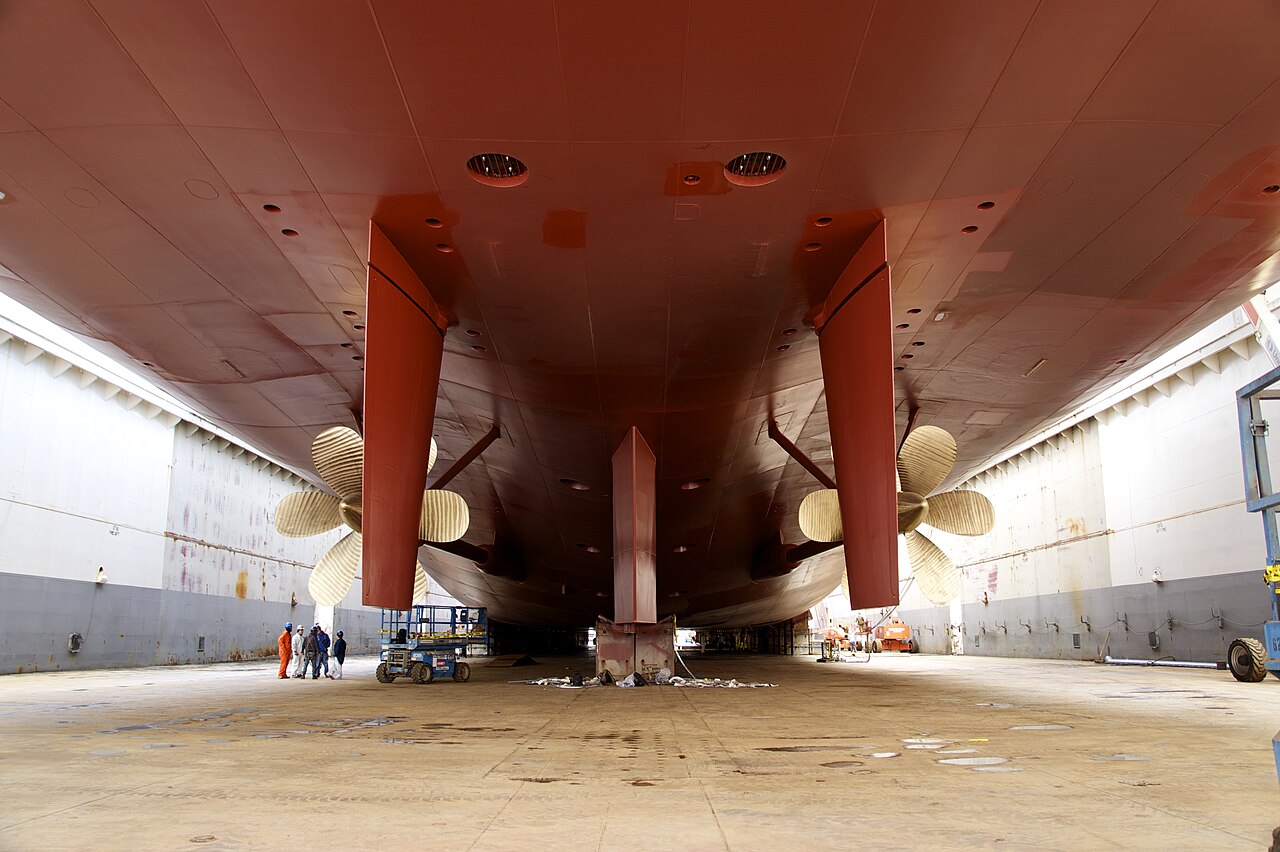
That changes when the Navy learns what a ship needs. Komodo lets planners map damaged areas before a vessel enters dry dock. Until now that assessment generally happened only after the maintenance period had begun, when changes to the work package are costly and slow.
| Feature | Traditional inspection | Gecko approach (company-stated) |
|---|---|---|
| Timing of damage assessment | After the maintenance cycle begins | Before the ship enters dry dock |
| Deck coatings | Crews dig into coatings to check them | Komodo scans coating health without removal |
| Inspection timeline | Months | Days |
| Speed at finding structural issues | Baseline | Up to 50 times faster |
| Savings | Not applicable | Up to $8 million per ship in repair costs |
The Readiness Goal Behind the Contract
The Navy’s stated goal is 80 percent fleet readiness by 2027. Chief of Naval Operations Adm. Daryl Caudle adopted the target from his predecessor, Adm. Lisa Franchetti, and has said reaching it requires shorter maintenance cycles, more spare parts, better training pipelines and targeted fleet upgrades.
Amphibious ships show the scale of the gap. A December 2024 Government Accountability Office report found readiness for Navy amphibious warfare ships fell to 46 percent between 2011 and 2020. Defense News reports the rate dropped to about 41 percent in August 2025, which contributed to a gap of more than five months in Marine Expeditionary Unit deployments that year.
Faster, more accurate inspection speaks directly to the maintenance-cycle problem. Whether it moves the readiness figure is untested at fleet scale, and that reading is analysis rather than a Navy statement.
Gecko Robotics Company Profile
| Item | Detail |
|---|---|
| Headquarters | Pittsburgh, Pennsylvania (North Side) |
| CEO | Jake Loosararian, co-founder |
| Platform | Cantilever, an AI-powered operating platform for inspection data |
| Robots | Robots that climb, fly and swim around critical infrastructure |
| Funding | $125 million Series D led by Cox Enterprises, valuing the company at $1.25 billion (mid-2025) |
| Earlier round | $173 million Series C in December 2023, valued at $633 million |
| Customers | Defense, energy and manufacturing |
Gecko Robotics Navy Contract FAQ
How much is the Gecko Robotics Navy contract worth?
As much as $300 million, up from a $54 million five-year contract signed about six months earlier.
What does Gecko Robotics do for the Navy?
It uses drones, wall-climbing robots and fixed sensors to inspect ship hulls, decks and welds, and AI tools to flag current and potential structural problems.
What is Komodo?
A Gecko machine system that scans deck coatings to assess their health without digging into them, so repairs can be planned before dry dock.
Is the $300 million guaranteed?
Not necessarily. It is a contract ceiling on an indefinite delivery vehicle, and actual spending depends on task orders.
Are Gecko’s savings figures verified?
They come from Gecko’s own release. The company says up to $8 million saved per ship and inspections up to 50 times faster.
- Defense News – “US Navy, Gecko Robotics surge AI maintenance contract to $300M” (October 20, 2026): defensenews.com
- Government Accountability Office – GAO-25-106728, Navy amphibious ship readiness (December 2024)
- Technical.ly – “Gecko Robotics raises $125M, unicorn valuation”: technical.ly
- Pittsburgh Magazine – Gecko Robotics company profile