HAL Hands Over Final Tejas Mk1 Trainers, First HTT-40s to IAF
Lead
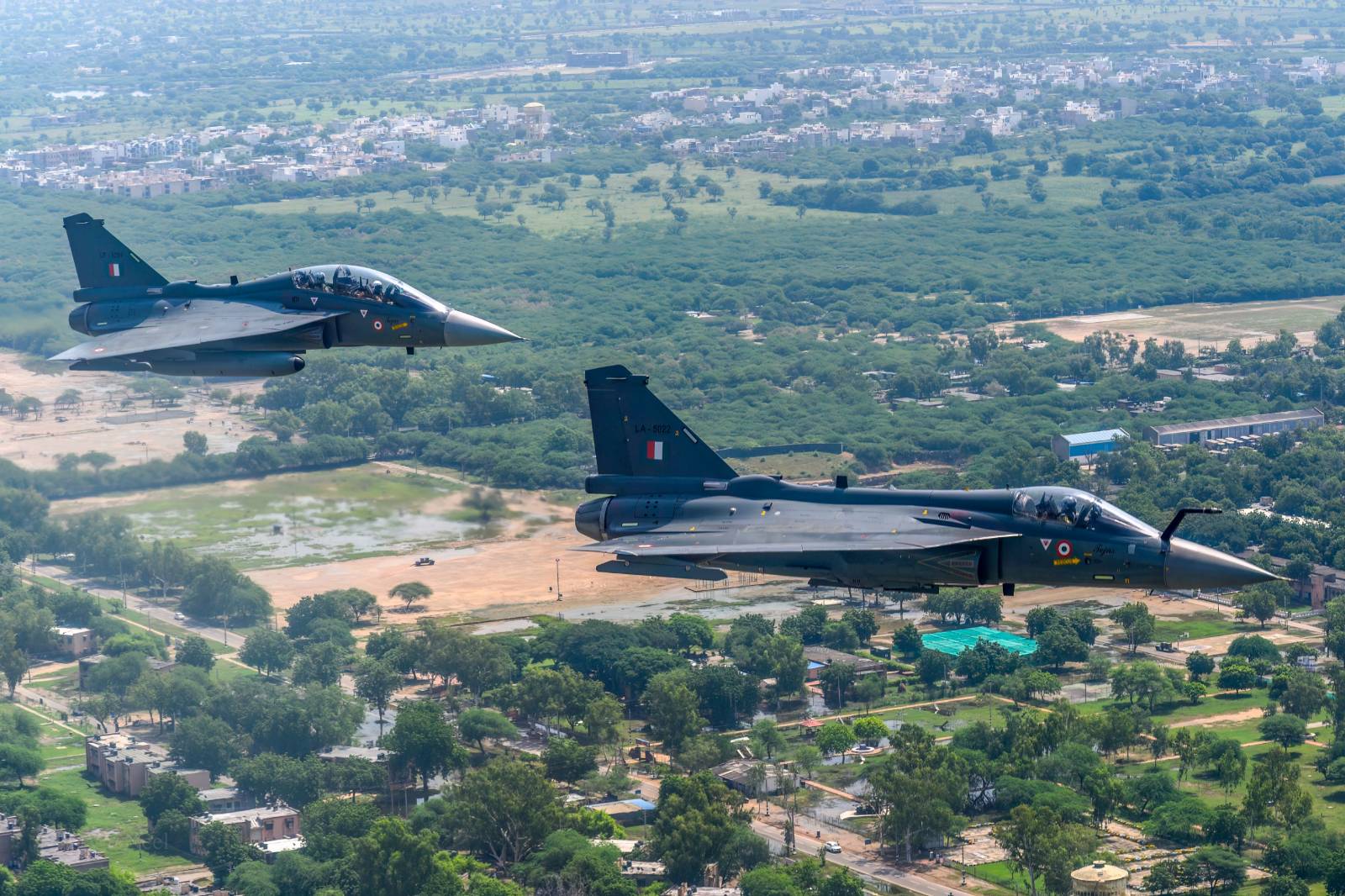
India’s Hindustan Aeronautics Limited (HAL) handed over the final two Tejas Mk1 twin-seat trainer aircraft to the Indian Air Force on September 18, closing out a fighter-trainer order placed nearly 16 years earlier. At the same Bengaluru ceremony, HAL delivered the first three HTT-40 basic trainer aircraft to the IAF under a separate 70-aircraft contract, and handed over four civil-certified Dhruv Advanced Light Helicopter Next Generation (ALH Dhruv NG) helicopters to state-run operator Pawan Hans Limited. Defence Minister Rajnath Singh, who attended the event, used the occasion to warn publicly that chronic program delays risk leaving Indian platforms technologically obsolete before they reach service — a pointed remark delivered as HAL’s newer Tejas Mk1A fighter, ordered in 2021, has yet to make a single delivery to the IAF.
What Happened
The September 18 ceremony in Bengaluru brought together Rajnath Singh, Civil Aviation Minister K. Rammohan Naidu, Chief of the Air Staff Air Chief Marshal Amar Preet Singh, and HAL Chairman and Managing Director Ravi K. for a formal handover of three separate indigenous aircraft programs. HAL delivered two LCA Tejas Mk1 twin-seat trainers configured to Final Operational Clearance (FOC) standard, completing the IAF’s 40-aircraft Tejas Mk1 order — split across a 2006 contract for 20 aircraft and a 2010 follow-on contract for 20 more. The second batch had originally been due by December 2016, meaning the final trainers arrived roughly a decade behind schedule.
Alongside the Tejas handover, HAL delivered the first three HTT-40 turboprop basic trainers to the IAF, marking the start of deliveries under a 70-aircraft, roughly Rs 6,828-crore (about $827 million) contract the government cleared to replace the air force’s ageing HPT-32 primary trainer fleet. Separately, four Dhruv NG helicopters — HAL’s civil-certified variant of the twin-engine Advanced Light Helicopter — were handed to Pawan Hans Limited, marking the type’s formal induction into India’s civil aviation segment.
Speaking at the ceremony, Singh said project delays “create capability gaps, escalate costs and even render technology obsolete,” and called for the armed forces and industry to “keep the timelines realistic.” The remark was widely read in Indian defense media as an implicit reference to the Tejas Mk1A program, whose deliveries have slipped for years behind a February 2024 target.
The Product/System
Tejas Mk1 twin-seat trainer: A tandem-seat, single-engine variant of HAL’s indigenous light combat aircraft, used for operational conversion training of IAF fighter pilots moving onto the Tejas fleet. The trainer retains combat capability but is primarily used to build pilot proficiency before single-seat squadron assignment. The type first flew in 2009, and the FOC-standard batch delivered this week represents the tail end of the original Tejas Mk1 production run, before HAL’s production lines shift fully to the improved Mk1A standard.
HTT-40: A turboprop, tandem-seat, fully aerobatic basic trainer designed by HAL to replace the IAF’s Swiss-origin Pilatus PC-7 Mk II and the retired HPT-32 for ab initio pilot training. It features an air-conditioned, pressurized cockpit, zero-zero ejection seats, hot refueling capability and modern avionics, and is powered by a Honeywell TPE331-12B turboprop engine. Engine-supply bottlenecks with Honeywell had previously delayed serial production before the first batch of three aircraft was readied this year.
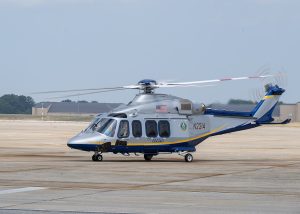
Dhruv NG (civil): A 5.5-tonne, twin-engine multi-role helicopter powered by twin Shakti 1H1C engines, featuring a glass cockpit and modern avionics, and certified by India’s Directorate General of Civil Aviation (DGCA) for civil operations, including offshore work. It is described by HAL as India’s first indigenously produced civil helicopter type to enter commercial service with a domestic operator.
Who Uses It
The Indian Air Force is the sole confirmed operator of both the Tejas Mk1 trainer and the HTT-40, both procured exclusively for IAF pilot training. Pawan Hans Limited, India’s state-owned helicopter operator, is the confirmed first civil operator of the Dhruv NG, which it will use largely to support offshore oil-and-gas transport and other commercial charter work; the military ALH Dhruv variant is separately in service with the Indian Army, Navy, Air Force and Coast Guard.
Export/Procurement History
The Tejas Mk1 trainer order traces to a 2006 contract for 20 IOC-standard aircraft (16 fighters, four trainers) and a 2010 follow-on for 20 FOC-standard aircraft (16 fighters, four trainers), together forming the 40-aircraft Mk1 program now complete. The HTT-40 order for 70 aircraft, worth roughly Rs 6,828 crore, was cleared by India’s Cabinet Committee on Security and covers airframes, simulators and associated training equipment, with deliveries scheduled to run over approximately six years. Neither the Tejas Mk1 trainer nor the HTT-40 has an export customer to date; both remain IAF-only programs, unlike the single-seat Tejas Mk1A, which HAL has separately marketed to buyers including Argentina and several Southeast Asian and African air forces.
Global Competitors
In the basic-trainer segment, the HTT-40 competes conceptually with aircraft such as Brazil’s Embraer T-27 Tucano successors, the Pilatus PC-7 Mk II it is intended to replace in Indian service, and Korea Aerospace Industries’ KT-1. In the light fighter-trainer category, the Tejas twin-seater sits alongside other single-engine light fighters offering trainer variants, including China’s JF-17B (operated by Pakistan and exported regionally) and South Korea’s FA-50, both of which have secured export orders in markets HAL is also targeting, including parts of Africa, Southeast Asia and Latin America.
Why It Matters
The handover closes out a program that had become a symbol of chronic delay in India’s indigenous fighter effort, even as it opens a new one: HAL must now show it can avoid repeating that pattern with the Mk1A. HAL’s own chairman has said the Mk1A program is “around 90-95 percent complete,” with 27 airframes built but held back by pending AESA radar integration and weapons-testing work, and by a General Electric F404 engine supply shortfall that Defense & Tech covered on September 8. Rajnath Singh’s on-record warning about “technology obsoletion” signals rising political pressure on HAL to compress that timeline before the Mk1A backlog — 83 aircraft ordered in 2021 for roughly Rs 48,000 crore — grows further behind schedule. The HTT-40 and Dhruv NG deliveries, by contrast, represent forward progress: the start of a long-awaited pilot-training fleet renewal, and the first commercial validation of India’s indigenous civil helicopter manufacturing.
What Happens Next
HAL says it expects to deliver 12 more GE F404 engines by December, which the company has linked to progress toward the first Mk1A deliveries; Indian defense media have reported that a formal first Mk1A handover is unlikely before the current Air Chief Marshal’s scheduled October retirement. HAL is expected to continue HTT-40 deliveries toward the 70-aircraft total over the coming years, while Pawan Hans is expected to bring its four Dhruv NG helicopters into commercial service in the near term.
FAQ
How many Tejas Mk1 trainers has the IAF now received in total?
The September 18 handover of two aircraft completed the IAF’s 40-aircraft Tejas Mk1 order, comprising 32 single-seat fighters and eight twin-seat trainers across two contracts signed in 2006 and 2010.
Is this the same as the Tejas Mk1A program?
No. The Mk1 trainers delivered this week are the final aircraft under the original, smaller Tejas Mk1 order. The separate Tejas Mk1A program — 83 aircraft ordered in 2021 — uses an upgraded airframe with AESA radar and has not yet delivered any aircraft to the IAF.
What is the HTT-40 replacing?
The HTT-40 is intended to replace the IAF’s retired HPT-32 Deepak basic trainer and supplement the Swiss-built Pilatus PC-7 Mk II fleet used for ab initio pilot training.
Who will operate the Dhruv NG helicopters delivered to Pawan Hans?
Pawan Hans Limited, India’s state-owned helicopter operator, will use the DGCA-certified Dhruv NG for commercial charter and offshore transport work; it is separate from the military ALH Dhruv already in service with India’s armed forces.
Has the Tejas Mk1A program been exported?
No export customer for the Tejas Mk1A has taken delivery to date, though HAL has pursued potential sales in Southeast Asia, Latin America and Africa. Neither the Tejas Mk1 trainer nor the HTT-40 has been offered for export.
Sources
- ANI, “Bengaluru: Rajnath Singh attends handover of Tejas Trainers, HTT-40s to IAF, Dhruv NG Helicopters to PHL,” September 18, 2026 — event confirmation, officials present, aircraft delivered. aninews.in
- The Print, “At Tejas trainer handover, Rajnath warns delays can lead to ‘technology obsoletion,'” September 18, 2026 — ministerial quotes, program-delay context. theprint.in
- The Print, “HAL hands over final two Tejas Mk1 trainers 16 years after IAF order, all eyes on Mk1A now,” September 18, 2026 — Mk1/Mk1A program timelines and figures. theprint.in
- India TV News, “HAL to hand over Tejas twin-seater trainers, HTT-40 and Dhruv-NG helicopters on September 18,” September 17, 2026 — advance event details. indiatvnews.com
- Social News XYZ, “Bengaluru: HAL hands over Tejas, HTT 40 trainers and Dhruv NG helicopters,” September 18, 2026 — delivered aircraft counts and officials. socialnews.xyz
- Airforce Technology, “India approves purchase of 70 HTT-40 aircraft from HAL” — HTT-40 contract value and scope. airforce-technology.com
- Defense & Tech, “GE Engine Shortfall Stalls India’s Tejas Mk1A Fighter Rollout,” September 8, 2026 — background on Mk1A engine-supply delay. defenseandtech.com