

Jet Trainer / Light Attack
Pilatus PC-7
The Pilatus PC-7 is a single-engine turboprop basic trainer built by Pilatus Aircraft at Stans, Switzerland, in service since 1978. About 618 original PC-7s were built before production moved to the PC-7 Mk II, and the type is used by air forces on several continents.
 Switzerland|Pilatus Aircraft
Overview
The PC-7 prototype first flew on 12 April 1966, and production deliveries began in 1978, with the Swiss Air Force and Burma among the first customers. It has a Pratt & Whitney Canada PT6A-25A turboprop of 550 shp, derated from about 700 shp, driving a three-blade propeller. Two crew sit in tandem on Martin-Baker ejection seats. Top speed is about 412 km/h, range about 1,200 km with ferry tanks and ceiling about 10,000 m. It is not a jet and not stealth.
The PC-7 Mk II, built from 1994, uses the PC-9 airframe with a 700 shp PT6A-25C and a glass cockpit. Operators include Switzerland, Austria, India with 75 Mk II since 2013, Botswana, Chile, Mexico, Myanmar, Oman, the UAE, South Africa, Uruguay, Angola and Malaysia. Iran and Iraq received aircraft in the 1980s, with current status uncertain. Switzerland has replaced some with PC-21s, and India is supplementing its fleet with the HAL HTT-40. Price is roughly 2 to 4 million US dollars, an industry estimate.
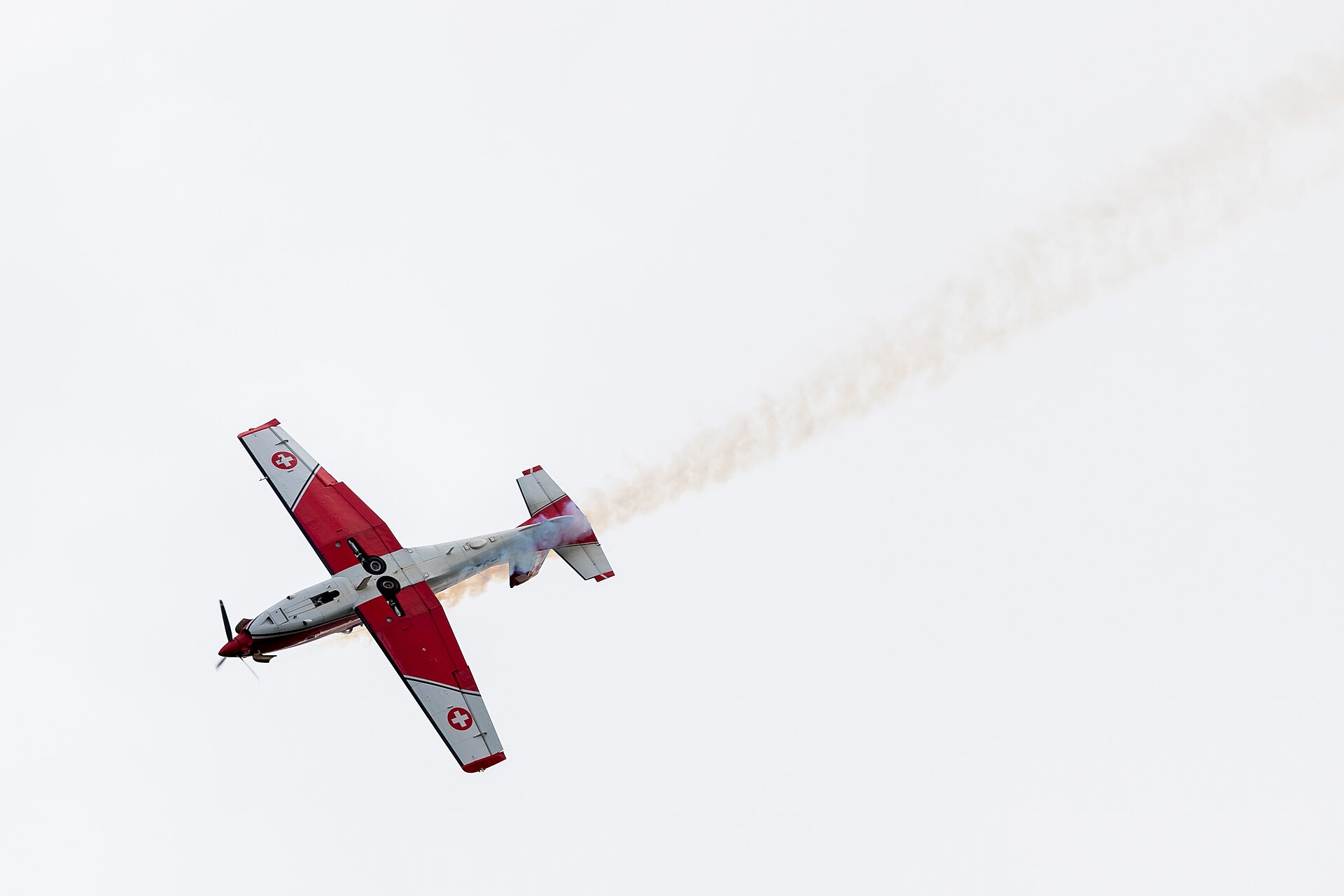
Key Specifications
Variants
The PC-7 is the original turboprop trainer, with about 618 built.
The PC-7 Mk II uses the PC-9 airframe with a more powerful engine and a glass cockpit.
The PC-7 Mk II M is an alternate designation for the upgraded Mk II.
Operators
Switzerland Austria
 India
India Botswana
 Chile
Chile Mexico
 Myanmar (Burma)
 Oman
Oman UAE
UAE South Africa
 Uruguay
 Malaysia
 Angola
 Iran
Iran Iraq
IraqFrequently Asked Questions
How much does the Pilatus PC-7 cost?
The Pilatus PC-7 costs roughly 2 to 4 million US dollars per aircraft, depending on version and equipment. That is an industry estimate, not an official list price.
How fast is the Pilatus PC-7?
The Pilatus PC-7 has a maximum speed of about 412 km/h. Its range is about 1,200 km with ferry tanks and its ceiling is about 10,000 m.
Which countries use the PC-7?
The Pilatus PC-7 is used by Switzerland, Austria, India, Botswana, Chile, Mexico, Myanmar, Oman, the UAE, South Africa, Uruguay, Angola and Malaysia. Iran and Iraq received earlier batches in the 1980s.
How many PC-7 were built?
About 618 original Pilatus PC-7 aircraft were built before production moved to the PC-7 Mk II from 1994. The line then continued with the larger PC-9 and PC-21.
PC-7 vs T-6 Texan II: what is the difference?
The Pilatus PC-7 is a lighter trainer with a 550 shp engine, while the Beechcraft T-6 Texan II is derived from the larger PC-9 and has a roughly 1,100 shp engine. The T-6 is faster at about 585 km/h.
Does India use the PC-7?
India uses 75 Pilatus PC-7 Mk II trainers, delivered from 2013 as the Air Force basic trainer. They are being supplemented by the indigenous HAL HTT-40.