Sudan Drone Strikes Kill 100+ in War’s Deadliest 48-Hour Wave

Lead: A wave of drone strikes across Sudan killed more than 100 people in roughly 48 hours over October 18-19, 2026, in what residents, medics and AFP described as one of the deadliest single stretches of aerial violence since the civil war began in April 2023. The worst single strike hit a transport hub in Al-Dibab, West Kordofan, killing about 80 people, mostly commuters waiting for onward travel after a market day. Separate strikes hit Nyala in South Darfur and a house near Khartoum International Airport, while Sudanese army air defenses said they intercepted Rapid Support Forces (RSF) drones targeting dam infrastructure in Gedaref state. The wave underscores how cheap, long-range drones supplied by multiple foreign states have turned Sudan’s 30-month civil war into one of the world’s most intensive theaters of drone warfare, with civilian gathering points increasingly caught in the crossfire.
What Happened
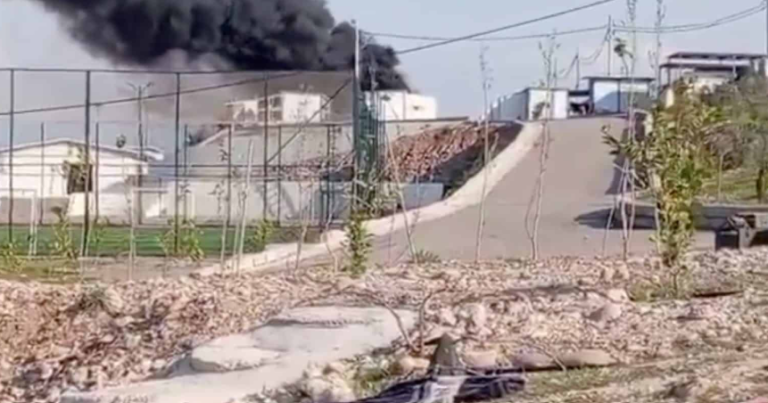
According to AFP reporting carried by regional outlets, a drone struck a market-day transport hub in Al-Dibab, West Kordofan state, on the evening of Sunday, October 18. A witness, Ahmed Abakar Wadi, who helped bury the dead, said the drone “struck once, and then came back 10 minutes later and struck again.” Residents and medical workers said roughly 80 people were killed, with at least 50 bodies recovered at the scene; of 47 wounded taken to Al-Mujlad, 30 later died of their injuries. The RSF’s self-declared parallel administration, known as Tasis, together with the rights group Emergency Lawyers, accused the Sudanese army of carrying out the strike. The army had not publicly responded as of this writing, and the claim has not been independently verified.
Early on Monday, October 19, a separate drone strike hit Nyala in South Darfur, killing 17 people, including seven RSF officers, and wounding 23; two homes were destroyed, according to the same AFP account. Responsibility for that strike was not stated in available reporting. That same morning, a drone hit a house in the Imtidad Nasser neighborhood east of Khartoum International Airport, killing four people, including three children between the ages of two and six. An army official said air defenses intercepted RSF drones aimed at the airport and surrounding areas, though it was not explicitly stated whether the strike on the house was one of the intercepted drones or a separate projectile that got through.
Sudan Tribune additionally reported that army air defenses intercepted RSF “suicide drones” aimed at the Upper Atbara and Setit dam complex in Gedaref state and the Khashm El-Girba dam in neighboring Kassala, as well as at the 2nd Infantry Division headquarters in Gedaref city, on October 18. It was the second such attack on the eastern dam sites in recent weeks, following a reported strike on September 15. No casualties or major damage were reported from the dam-area interceptions. Taken together, AFP’s wider tally put total deaths from the drone wave at more than 100 people since the preceding Sunday, across Khartoum and two western regions.
The Product/System
None of the outlets covering the October 18-19 wave specified which drone types were used in the Al-Dibab, Nyala or Khartoum house strikes. But the broader arsenal both sides have assembled over the past year is well documented. The RSF has relied heavily on the FH-95, a roughly one-ton multifunctional UAV built by Aerospace Times Feihong Technology Corporation, a subsidiary of the state-owned China Aerospace Science and Technology Corporation (CASC). The FH-95 is marketed for electronic warfare, reconnaissance and strike roles, with a payload of around 200-250 kg and an endurance variously reported at 12 to 24 hours depending on configuration. A Yale Humanitarian Research Lab analysis previously identified aircraft matching the FH-95’s shape and dimensions at Nyala airport, the same city hit in this week’s wave, though Beijing has not confirmed any export contract and the drone’s presence in Sudan has not been officially acknowledged by any government.
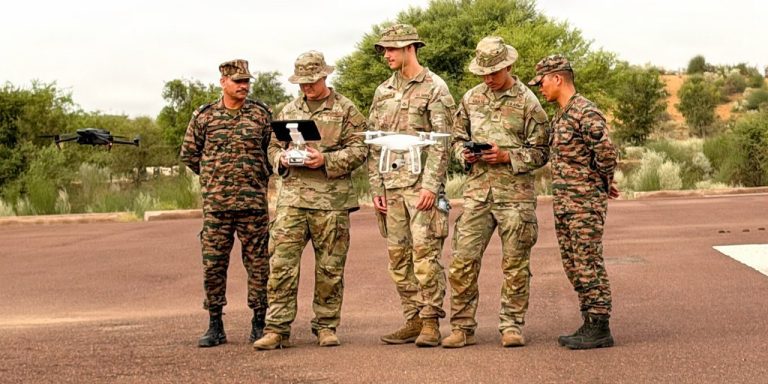
The Sudanese army, for its part, has built a mixed fleet drawn from Pakistan, Turkey and Iran. Sudan Tribune and other regional sources have reported that Pakistan’s National Defence Complex and National Engineering and Scientific Commission (NESCOM) delivered more than 40 Shahpar-series drones to the Sudanese Armed Forces (SAF) in batches beginning in July 2026, alongside Mohafiz armored vehicles. The army’s drone inventory reportedly also includes Turkish-made Bayraktar Akıncı heavy combat drones and Iranian Mohajer-series UAVs, though procurement figures from competing reports range widely, from roughly 40 to more than 200 airframes, and none of the governments involved has confirmed contract terms publicly.
Who Uses It
Attribution in Sudan’s drone war is contested and rarely independently confirmed. The FH-95 has been documented, with moderate confidence, only in RSF-controlled areas and at airfields the paramilitary group has used, such as Nyala. The Shahpar, Akıncı and Mohajer types are reported, based on military and diplomatic sources, to be operated by the Sudanese Armed Forces. Neither Beijing, Islamabad, Ankara nor Tehran has issued an official statement confirming these transfers, and this article treats all operator claims as attributed to named or anonymous sources rather than as confirmed fact.
Export/Procurement History
China has not published an export license or sale notice for the FH-95, and its appearance in Sudan — like similar Chinese drone sightings in other African conflicts — rests on open-source imagery analysis rather than official disclosure. Pakistan’s Shahpar transfers to Sudan were first reported in mid-2025 and have continued in tranches through 2026, according to Sudan Tribune’s military sources, with Qatar and Saudi Arabia named in some reports as possible financial backers, though neither Gulf state has commented. Earlier reporting documented repeated FH-95 shootdown claims by the Sudanese army through September 2026, while a parallel UN fact-finding effort has examined the broader network of foreign drones and alleged foreign personnel involved in the conflict.
Global Competitors
Sudan has effectively become an open proving ground for mid-tier drone exporters competing for African and Middle Eastern market share: China’s CASC/Feihong family, Turkey’s Baykar, Pakistan’s NESCOM/Global Industrial and Defence Solutions, and Iran’s HESA/Qods Aviation all have systems reportedly in theater simultaneously, a concentration of competing suppliers rarely seen in a single African conflict. Sudan’s drone war has also spilled into neighboring Ethiopia’s Blue Nile frontier, drawing in a regional dimension beyond the two main combatants.
Why It Matters
The October 18-19 toll is significant less for any single new weapon system than for what it signals about the trajectory of drone use in Sudan: strikes are increasingly hitting crowded civilian infrastructure — markets, transport hubs, residential neighborhoods — rather than purely military targets. The UN has reported more than 1,100 people killed in drone attacks across Sudan in just the first half of 2026, and aid agencies already describe the conflict, which has killed an estimated 200,000 people since April 2023, as the world’s largest hunger and displacement crisis. The proliferation of medium-altitude, long-endurance drones from at least four foreign suppliers, with no government publicly acknowledging its exports, also illustrates a wider accountability gap: combatants in low-intensity but high-casualty wars can now field strike capability once limited to state air forces, while sourcing remains deniable and civilian harm goes largely uninvestigated.
What Happens Next
Rights groups including Emergency Lawyers have called for both the army and the RSF to halt drone attacks on populated areas, but neither side has signaled a change in tactics. A UN arms embargo deadline affecting the Darfur region has already come and gone without a visible reduction in drone activity, and Kordofan — an oil-producing region both sides are contesting — is likely to remain a focal point as the army presses to reverse RSF territorial gains from 2025. Independent verification of the October 18-19 death tolls and of responsibility for the Al-Dibab and Khartoum strikes will depend on access that has so far been difficult for journalists and investigators to obtain.
FAQ
How many people were killed in Sudan’s drone strikes on October 18-19, 2026?
AFP reporting, citing residents, medics and military sources, put the combined toll at more than 100 people across strikes in Al-Dibab (West Kordofan), Nyala (South Darfur) and Khartoum, with the Al-Dibab transport-hub strike alone killing approximately 80 people.
Who was responsible for the Al-Dibab strike?
The RSF’s self-declared Tasis administration and the rights group Emergency Lawyers accused the Sudanese army. The army had not responded publicly, and the claim has not been independently verified.
What drones have been used in Sudan’s civil war?
Reported systems include China’s CASC/Feihong FH-95 (associated with the RSF), and Pakistani Shahpar, Turkish Bayraktar Akıncı and Iranian Mohajer-series drones (reported in Sudanese army service). None of the supplier governments has officially confirmed these transfers.
Why did RSF drones target dams in Gedaref and Kassala?
Sudanese army sources said air defenses intercepted RSF drones aimed at the Upper Atbara, Setit and Khashm El-Girba dam complexes on October 18, the second such attack on the sites in recent weeks. No official reason for targeting the dams has been confirmed, though they sit near army positions including the 2nd Infantry Division headquarters in Gedaref.
How many people has Sudan’s civil war killed overall?
Aid organizations estimate the war, which began in April 2023, has killed more than 200,000 people and triggered what they describe as the world’s largest hunger and displacement crisis.
Sources
- AFP, via Citizen Digital, “Drone strikes across Sudan kill more than 100,” published October 19, 2026 — https://citizen.digital/article/drone-strikes-across-sudan-kill-more-than-100-n392353 — primary source for death tolls, locations and quotes.
- Dhaka Tribune (AFP), “80 killed in drone strike on transport hub in southern Sudan” — https://www.dhakatribune.com/world/africa/422494/80-killed-in-drone-strike-on-transport-hub-in — corroborates Al-Dibab toll.
- L’Orient-Le Jour (AFP), “80 killed in drone strike on transport hub in southern Sudan” — https://today.lorientlejour.com/article/1551355/80-killed-in-drone-strike-on-transport-hub-in-southern-sudan.html — corroborates Al-Dibab toll and attribution dispute.
- Sudan Tribune, “Sudan army repels RSF drone strikes in east, military sources say,” October 2026 — https://sudantribune.com/article/320103 — source for Gedaref/Kassala dam interception claims.
- Sudan Tribune, “Three children killed as army intercepts RSF drones near Khartoum airport” — https://sudantribune.com/article/320162 — source for Khartoum strike details.
- Yale Humanitarian Research Lab / Army Recognition / The Defense Post, background reporting on the FH-95 UAV’s manufacturer, specifications and suspected Sudan deployment.
- Sudan Tribune and Capital Ethiopia, prior reporting on Pakistani Shahpar and Mohafiz deliveries to the Sudanese Armed Forces.