Super Sukhoi Upgrade Explained: How India Plans to Modernise Its Su-30MKI Fighter Fleet
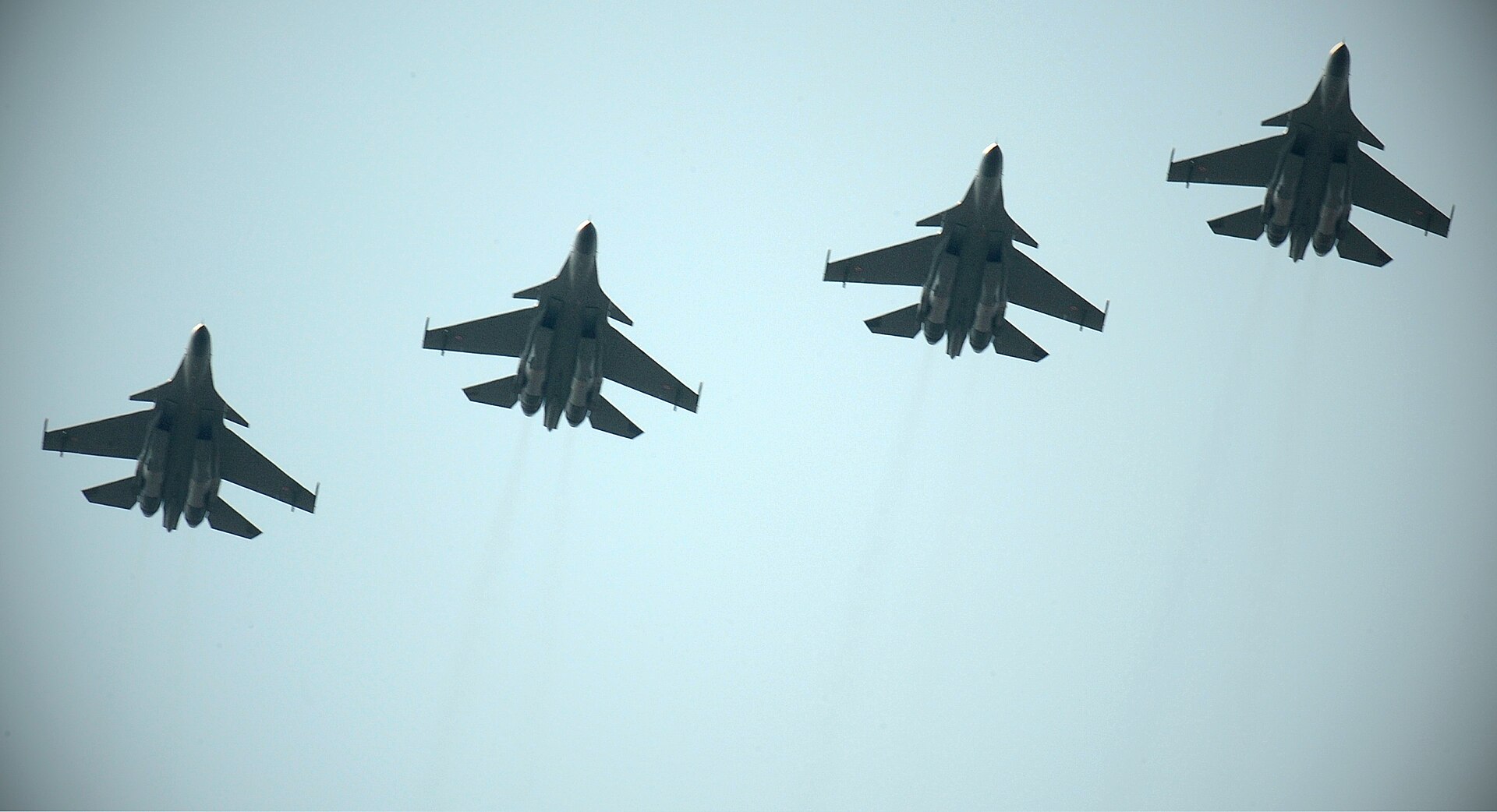

The Su-30MKI is the backbone of the Indian Air Force, with around 260 in service. But the first of these Russian-designed jets entered service in 2002, and their radars and avionics are falling behind those of Chinese and Pakistani fighters. India’s answer is the “Super Sukhoi” programme, one of the largest fighter upgrades ever planned.
- Upgrade programme for the Indian Air Force’s Su-30MKI fleet
- First phase expected to cover 84 jets, with more to follow
- Estimated cost of around Rs 60,000-65,000 crore for the first phase
- Key features: Virupaksha GaN AESA radar, new mission computer, glass cockpit, EW suite
- Led by HAL, with support from Russia’s original designers
Why India needs the upgrade
The Su-30MKI is a large, twin-engine air superiority fighter with thrust-vectoring engines, licence-built by Hindustan Aeronautics Limited (HAL) at Nashik. It remains a formidable aircraft, but its N011M Bars passive electronically scanned radar is now dated. China’s J-16 and J-20 and Pakistan’s J-10C carry modern AESA radars and long-range missiles such as the PL-15. With fighter squadron numbers already low, India cannot afford to let its most numerous jet fall behind.
What the upgrade includes
The centrepiece is the Virupaksha, an Indian-developed AESA radar using gallium nitride technology, expected to offer much longer detection range and better resistance to jamming. The jets will also receive a new mission computer, a modern glass cockpit, an upgraded electronic warfare suite and improved self-protection. Many of these systems come from DRDO and Indian industry.
New weapons
The Super Sukhoi will be cleared to carry a wider range of Indian missiles and bombs, including the Astra Mk1 and Mk2 beyond-visual-range air-to-air missiles, the air-launched BrahMos, the Rudram anti-radiation missiles and indigenous glide weapons. This reduces dependence on Russian munitions and makes supply chains more secure.
Cost and approvals
Indian media reports put the first phase at around 84 aircraft and Rs 60,000-65,000 crore. The Ministry of Defence has been seeking final clearance from the Cabinet Committee on Security. Separately, HAL received an order in 2024 for 240 AL-31FP engines to keep the fleet flying, and an order for 12 additional Su-30MKIs to replace aircraft lost in accidents.
Timeline
Once approved, HAL will need to complete design and testing before upgrading aircraft in batches. Most estimates suggest the first upgraded jets could return to squadrons several years after contract signature, with the full programme running well into the 2030s.
Verdict
The Super Sukhoi upgrade is the fastest way for India to add modern capability to a large part of its fighter fleet while the Tejas Mk2, AMCA and any new foreign fighter are still years away. Its success will depend on how quickly HAL can deliver and how well Indian-made radars and electronics perform.
Featured image: U.S. Air Force photo/ Airman 1st Class Stephany Miller / Public domain, via Wikimedia Commons