Fighter Aircraft
Su-30MKI
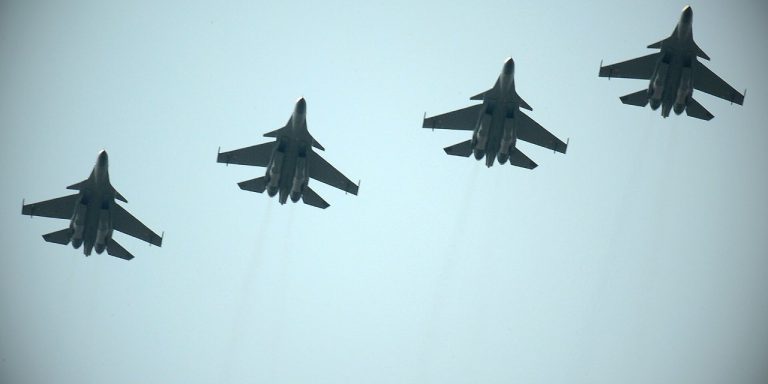
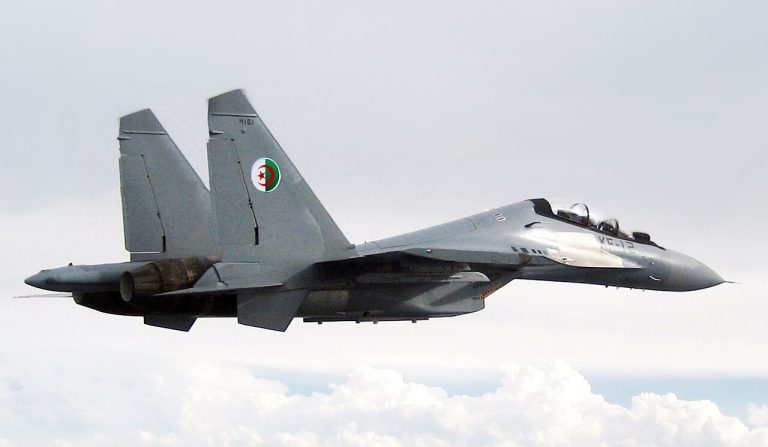
The Su-30MKI is a twin-engine, two-seat heavy multirole fighter designed by Russia’s Sukhoi and licence-built in India by Hindustan Aeronautics Ltd (HAL). With around 260 in service, it is the backbone of the Indian Air Force and the most advanced member of the Su-30 family when it was introduced.
 Russia|Sukhoi & HAL
Overview
The Su-30 grew out of the Su-27UB two-seat trainer, and the family first flew on 31 December 1989. India’s Su-30MKI added AL-31FP engines with thrust-vectoring nozzles, canard foresurfaces and the N011M Bars passive electronically scanned array radar, combined with Indian, French and Israeli avionics. It entered IAF service on 27 September 2002. The jet reaches about Mach 2 at altitude, has a 3,000 km range on internal fuel and carries 8,130 kg of weapons on 12 hardpoints, from R-77 and Astra missiles to the BrahMos-A cruise missile.
More than 630 Su-30 family aircraft had been built by 2019. About 272 Su-30MKIs were produced for India, mostly at HAL Nashik, and New Delhi ordered 12 more in December 2024 while planning a ‘Super Sukhoi’ upgrade with the indigenous Virupaksha AESA radar. Russia flies the Su-30SM and SM2, and other versions serve with China, Algeria, Vietnam, Malaysia, Kazakhstan and others. Russian Su-30SMs have flown combat missions in Syria and Ukraine, and Indian Su-30MKIs took part in the May 2025 clashes with Pakistan, where claims from both sides remain disputed.

Key Specifications
Variants
Su-30MK: the export-oriented multirole demonstrator standard that first flew in 1997 and led to customer versions such as the Su-30MKK, MKA and MKM.
Su-30MKI: India’s thrust-vectoring, canard-equipped version with the Bars PESA radar, licence-built by HAL and in IAF service since 2002.
Su-30SM2: the latest Russian version, introduced from 2023 with Su-35-type AL-41F1S engines and the Irbis-E radar.
Operators
Russia India
 China
 Algeria
 Malaysia
 Vietnam
 Indonesia
 Venezuela
 Uganda
 Angola
 Kazakhstan
 Belarus
 Armenia
 Myanmar (Burma)
 Mongolia
 Ethiopia
Frequently Asked Questions
How much does a Su-30MKI cost?
A Su-30MKI is commonly estimated at roughly US$50–70 million per aircraft for earlier batches. India’s December 2024 order for 12 jets, worth about ₹13,500 crore, implies a higher per-aircraft figure because the package also covers support.
How fast is the Su-30MKI?
The Su-30MKI has a top speed of about 2,120 km/h, or Mach 2, at high altitude. It has a range of about 3,000 km on internal fuel, roughly 8,000 km with two aerial refuellings, and a service ceiling of 17,300 m.
How many Su-30MKI does India have?
India operates around 260 Su-30MKI fighters, making it the largest Su-30 user and the backbone of the Indian Air Force. About 272 were built for India, most by HAL, and 12 more were ordered from HAL Nashik in December 2024.
Which countries use the Su-30?
The Su-30 is flown by about 16 countries, led by India, Russia, China and Algeria. Other operators include Vietnam, Kazakhstan, Malaysia, Venezuela, Belarus, Indonesia, Angola, Uganda, Myanmar, Armenia, Mongolia and Ethiopia. Algeria, with about 59 Su-30MKA, is the largest Arab user.
Su-30MKI vs Rafale: which is better?
The two fighters suit different roles. The Su-30MKI is larger, with longer range and a heavier payload, while the Rafale is a newer 4.5-generation design with an AESA radar, a smaller radar signature and more modern sensors and electronic warfare. India operates both types.
Is the Su-30 a stealth fighter?
No, the Su-30 is not a stealth fighter. It is a 4th/4.5-generation design with a large radar signature that carries its weapons externally. Its strengths are range, payload and manoeuvrability; Russia’s stealth fighter is the separate Su-57.