Algeria Deploys Su-30 Jets to Niger After Coup Attempt
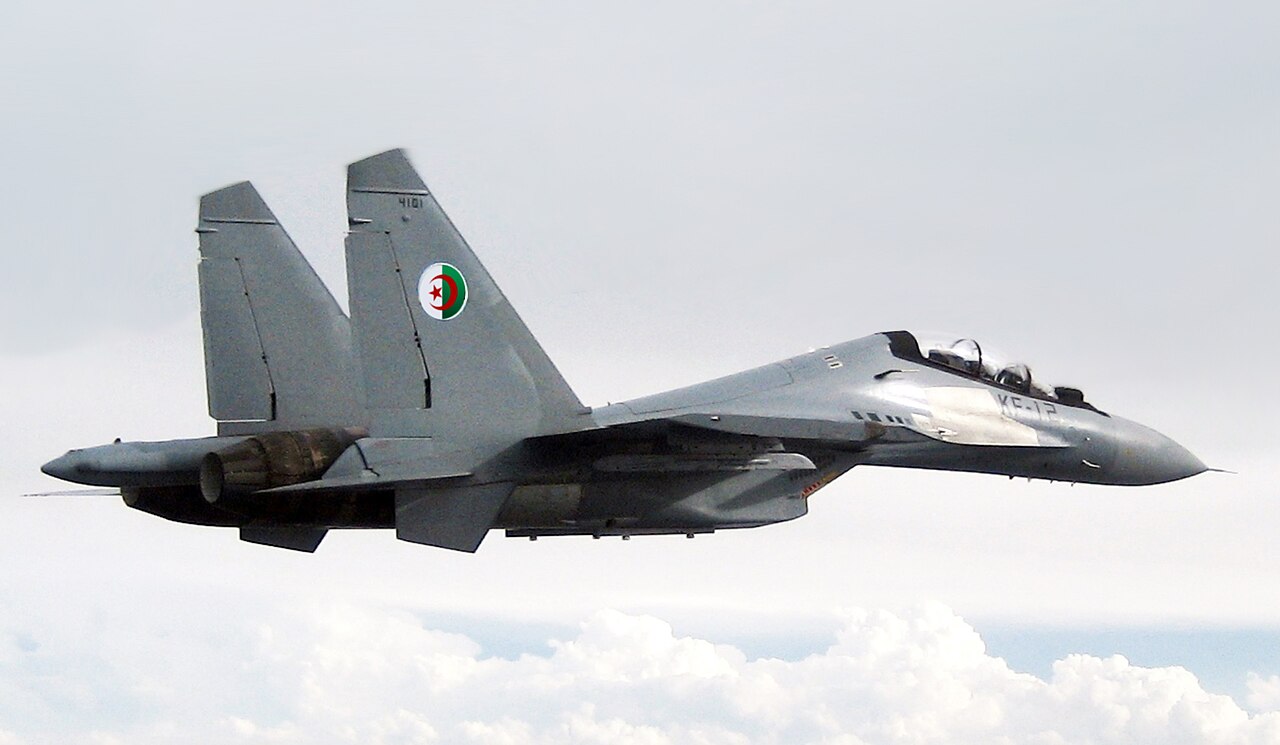
Algeria has flown fighter jets abroad for the first time since 1973, deploying four Su-30MKA multirole aircraft and a refueling tanker to Niger in the days after a failed mutiny shook Niamey. The move, confirmed by Algeria’s Ministry of National Defense, marks a rare and closely watched break from Algiers’ long-standing non-interventionist posture and signals a deepening military relationship between the two Sahel neighbors barely a year after a diplomatic rupture between them.
What Happened
On the night of August 28–29, 2026, soldiers identifying themselves as the “Armed Forces for the Restoration of the Fatherland” (FARP) — reportedly drawn in part from units that had taken heavy losses fighting jihadist groups in Niger’s border regions — stormed a military base adjacent to Niamey’s Diori Hamani International Airport and pushed toward the presidential palace. At least three members of the Presidential Guard were killed in the fighting, according to regional reporting. Loyalist forces, which several outlets say were assisted by personnel from Russia’s Africa Corps already present in the country, put down the mutiny by August 30. Dozens of the mutineers were arrested, and Niger’s ruling general, Abdourahamane Tiani, remained in power. Niamey has not published an official timeline or casualty count, and the extent of Africa Corps involvement has not been officially confirmed by either Moscow or Niamey.
Niger’s government asked Algeria for military support in the mutiny’s aftermath. On August 30, two patrols of Algerian Su-30MKA fighters — four aircraft in total — flew the roughly 2,600-kilometer route from Algiers to Niamey, escorted by an Il-78 aerial tanker and trailed by an Il-76 transport aircraft. The formation landed at Air Base 101, which sits inside the Diori Hamani airport perimeter where the mutiny had erupted days earlier. Niger’s Prime Minister, Ali Mahamane Lamine Zeine, met the aircraft on arrival.
Algeria’s Ministry of National Defense described the mission as support for “the Nigerien army” against “an attempt to destabilize the brotherly nation,” carried out on the instructions of President Abdelmadjid Tebboune and ordered through army chief of staff Lieutenant General Said Chengriha. Algiers has not disclosed how long the deployment is intended to last, what rules of engagement the jets are operating under, or whether the aircraft have flown any operational sorties since arriving.
The Product/System
The Su-30MKA is a twin-seat, twin-engine heavyweight variant of Sukhoi’s Flanker family built specifically for Algeria under contracts signed in the mid-2000s, with deliveries beginning in 2007 and continuing in batches through 2020. It combines the N011M electronically scanned array radar, AL-31FP engines with thrust-vectoring nozzles, and canard surfaces derived from the Su-35 program, giving it long range and high maneuverability by the standards of fourth-generation-plus fighters. Algeria’s air force fields one of the largest Su-30 fleets outside Russia and India, with estimates from open-source trackers ranging from roughly 60 to more than 70 airframes.
Who Uses It
The Su-30MKA designation is unique to Algeria; it is a distinct configuration from India’s Su-30MKI, Malaysia’s Su-30MKM, or China’s Su-30MKK/MK2. Algeria is therefore the sole confirmed operator of this specific variant, and the aircraft has formed the backbone of the Algerian Air Force’s heavy fighter fleet for nearly two decades.
Export/Procurement History
Algeria’s Su-30MKA fleet stems from Russian arms packages negotiated in 2006, with follow-on orders keeping the line active into the 2020s even as Moscow’s own air force absorbs wartime losses over Ukraine. Algiers has continued to diversify its Russian-sourced airpower in parallel: a 2019 contract reportedly bundled Su-34 strike aircraft and Su-35 air-superiority fighters, with Su-35 deliveries beginning in 2025 and additional Su-34s arriving through 2026. Several specialist outlets have also reported, based on satellite imagery and unconfirmed leaks rather than official disclosure, that Algeria may be the first export customer for Russia’s Su-57E stealth fighter, which Rosoboronexport has been marketing heavily this year as part of a broader $13 billion export push; Moscow and Algiers have not officially confirmed any Su-57E delivery, and that claim should be treated as unverified pending independent confirmation.
Global Competitors
Algeria evaluated the French Rafale as a potential alternative to further Sukhoi purchases but opted to continue investing in the Su-30MKA and its Russian-built successors, judging the type’s payload, range, and radar performance to outweigh the cost of sustaining a Russian-standard fleet. That choice has left Algeria as something of an outlier in North Africa, where Egypt and Morocco have built mixed fleets incorporating French, American, and increasingly Chinese hardware.
Why It Matters
The deployment is being read regionally as more significant than the four jets themselves. Algeria’s 1976 constitution and its long practice of non-intervention had made overseas combat deployments rare; multiple regional outlets describe this as Algeria’s first dispatch of combat aircraft beyond its borders since it sent jets to support Egypt during the 1973 Arab-Israeli war. Algeria’s 2020 constitutional revision opened a conditional path for deploying forces abroad, though accounts differ on whether this specific mission was carried out under that provision or under a narrower bilateral-cooperation framework, and no parliamentary authorization has been publicly disclosed. Either way, the willingness to fly jets into a country where Russian-aligned Africa Corps personnel are already operating suggests Algiers is prepared to act more assertively to prevent instability on its southern flank, particularly as jihadist violence continues to strain Sahelian militaries already leaning on foreign-supplied airpower, from Chinese-made strike drones in neighboring Chad to Turkish and Russian hardware elsewhere in the region.
The timing is also notable given the state of Algeria-Niger relations. The two countries plunged into a diplomatic crisis in April 2025 after Algeria shot down a drone that had crossed from Malian airspace, prompting Niger, Mali, and Burkina Faso to withdraw their ambassadors from Algiers. Ties had only begun rebuilding in mid-2026 through economic channels — including energy agreements between Sonatrach subsidiaries and Niger’s SONIDEP, the commissioning of a 40-megawatt power plant at Gorou Banda, and groundbreaking on Algeria’s segment of the Trans-Saharan Gas Pipeline — before the coup attempt gave Algiers an opening to re-engage militarily as well.
What Happens Next
Neither government has said how long the Su-30MKA detachment will remain at Air Base 101 or whether it will be reinforced or drawn down. Analysts will be watching for whether Algeria formalizes a longer-term security arrangement with Niamey, how the deployment intersects with Russia’s existing Africa Corps presence in the country, and whether other Sahelian governments facing similar internal threats look to Algeria — rather than only to Moscow or Ankara — for military backing.
FAQ
Why did Algeria send fighter jets to Niger?
Niger’s government requested support after a failed mutiny by soldiers calling themselves the “Armed Forces for the Restoration of the Fatherland” attacked a military base and moved toward the presidential palace in Niamey on August 28–29, 2026. Algeria’s Ministry of National Defense described the response as support for the Nigerien army against a destabilization attempt.
What aircraft did Algeria deploy?
Four Su-30MKA fighter jets, escorted by an Il-78 aerial refueling tanker and an Il-76 transport aircraft, flew from Algiers to Niamey’s Air Base 101 on August 30, 2026.
Is this really Algeria’s first overseas military deployment?
It is widely described as Algeria’s first deployment of combat aircraft abroad since 1973, when Algerian jets supported Egypt in the October War. Algeria has had smaller forces abroad in earlier decades, but a combat-aircraft deployment of this kind is considered rare and historically significant.
Did Russia’s Africa Corps play a role in defeating the coup attempt?
Several regional and specialist outlets report that Russia’s Africa Corps, already present in Niger, assisted loyalist forces in repelling the mutineers. This has not been officially confirmed by the Russian or Nigerien governments.
Has Algeria acquired the Su-57E stealth fighter?
Some open-source and specialist outlets have reported, citing satellite imagery and unofficial leaks, that Algeria may be the first export customer for Russia’s Su-57E. Neither Moscow nor Algiers has officially confirmed this, and the claim remains unverified.
Sources
- African Arguments, “Beyond the Fighter Jets: What Algeria’s Deployment to Niger Really Signals,” September 7, 2026 — analysis of the deployment’s strategic and constitutional significance.
- AeroTime, “Algeria sends four Su-30 fighters and tanker to Niger after coup attempt,” August 31, 2026 — deployment details and official Algerian MoD statement.
- The Rio Times, “Algeria Deploys Fighter Jets to Niger After Coup Attempt,” September 3, 2026 — historical comparison and coup-attempt casualty details.
- MilitaryWatch Magazine, “How Capable are the Su-30MKA Fighters Algeria Flew to Support Niger Against the West?,” August 31, 2026 — Su-30MKA technical background and fleet size.
- Agenzia Fides, “AFRICA/NIGER – Algeria sends fighter jets to Niger after a failed military coup” — independent confirmation of deployment and context.