Type 214 Submarine: Specs, AIP Fuel Cells and Operators from Greece to South Korea and Türkiye
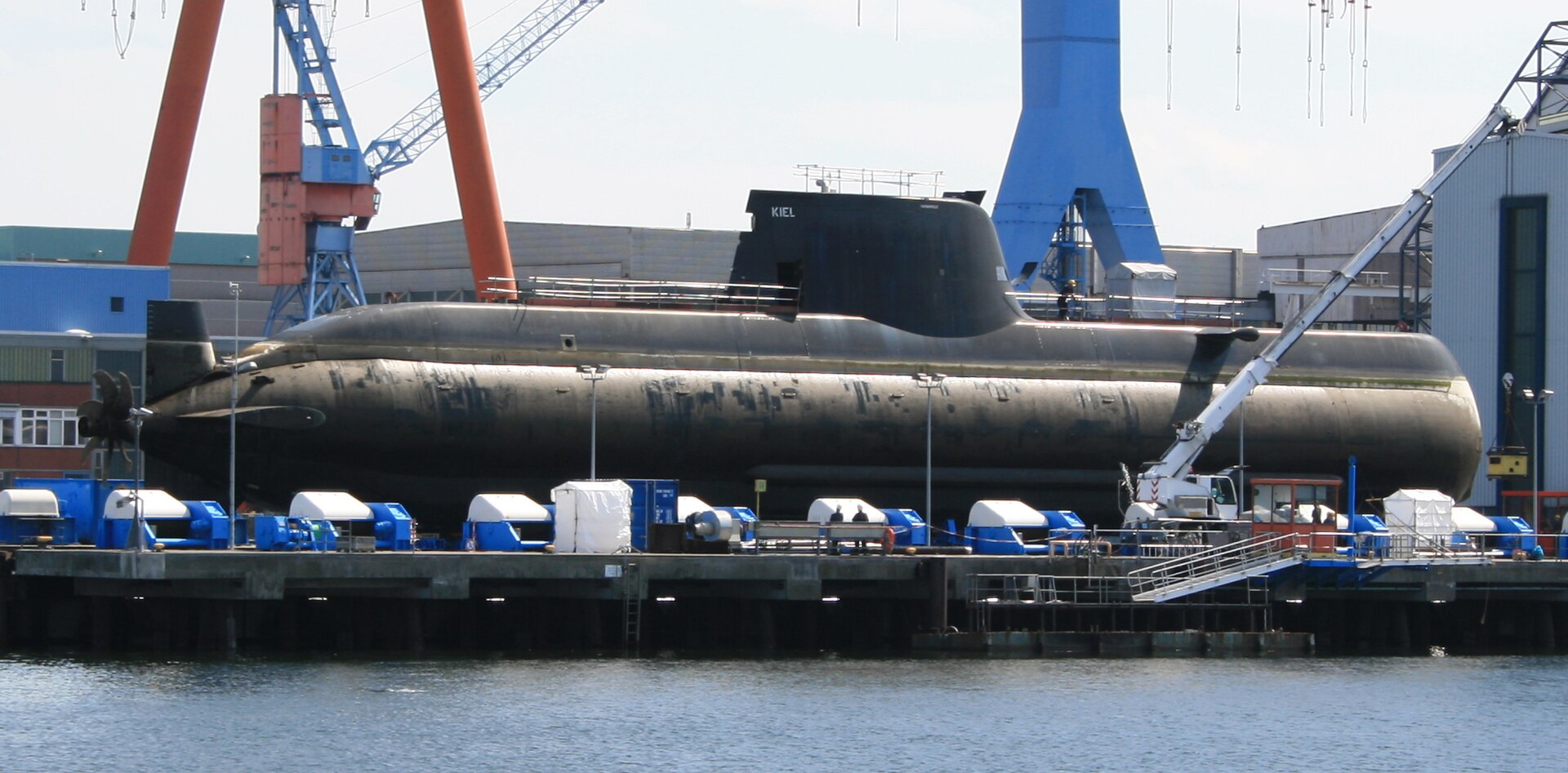
The Type 214 is one of the world’s most successful export submarines, a German design that uses fuel cells to stay underwater for weeks without surfacing. Built by ThyssenKrupp Marine Systems (TKMS), it serves with Greece, South Korea, Portugal and Türkiye, and is a key reason Germany remains a leader in conventional submarines.
- Builder: TKMS (Germany)
- Propulsion: diesel-electric plus fuel-cell AIP
- Displacement: ~1,700–2,000 tonnes; length ~65 m
- Weapons: 8 x 533 mm tubes (torpedoes, Harpoon, mines)
- Operators: Greece, South Korea, Portugal, Türkiye
Fuel-cell air-independent propulsion
Ordinary diesel-electric submarines must regularly surface or snorkel to run their diesel engines and recharge batteries, which makes them easier to detect. The Type 214 adds an air-independent propulsion (AIP) system based on hydrogen fuel cells, developed from the German Navy’s Type 212. The fuel cells are almost silent and allow the boat to stay submerged for up to around three weeks at low speed.
Specs
The Type 214 is about 65 meters long and displaces roughly 1,700 to 2,000 tonnes, depending on the version. It needs a crew of only about 27 to 40, thanks to high automation. Its hull is made from non-magnetic steel to reduce the risk of detection by magnetic sensors and mines.
Weapons
The submarine has eight 533 mm bow tubes that can fire heavyweight torpedoes such as the SeaHake or national designs, as well as anti-ship missiles like Harpoon and, in some navies, mines. South Korea’s boats can also launch domestically developed cruise missiles.
Who operates it?
Greece operates the Papanikolis class, South Korea the Son Won-il class, built locally by Hyundai and Daewoo (now Hanwha Ocean), and Portugal the Tridente class. Türkiye is building six Reis-class boats (Type 214TN) at the Gölcük shipyard with heavy local content, the first of which entered service in 2024. Each version differs in combat systems and weapons.
Strengths and weaknesses
The Type 214’s main strengths are stealth, endurance and proven reliability after early teething problems on the Greek boats. Its limitation is size: it is smaller than newer designs such as South Korea’s KSS-III or Germany’s own Type 212CD, and cannot carry the large vertical missile cells that some navies now want.
What’s next
TKMS is now building the larger Type 212CD for Germany and Norway, and competing for new orders worldwide. Still, with dozens of Type 214 and related boats in service, the design will remain a backbone of non-nuclear submarine fleets in the Mediterranean and Asia for decades.
Featured image: GDK / CC BY-SA 3.0, via Wikimedia Commons