
What Missiles Does Russia Have? Types, Ranges and Stockpiles
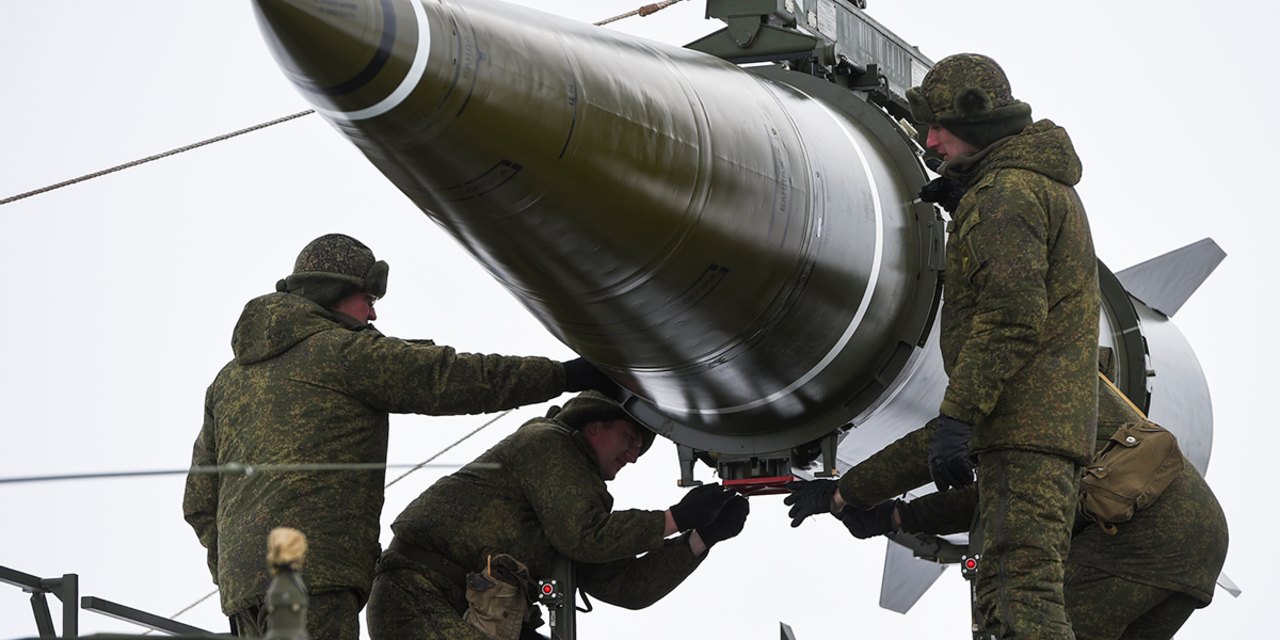
Russia has one of the largest and most varied missile arsenals in the world, from the 500 km Iskander-M fired almost daily at Ukraine to intercontinental missiles that can reach any point in the United States. Ukrainian military intelligence estimated in August 2026 that Russian factories were building more than 200 long-range missiles a month.
This guide sorts Russia’s missiles by type: ballistic, cruise, hypersonic and anti-ship, and nuclear. It gives the range and launch platform of each main system and the best available estimates of how many Russia holds.
What missiles does Russia have?
Russia’s missiles fall into four broad families. Ballistic missiles fly a high arc and fall on the target at great speed. Cruise missiles fly low, like small unmanned aircraft. Hypersonic and anti-ship missiles are built to defeat warships and air defenses. Strategic nuclear missiles are the long-range weapons that underpin deterrence.
Most of the conventional types have been used in Ukraine, which has given outside analysts an unusually detailed picture of how they perform. An overview of the forces that field them is in our guide to how strong Russia’s military is.
| Missile | Type | Launched from | Range |
|---|---|---|---|
| Iskander-M (9M723) | Short-range ballistic | Road-mobile launcher | Up to 500 km |
| Kinzhal (Kh-47M2) | Air-launched ballistic | MiG-31K | Up to 2,000 km, claimed |
| Oreshnik | Intermediate-range ballistic | Road-mobile launcher | Up to about 5,000 km, claimed |
| Kalibr (3M14) | Land-attack cruise | Ships and submarines | 1,500 to 2,500 km |
| Kh-101 | Air-launched cruise | Tu-95MS, Tu-160 | At least 2,500 km |
| Iskander-K (9M728) | Ground-launched cruise | Iskander launcher | About 500 km |
| P-800 Oniks | Supersonic anti-ship | Ships, submarines, Bastion coastal launchers | 300 to 800 km |
| Zircon (3M22) | Hypersonic cruise | Ships and submarines | Up to 1,000 km, claimed |
| Kh-22 / Kh-32 | Supersonic anti-ship | Tu-22M3 | 600 to 1,000 km |
| RS-24 Yars | Intercontinental ballistic | Silos and road-mobile launchers | About 11,000 km |
| RSM-56 Bulava | Submarine-launched ballistic | Borei-class submarines | About 8,000 km |
Russia’s ballistic missiles
The workhorse is the 9M723 missile of the Iskander-M system. It carries a warhead of about 480 kg to roughly 500 km, flies a flattened path and can maneuver in the final phase, which makes interception difficult. Russia has also fired North Korean KN-23 missiles of similar design.
The Kinzhal is an air-launched relative of the Iskander missile, carried by MiG-31K interceptors. Russia calls it hypersonic, and it does exceed Mach 5, but Ukrainian Patriot batteries have shot some down since 2023. At the top of the conventional range is Oreshnik, an intermediate-range missile with multiple warheads that Russia first fired at Dnipro in November 2024 and has used at least twice more in 2026.
Russia’s cruise missiles
The air-launched Kh-101 is the main long-range strike weapon. Tu-95MS and Tu-160 bombers release it from deep inside Russian airspace, and its range is at least 2,500 km. The naval equivalent is the Kalibr, fired from surface ships and submarines in the Black Sea and Caspian Sea, with an estimated range of 1,500 to 2,500 km.
Shorter-range types fill the gaps. The Iskander-K is a ground-launched cruise missile with a stated range of about 500 km. The Kh-69, a newer weapon carried by tactical aircraft, reaches about 400 km. The Kh-59 family is older and shorter-ranged.
Russia’s hypersonic and anti-ship missiles
The Zircon is a ship- and submarine-launched cruise missile that Russia says reaches about Mach 8 and 1,000 km. It has been used against land targets in Ukraine since 2024. For background on the technology, see how hypersonic missiles work.
The P-800 Oniks is a supersonic anti-ship missile that also arms Bastion coastal batteries and has been fired at Odesa from Crimea. The Soviet-era Kh-22 and its Kh-32 upgrade, launched from Tu-22M3 bombers, are fast, heavy and inaccurate against land targets, which has made them especially destructive in cities.
Russia’s nuclear missiles
The Federation of American Scientists counts about 324 nuclear-armed intercontinental ballistic missiles in 2026. Roughly 207 are RS-24 Yars, deployed in silos and on road-mobile launchers. The rest are Topol-M, a small number of UR-100N missiles carrying the Avangard glide vehicle, and about 40 aging R-36M2 Voevoda heavy missiles. Their intended replacement, the RS-28 Sarmat, is still not deployed.
At sea, 13 ballistic missile submarines carry Bulava and Sineva missiles. In the air, Kh-102 cruise missiles, the nuclear version of the Kh-101, arm the bomber force. Many shorter-range missiles, including Iskander, Kalibr and Kinzhal, can also carry nuclear warheads.
How many missiles does Russia have?
Russia does not publish stockpile figures. The most detailed numbers come from Ukraine’s military intelligence agency, which has an interest in the subject but also the closest view of it. Its mid-2026 estimates are below.
| Missile | Stockpile | Monthly output |
|---|---|---|
| Iskander-M | About 130 | 50 to 65 |
| Kh-101 | About 100 | 60 to 87 |
| Kalibr | About 450 | About 20 |
| Kinzhal | About 50 | About 5 |
| Zircon | About 120 | About 3 |
| P-800 Oniks | About 600 | About 5 |
Two patterns stand out. Stocks of the missiles Russia fires most often, the Iskander-M and Kh-101, are small relative to output, which means they are used almost as fast as they are made. Stocks of naval missiles such as Oniks and Kalibr are much larger, because fewer launch platforms can safely reach firing positions.
Frequently asked questions
What is Russia’s longest-range missile?
In service, the R-36M2 Voevoda and RS-24 Yars intercontinental missiles, with ranges of 11,000 km or more. The Sarmat, which is not yet deployed, is claimed to reach 18,000 km.
What is Russia’s fastest missile?
The Avangard glide vehicle is claimed to exceed Mach 20. Among conventional weapons, the Kinzhal is credited with about Mach 10 and the Zircon with about Mach 8. All three figures are Russian claims.
Can Russian missiles reach the United States?
Yes. Russia’s intercontinental and submarine-launched ballistic missiles can reach all of the United States. Conventional missiles such as Iskander and Kalibr cannot.
How many missiles can Russia produce?
More than 200 long-range cruise and ballistic missiles a month, according to Ukrainian military intelligence in August 2026.
Does Russia use foreign missiles?
Yes. Russia has fired North Korean KN-23 ballistic missiles at Ukraine since late 2023. Ukrainian intelligence estimated about 50 were in stock in mid-2026.
- CSIS Missile Threat – Missiles of Russia: missilethreat.csis.org
- Bulletin of the Atomic Scientists – Russian nuclear weapons, 2026: thebulletin.org
- Ukrainska Pravda – Ukraine’s Defence Intelligence on Russia’s missile stockpiles and production rates (August 2026): pravda.com.ua
- The New Voice of Ukraine – Ukrainian intelligence data on Russian missile output (July 2026): english.nv.ua
- Wikipedia – Oreshnik (missile): en.wikipedia.org