What Is CJADC2? The Pentagon’s Plan to Connect Every Sensor to Every Shooter
Modern militaries have more sensors than ever: satellites, drones, radars, ships and soldiers all collect data. The problem is getting the right information to the right weapon fast enough. The Pentagon’s answer is CJADC2, short for Combined Joint All-Domain Command and Control. It is less a single system than a giant effort to rewire how the US military fights. Here is what it means.
- Stands for Combined Joint All-Domain Command and Control
- Goal: link any sensor to any shooter across all services
- Army Project Convergence, Navy Project Overmatch, Air Force battle network
- AI tools like Maven Smart System speed up targeting
- Allies, including NATO, are being connected
The idea
CJADC2 aims to connect “any sensor to any shooter” across land, sea, air, space and cyberspace. A satellite might spot a ship, an AI tool identifies it, a commander approves a strike, and an Army missile battery or Navy destroyer fires, all in minutes rather than hours. “Combined” means allies are included; “joint” means all US services share the same picture.
How the services contribute
Each service runs its own programme that feeds into CJADC2. The Army’s Project Convergence holds large experiments testing new networks and AI targeting with allies. The Navy’s Project Overmatch connects ships, submarines and aircraft. The Department of the Air Force develops the DAF Battle Network, formerly known as the Advanced Battle Management System. The Pentagon’s Chief Digital and AI Office coordinates the effort and declared an initial minimum capability in 2024.
The role of AI
Artificial intelligence is central. Tools such as the Maven Smart System fuse data from many sources, flag potential targets and help commanders decide faster. Maven has been used by US commands and was adopted by NATO in 2025. Humans still make the final decision to strike, but AI dramatically shortens the “kill chain”.
Why it matters
In a war with China, speed and scale would be decisive. The PLA is building its own “intelligentised” command networks, and the side that can find, decide and strike faster across thousands of kilometres of ocean would have a major advantage. CJADC2 is also meant to make US forces more resilient: if one link is jammed or destroyed, data should flow through other paths.
The challenges
Connecting decades of incompatible systems is hard. Data standards differ, security rules make sharing difficult, especially with allies, and networks are vulnerable to cyber attack and jamming. Critics also warn that CJADC2 has suffered from vague goals and overlapping service programmes. Still, combat experience in Ukraine, where cheap drones and commercial software created fast sensor-to-shooter loops, has added urgency.
Verdict
CJADC2 is not a single weapon you can photograph, but it may matter more than any new fighter or ship. It is the digital nervous system the US military believes it needs to win the wars of the future.
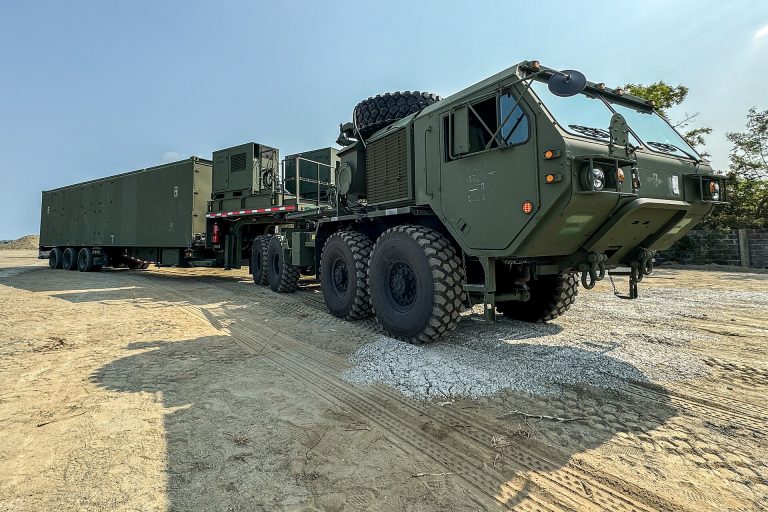
Featured image: Lt. Col. Karl C. Hurdle / Public domain, via Wikimedia Commons