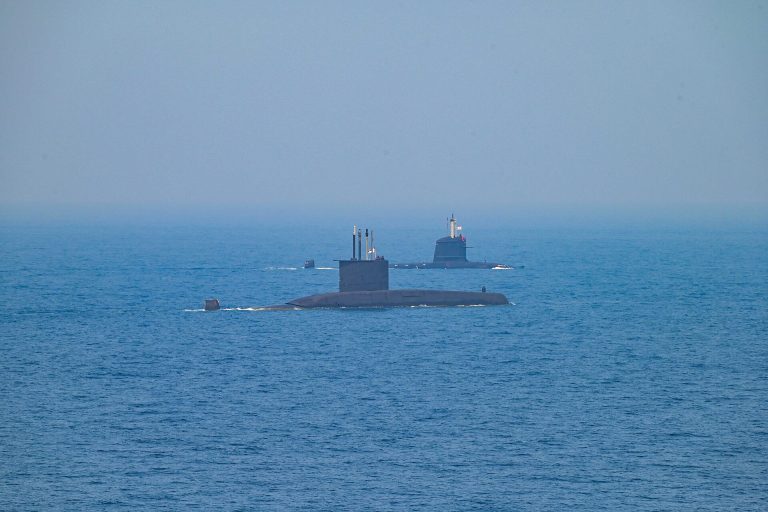
Spain’s S-82 Narciso Monturiol Reaches Maximum Operating Depth
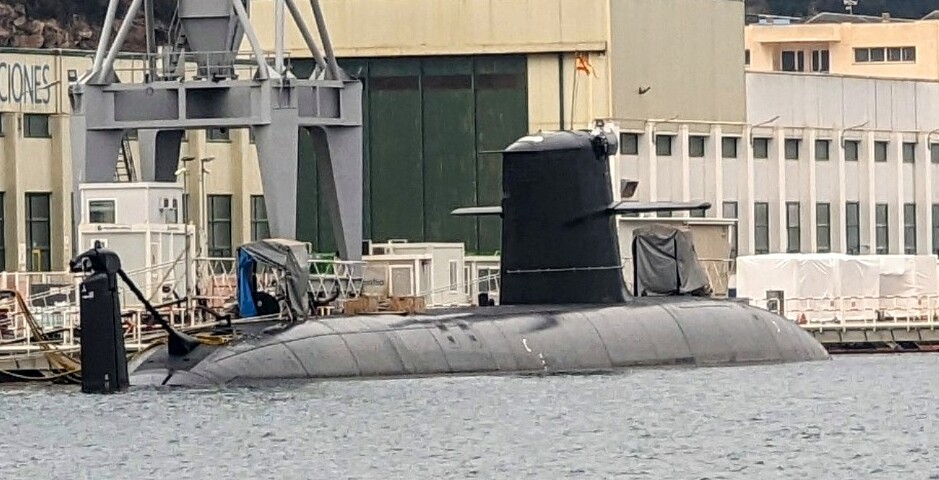
Cartagena, Spain — The Spanish Navy’s second S-80 class submarine, S-82 Narciso Monturiol, has completed its first dive to maximum operating depth, one of the most demanding milestones in its sea trials and a key step toward delivery to the Armada before the end of 2026.
The dive, known in the trials program as Safety Milestone HS10, was carried out by shipbuilder Navantia off Cartagena, according to Spanish defense media reports published on September 25 and 26. As is customary, the exact maximum operating depth of the class has not been disclosed.
A Step-by-Step Trials Program
Deep-diving tests are among the last and most closely watched safety checks for any new submarine. They are carried out progressively, with the boat taken to increasing depths in stages while the hull, hull penetrations, valves and systems are monitored. Reaching maximum operating depth validates the pressure hull and the boat’s safety systems under the conditions it is designed to face in service.
Narciso Monturiol began its sea trials at the end of June with its first surface sailing. In July, Navantia carried out the boat’s first static dive in waters near the La Algameca naval station in Cartagena. Since then, the submarine has progressively completed the safety milestones set out in the program schedule, culminating in the HS10 deep dive.
Remaining work includes further verification of systems at sea and preparations for entry into service, with delivery to the Spanish Navy still planned for the end of this year.
The S-80 Program
The S-80 Plus is the first submarine designed and built entirely in Spain. Four boats are planned: S-81 Isaac Peral, S-82 Narciso Monturiol, S-83 Cosme García and S-84 Mateo García de los Reyes. The lead boat, Isaac Peral, was delivered to the Spanish Navy in late 2023.
The program suffered a significant setback in 2013, when a weight imbalance discovered in the design forced Navantia to lengthen the hull and rework the submarine, adding years of delay and considerable cost. Since then, the program has progressed steadily, and the successful trials of S-82 indicate that the corrections made to the design are holding up in the second boat.
A key feature of the class is its air-independent propulsion system, known as BEST (Bioethanol Stealth Technology), which produces hydrogen on board from bioethanol and liquid oxygen to power fuel cells. This allows the submarine to remain submerged for much longer periods than a conventional diesel-electric boat without surfacing or snorkeling.
S-82 is not being delivered with AIP; the system will be fitted during its first major overhaul, as with S-81. The third and fourth boats, S-83 and S-84, will incorporate AIP from the outset. Navantia recently completed testing of the AIP system for S-83 Cosme García.
Why It Matters
For the Spanish Navy, the arrival of Narciso Monturiol will significantly strengthen an undersea force that has relied for years on a small number of ageing S-70 (Agosta-class) boats. Having two modern S-80s in service will improve availability and allow Spain to maintain a more regular submarine presence in the Mediterranean, the Atlantic approaches and NATO operations.
For Navantia, a smooth trials campaign for the second boat is important for the company’s export ambitions. The S-80 design has been offered to several foreign navies, and a demonstrated track record from the Spanish program strengthens its case against established European submarine builders.
The next milestones will be the completion of acceptance trials and the formal delivery of S-82 to the Armada, followed by the continued construction of S-83 and S-84 in Cartagena.
Sources
- Infodefensa – S-82 Narciso Monturiol reaches maximum operating depth for the first time (in Spanish)
- Zona Militar – S-82 completes first dive to maximum operating depth (in Spanish)
- Navantia – Navantia conducts the first dive of the S82 submarine Narciso Monturiol
- Infodefensa – Navantia completes AIP trials for S-83 Cosme García (in Spanish)