Rockwell Collins Wins $249.7 Million Navy Contract for GPS Range Instrumentation
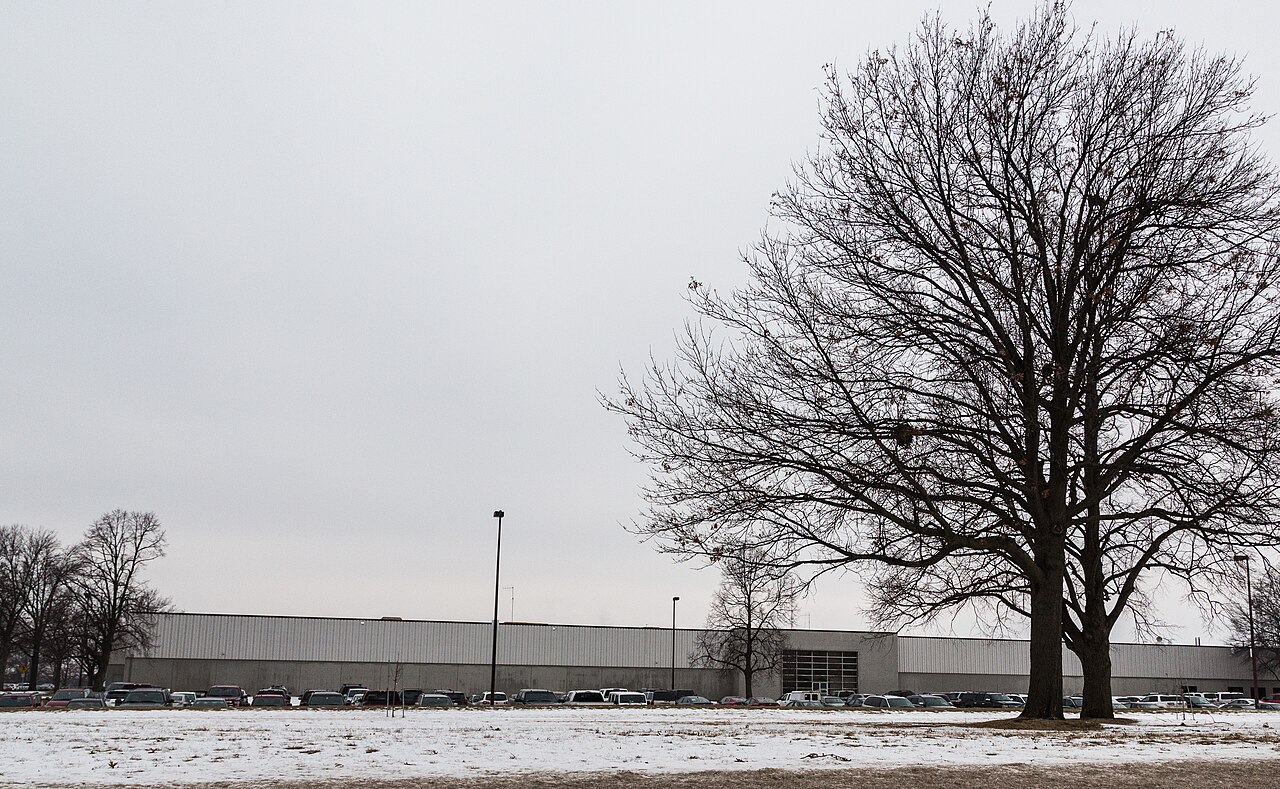
Rockwell Collins Inc., doing business as Collins Aerospace Government Systems, has been awarded a $249,717,034 Navy contract to supply and modernize GPS-based range instrumentation for military test and training ranges. The award appeared in the Pentagon’s daily contract announcement for 28 September.
The Cedar Rapids, Iowa, company is part of RTX. The indefinite-delivery/indefinite-quantity contract covers airborne and ground-based range equipment plus sustainment of systems already in service, and Naval Air Warfare Center Weapons Division at China Lake, California, is the contracting activity.
What Is the Rockwell Collins GPS Range Instrumentation Contract?
The notice describes products and services for GPS-based range instrumentation test and training systems, including airborne and ground-based elements, associated equipment, and engineering and technical support. It also covers sustainment and modernization of existing range instrumentation “to address obsolescence, improve performance, and add capabilities” for testing and training across multiple aircraft, weapons and range systems.
The named systems are the Common Range Integrated Instrumentation System (CRIIS), Tactical Combat Training System II (TCTS II), Air-to-Air Range Infrastructure 2nd Generation, and P6. The contract combines cost-plus-fixed-fee, cost and firm-fixed-price pricing. The notice says it was not competitively procured.
How Much Is the Contract Worth and Where Is the Work Done?
| Item | Detail |
|---|---|
| Contractor | Rockwell Collins Inc. (Collins Aerospace Government Systems), Cedar Rapids, Iowa |
| Value | $249,717,034 |
| Type | Cost-plus-fixed-fee, cost and firm-fixed-price IDIQ |
| Scope | GPS-based range instrumentation, sustainment and modernization |
| Work locations | Largo, FL (67%); Cedar Rapids, IA (23%); Richardson, TX (6%); Coralville, IA (4%) |
| Completion | September 2031 |
| Funding | None obligated at award; funds are committed on individual orders |
| Competition | Not competitively procured |
| Contracting activity | Naval Air Warfare Center Weapons Division, China Lake, California |
| Contract number | N6893626D5007 |
Because nothing was obligated at award, the $249.7 million figure is a ceiling. Money flows only as the Navy issues orders, so the actual spending will depend on how many orders arrive before 2031.
What Are CRIIS, TCTS II and P6?
CRIIS supplies time, space and position information (TSPI) and secure data exchange on test ranges. It replaced the Advanced Range Data System, and a 2019 report listed seven ranges: Eglin, Edwards, Patuxent River, White Sands, Nellis, China Lake and Point Mugu. The same report gave real-time tracking of aircraft out to roughly 430 nautical miles (Aviation Today).
TCTS II is the air combat training pod and ground system that succeeds the earlier TCTS/P5 pod used by the Navy, Marine Corps and Air Force. It is encrypted, uses multiple independent levels of security, and can inject simulated aircraft and threats into live training (The Aviationist). The Air Force branch of the effort is called P6, and Janes reported in 2022 that it is meant to replace air combat manoeuvring instrumentation at an estimated 55 Air Force ranges (Janes).
| System | Role | Note |
|---|---|---|
| CRIIS | Range tracking and data exchange (TSPI) | Replaces the Advanced Range Data System |
| TCTS II | Encrypted live, virtual and constructive training pod | Successor to the TCTS/P5 pod |
| P6 | Air Force combat training system | Built around TCTS II, per Janes |
| Air-to-Air Range Infrastructure 2nd Generation | Air-to-air range support | Named in the notice; no further detail in the sources reviewed |
Why Does the Navy Use GPS-Based Range Instrumentation?
Ranges need to know where every aircraft and weapon is, in real time, and GPS-based instrumentation is how that has been done for decades. A technical paper indexed by the University of Arizona repository says a tri-service committee formed in 1981 found GPS tracking offered cost and technical advantages, leading to the Range Applications Joint Program Office at Eglin Air Force Base (repository record).
Analysis: the notice stresses obsolescence. Equipment built for older aircraft has to keep pace with fifth-generation platforms and newer weapons, and a sole-source sustainment vehicle lets the Navy keep one supplier’s hardware and software family current rather than re-compete it.
What Else Did Rockwell Collins Win on 28 September?
The same announcement listed a second Rockwell Collins award: a $13,763,859 modification to a 2017-numbered firm-fixed-price contract for full-rate production III supplemental spares, containers, software support and site support for TCTS II. Work is expected to run to September 2028, and Naval Air Warfare Center Training Systems Division in Orlando is the contracting activity. Combined, the two Navy notices total roughly $263 million. Another RTX unit, Raytheon, also drew a recent Navy award for Phalanx and SeaRAM close-in weapon systems.
Who Is Collins Aerospace? Company Profile
| Item | Detail |
|---|---|
| Parent | RTX Corporation |
| Headquarters | Charlotte, North Carolina |
| Formed | 26 November 2018, when United Technologies completed its Rockwell Collins acquisition and merged it with UTC Aerospace Systems |
| Employees | More than 80,000 (Wikipedia, 2023 figure) |
| Revenue | $30.2 billion (2025 segment sales, up 7%) |
| RTX chairman and CEO | Chris Calio |
| Relevant sites | Cedar Rapids, Iowa (government systems); Largo, Florida ($26.5 million expansion announced May 2026) |
RTX reported 2025 sales of $88.6 billion across the group. In May 2026 the company said its Largo site produces radars, satellite and secure communications components, and test services for commercial and military customers (RTX).
Rockwell Collins Range Instrumentation FAQ
How much is the Rockwell Collins Navy contract?
$249,717,034, an indefinite-delivery/indefinite-quantity ceiling with no funds obligated at award.
What will Collins deliver?
GPS-based range instrumentation for test and training, including airborne and ground elements, plus sustainment and modernization of CRIIS, TCTS II, Air-to-Air Range Infrastructure 2nd Generation and P6.
Where will the work be done?
Largo, Florida (67%); Cedar Rapids, Iowa (23%); Richardson, Texas (6%); and Coralville, Iowa (4%).
When does it end?
The notice gives an expected completion of September 2031.
Was the contract competed?
No. The notice says it was not competitively procured.
- US Department of War – Contracts for Sept. 28, 2026: war.gov (text read via GlobalSecurity)
- Aviation Today – Collins Aerospace to modernize DoD test range systems (9 August 2019): aviationtoday.com
- Military & Aerospace Electronics – Rockwell Collins CRIIS upgrade (17 April 2017): militaryaerospace.com
- The Aviationist – Navy completes tests of the TCTS Increment II pod (17 November 2020): theaviationist.com
- Janes – USAF stands up new combat training system (Farnborough 2022): janes.com
- Janes – Navy League 2026, Collins rolls out TCTS II (20 April 2026): janes.com
- RTX – 2025 results (27 January 2026): rtx.com
- RTX – Collins Largo investment (11 May 2026): rtx.com
- University of Arizona repository – The RAJPO GPS Range Equipment Family: repository.arizona.edu
- Wikipedia – Collins Aerospace: en.wikipedia.org