Pakistan-Afghanistan War: Where Things Stand in October 2026

Talks meant to cool the Pakistan-Afghanistan border war instead confirmed how far apart the two sides remain. On October 5, the eighth round of the Moscow Format Consultations on Afghanistan closed without a joint statement after Kabul’s Taliban delegation objected to draft language linking Afghanistan to terrorism, according to Russian presidential envoy Zamir Kabulov. Within days, fighting flared again along the Pakistan-Afghanistan border, Pakistan declared a state of emergency in Khyber Pakhtunkhwa province, and a United Nations special rapporteur called for an independent investigation into Pakistani airstrikes that he said may amount to war crimes. Eight months after Islamabad declared what its defence minister called “open war” on the Afghan Taliban, the conflict has settled into a grinding, unresolved pattern of strikes, border skirmishes and failed mediation.
What Happened This Month
Senior officials from Afghanistan, Russia, Pakistan, Iran, India, China and the Central Asian states met in Moscow for the eighth Moscow Format Consultations, with Belarus and Egypt attending as guests, according to Long War Journal. The meeting ended on October 5 without a joint statement. Kabulov said the Taliban delegation balked at repeated references connecting Afghanistan to terrorism, similar language to the previous year’s statement, and added that the forum was never intended to resolve bilateral disputes between Islamabad and Kabul directly.
Border clashes resumed within days, concentrated in Afghanistan’s Paktia province and Pakistan’s Khyber Pakhtunkhwa (KP). Pakistan’s military said its forces engaged militants attempting to cross from Afghanistan in Kurram district on October 9-10, and that Afghan Taliban border posts opened fire in support of the infiltration attempt; Radio Pakistan reported 12 TTP and Afghan Taliban fighters killed and one Pakistani soldier killed. The Taliban’s 203 Mansouri Corps gave a different account, saying Pakistani troops fired first and that its forces suffered no casualties in an exchange near Dand Patan district. Khaama Press separately reported clashes in Aryob Zazi district that forced some residents to flee, with casualties unclear.
On October 11, Pakistani President Asif Ali Zardari declared a state of emergency in Khyber Pakhtunkhwa and suspended the provincial government, which has been led by former prime minister Imran Khan’s PTI party. The federal cabinet accused the provincial administration of disengaging from counterterrorism efforts; the move followed protests demanding Khan’s release from prison. A day later, UN Special Rapporteur on Afghanistan Richard Bennett called for an independent investigation into Pakistani cross-border strikes that he said “may constitute war crimes” and urged the International Criminal Court to examine them, according to Long War Journal’s October 12 report. Pakistan’s Special Representative for Afghanistan, Mohammad Sadiq, has characterized the cross-border operations as legitimate self-defence against militant groups it says Kabul shelters.
How the War Started
The current fighting traces back to Pakistan’s long-standing accusation that Afghanistan’s Taliban government shelters and tolerates the Tehrik-i-Taliban Pakistan (TTP), a separate, ideologically aligned militant group waging an insurgency inside Pakistan. The Taliban deny this. A fragile ceasefire following October 2025 border clashes collapsed through failed talks in Doha and Istanbul, and tensions escalated sharply after a February 2026 suicide bombing at a Shia mosque in Islamabad killed 31 people, claimed by ISIS-Khorasan.
On February 21-22, Pakistani airstrikes hit sites in Nangarhar, Paktika and Khost provinces that Islamabad said were TTP and ISIS-K camps; the Taliban said civilians were killed, and the UN’s Assistance Mission in Afghanistan (UNAMA) later confirmed at least 13 civilian deaths in that round. Border clashes spread over the following days, and on February 26 Pakistan’s Defence Minister Khawaja Asif declared the situation “open war” after strikes extended to Kabul, Kandahar, Paktia and Nangarhar provinces. Pakistan says it also seized roughly 32 square kilometres of Afghan territory near Zhob in early March. The fighting has since moved through alternating phases of intensity: an Eid al-Fitr ceasefire in late March, renewed strikes and Chinese-mediated talks in Ürümqi in April, a quieter stretch through May, an Eid al-Adha pause, and a summer of named Pakistani operations, including Iron Fist-3 in Miranshah and Shaban in Balochistan, interspersed with cross-border raids and ambushes on both sides.
The September 18 suicide bombing and gun battle at a police-linked mosque compound in Kohat, Pakistan, which killed 31 people including 16 police officers, reset the cycle again. The militant alliance Ittehad-ul-Mujahideen Pakistan, which includes the Hafiz Gul Bahadur faction linked to the TTP, claimed responsibility. Pakistan responded with fresh airstrikes it said targeted militant facilities in Afghanistan; Kabul denies any Afghan role in the attack.
Weapons and Tactics on Both Sides
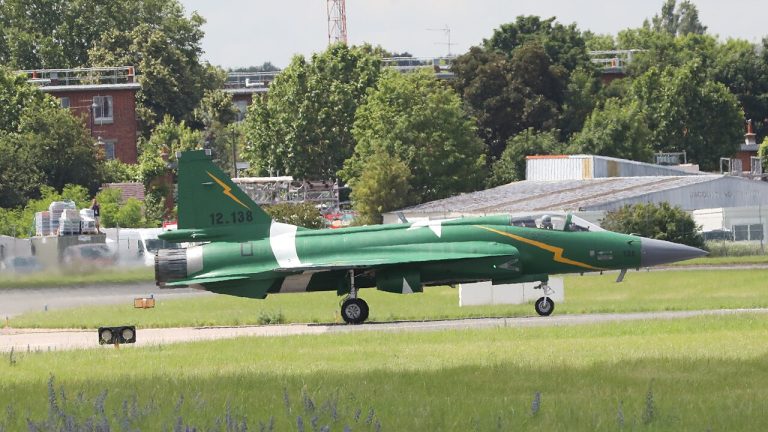
Pakistan has relied primarily on air power, drones and artillery, backed by ground incursions along the border. Islamabad’s military has named several operations over the course of the year, including Ghazab-lil-Haq, Iron Fist-3 and Shaban, and has released footage through its Inter-Services Public Relations wing showing strikes on hillside and border positions. Pakistan says it has destroyed tanks, armoured personnel carriers, artillery pieces and aircraft, including claims of hits on Black Hawk helicopters, C-130 transports and Super Tucano light attack aircraft during a strike on Bagram Airfield; these claims have not been independently verified.
The Afghan Taliban have responded mainly with artillery, mortars, small arms and anti-aircraft fire, along with claimed drone strikes and intercepts of Pakistani surveillance drones; Pakistan disputes several of these claims. In June, the Taliban announced the formation of an 8,000-strong “Hibati” border defence unit, saying roughly half had already been deployed. The TTP and allied factions such as Ittehad-ul-Mujahideen Pakistan have continued a separate insurgent campaign inside Pakistan using suicide bombings, roadside IEDs, ambushes and quadcopter-delivered munitions, including an attack that overran a border post in Chitral in June and killed six guards.
The Failed Diplomacy
Multiple mediation efforts have produced only temporary pauses. Qatar and Turkey brokered the initial ceasefire after the October 2025 clashes; China hosted preliminary talks in Ürümqi in April and a further round the same month, which ended with the two sides giving conflicting accounts of whether any agreement was reached. Uzbekistan hosted informal talks in Termez in June. The two religious ceasefires around Eid al-Fitr and Eid al-Adha each held only briefly before fighting resumed.
The Moscow Format grouping, which brings together Russia, China, India, Iran, Pakistan, Afghanistan and the Central Asian states, represents the broadest diplomatic forum yet applied to the conflict, but Kabulov’s own comments after the October 5 meeting made clear it was not designed to adjudicate the bilateral dispute. Russia has said it is willing to mediate directly if both Islamabad and the Taliban request it, an offer neither side has yet taken up.
The Human and Political Cost
Casualty figures diverge sharply by source and have not been independently reconciled. UNAMA reported 56 civilians killed between February 26 and March 5 in the war’s opening phase, and separately put the toll at 372 civilians killed and 397 wounded in Pakistani strikes over a later reporting period. The Taliban have claimed far higher figures, including 779 Afghan civilians killed by mid-year; Pakistan disputes these numbers and has reported its own, markedly lower, civilian and military casualty counts. The UN refugee agency has estimated roughly 115,000 Afghans and 3,000 Pakistanis displaced by the fighting. Land border crossings, including the Torkham crossing used for bilateral trade, have been largely closed since the October 2025 clashes, disrupting commerce on both sides.
Inside Pakistan, the war has become entangled with domestic politics. Zardari’s suspension of the PTI-led Khyber Pakhtunkhwa government, following protests over Imran Khan’s imprisonment, has drawn criticism that the federal government is using the security crisis to sideline a political rival, a charge the cabinet denies.
Why It Matters
The conflict pits two nuclear-armed-adjacent security establishments against each other in a dispute rooted in the unresolved status of the Durand Line, the colonial-era border that Afghanistan has never formally recognized. It tests whether Pakistan’s air force and army, built and equipped primarily for a conventional confrontation with India, can sustain a prolonged counter-insurgency campaign across an international border without a clear exit. It also places China, which has invested heavily in Pakistani infrastructure and has growing economic interests in Afghan minerals, and Russia, which has expanded its diplomatic footprint in Kabul, in the position of competing to broker an end to a war that neither can easily walk away from. For Washington and other Western capitals, the fighting is a reminder that the TTP insurgency and the Afghan Taliban’s territorial control remain unresolved legacies of the 2021 withdrawal, even as international attention has moved elsewhere.
What Happens Next
Nothing in the current trajectory points to a durable settlement. Pakistan has repeatedly said its cross-border operations will continue until the Taliban government provides what Islamabad calls credible, verifiable action against the TTP; the Taliban say they already reject responsibility for TTP attacks and have called on outside powers, including Russia and China, to pressure Pakistan to halt strikes they characterize as violations of Afghan sovereignty. With the Moscow Format talks closed without result and no new mediation round announced, further border clashes in Kurram, Paktia and neighbouring districts are likely in the near term, punctuated by the kind of short religious or diplomatically brokered ceasefires that have repeatedly failed to hold through the year. The UN rapporteur’s call for an ICC inquiry adds a new, slower-moving track of accountability pressure on Pakistan, separate from the battlefield.
FAQ
What caused the Pakistan-Afghanistan war?
Pakistan accuses Afghanistan’s Taliban government of sheltering the Tehrik-i-Taliban Pakistan (TTP), a militant group that has escalated attacks inside Pakistan since 2021. The Taliban deny this. A fragile October 2025 ceasefire broke down through failed talks, and a February 2026 mosque bombing in Islamabad triggered Pakistani airstrikes that both sides have since called an open war.
Is the TTP the same as the Afghan Taliban?
No. The TTP is a separate, Pakistan-focused militant group that shares ideological roots and some historical ties with Afghanistan’s ruling Taliban movement but operates independently and primarily targets the Pakistani state.
What is the Durand Line and why does it matter?
The Durand Line is the roughly 2,600-kilometre border drawn in 1893 between British India and Afghanistan. Afghan governments, including the Taliban, have never formally recognized it as an international border, and the dispute underlies recurring tension over cross-border militant movement and Pakistani military operations inside Afghan territory.
Has any ceasefire held?
Several brief ceasefires, including pauses around Eid al-Fitr and Eid al-Adha in 2026 and an initial Qatar-Turkey-brokered truce in late 2025, have temporarily reduced fighting but none has produced a lasting settlement. Each has broken down within weeks.
Who is mediating the conflict?
Qatar, Turkey, Saudi Arabia, China and Uzbekistan have each hosted talks or informal contacts between Islamabad and Kabul at various points in 2026. Russia has offered to mediate through the multilateral Moscow Format, though its October 2026 round ended without addressing the bilateral dispute directly.
Sources
- Long War Journal, “Taliban-Pakistan border clashes continue after Moscow talks end without agreement,” October 12, 2026 — primary source for the Moscow Format outcome, October Kurram and Paktia clashes, the Khyber Pakhtunkhwa state of emergency and the UN rapporteur’s statement.
- Al Jazeera, “Pakistani forces kill Afghan Taliban fighters in border escalation,” September 25, 2026 — used for late-September border fighting context.
- Al Jazeera, multiple February-March 2026 reports on the “open war” declaration, strikes on Kabul and Kandahar, and the Jalalabad Airport strike claims.
- Wikipedia, “2026 Afghanistan–Pakistan conflict,” citing BBC, Reuters, AFP, UNAMA, UNHCR, the Norwegian Refugee Council and Planet Labs satellite imagery, among others — used for the month-by-month timeline, casualty figures by source, and named Pakistani operations (Ghazab-lil-Haq, Iron Fist-3, Shaban) and the Taliban’s “Hibati” border unit.
- Al Jazeera / Outlook India / Arab News Pakistan, September 18, 2026 reporting on the Kohat mosque and police-complex attack and the claim of responsibility by Ittehad-ul-Mujahideen Pakistan.