
Otokar, the Koc Group Armor Maker Selling to 40 Armies
Otokar is the Koc Group’s armored vehicle house, the Sakarya manufacturer whose Cobra 4x4s serve in some 40 armies and whose Arma family carries Turkish armor exports from the Gulf to Central Asia. Part of Turkey’s largest industrial conglomerate, listed on Borsa Istanbul and pulling near a billion dollars in annual revenue, Otokar is the commercial face of Turkish land systems, and the company that designed the Altay tank before losing its production to a rival.
Otokar at a glance
| Item | Detail |
|---|---|
| Headquarters | Arifiye, Sakarya, Turkey |
| Founded | 1963; defense vehicles from the 1980s |
| Parent | Koc Holding, chaired by Ali Koc; listed as OTKAR on Borsa Istanbul |
| Employees | 3,580 (2023) |
| Revenue | $982 million (2024) |
| Defense products | Cobra and Cobra II 4×4, Akrep, Arma 6×6/8×8, Tulpar tracked IFV |
| Civil products | Kent and Vectio buses, e-Centro electric minibus, trailers |
Cobra, the export workhorse
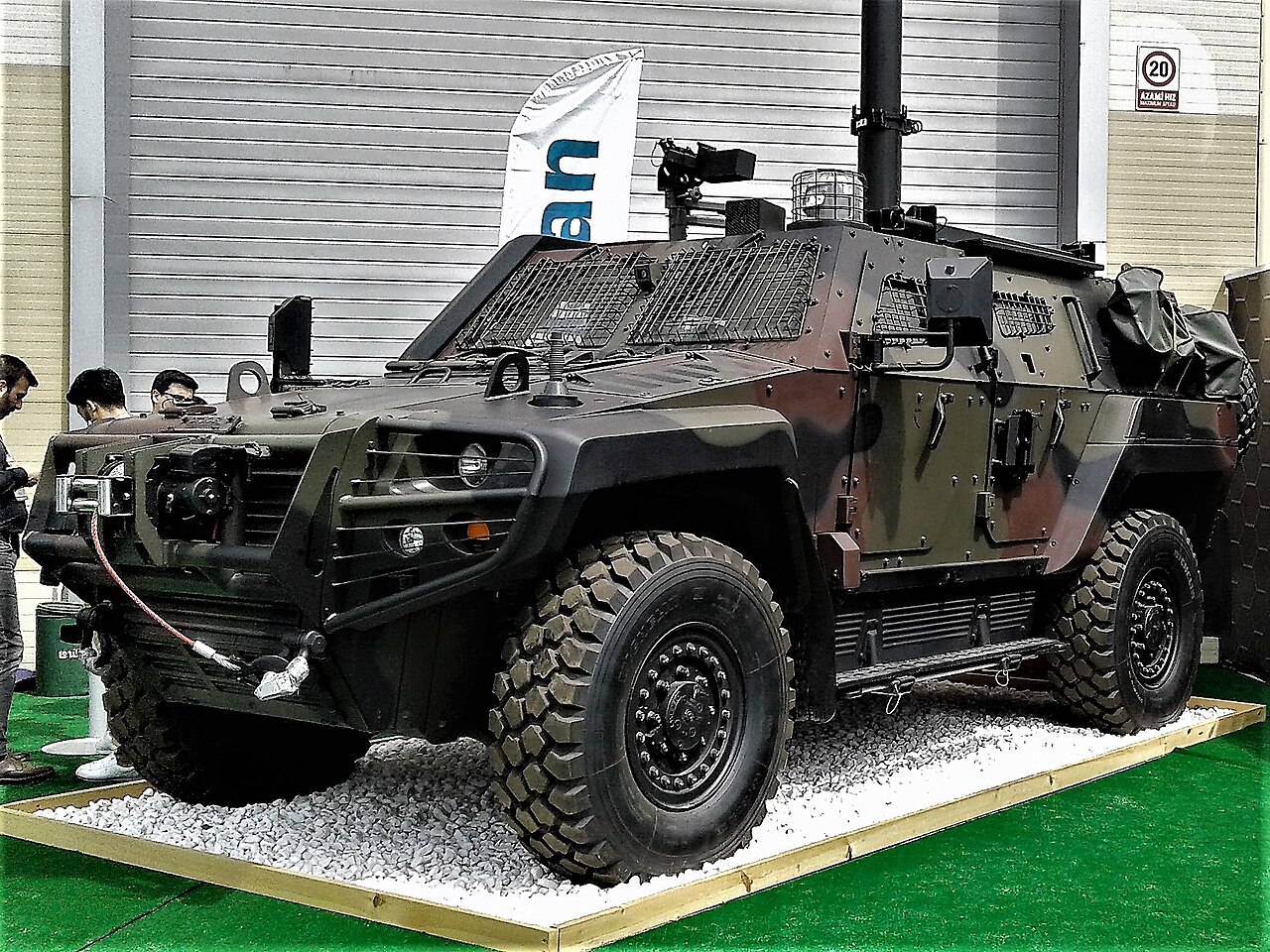
The original Cobra, built on Humvee running gear from the 1990s, became one of the most exported Turkish defense products ever: a light 4×4 sold to roughly 40 users across the Gulf, Africa, the Caucasus and Asia, seen in conflicts from Georgia to Azerbaijan. The larger, mine-protected Cobra II followed with V-hull protection and 8-plus tonnes of growth, winning repeat orders across the same map and keeping the line among Otokar’s steadiest earners two decades on. For many small armies, a Cobra was their first Turkish defense purchase, the entry product that built the national brand later drone sales globalized.
Arma, Tulpar and the heavier line
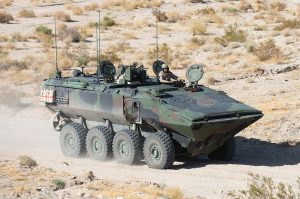
Above the 4x4s sit the modular Arma 6×6 and 8×8, amphibious-capable carriers sold to users including Bahrain and Kazakhstan and fitted with everything from ASELSAN turrets to air defense fits, and the Tulpar, a tracked IFV pitched at K2-and-Leopard-class escort roles and repeatedly shortlisted in European trials. The new-generation Arma II 8×8 unveiled in 2023 targets exactly the segment where FNSS’s PARS, Patria’s AMV and the Boxer fight, Turkey entering its own two-horse race abroad: Otokar and FNSS regularly bid against each other for the same wheeled tenders.
The Altay story
Otokar designed Turkey’s national tank: it won the Altay development contract in 2008, built the prototypes and carried the program through qualification. The serial-production tender, though, went to BMC in 2018, a politically charged decision that left the designer without the build. The consolation is capability: the engineering team, test infrastructure and tracked-vehicle know-how from Altay now feeds Tulpar and future combat vehicle bids, and Otokar remains, with Altay now entering service under BMC, the quiet author of much of its design.
Turrets and the electronics turn
Otokar’s quieter growth line is unmanned turrets: the Ucok and Mizrak families, Bozok remote stations and the 30mm fits qualified on Arma and export hulls, increasingly packaged with ASELSAN sights and, lately, counter-drone jammer options. The turret business converts every hull sale into a systems sale and lets Otokar bid on other makers’ vehicles, the same margin logic that carried its rivals upmarket. Paired with hybrid-drive Akrep II prototypes and the electric bus expertise next door, it sketches the company’s next decade: platforms as carriers for sensors, protection and power electronics rather than welded steel alone.
Buses by day, armor by contract
Otokar’s twin identity is its stabilizer. The same plants that armor hulls build city buses for European operators and electric minibuses for municipal fleets, civilian lines that cover fixed costs when defense orders ebb and give Koc shareholders steady revenue between wars. The mix also shapes strategy: unlike foundation-owned ASELSAN or state MKE, Otokar answers to a public market, bids commercially and walks away from unprofitable prestige, which is why its export book skews to repeatable light vehicles rather than moonshots. At ADEX and the Gulf shows it sells exactly that: proven trucks, quick delivery, Koc-grade support.
Where Otokar sells next
The near-term order map runs through three fronts. Gulf re-orders, where Cobra II fleets in the UAE and beyond are due upgrades and replacements; Central Asia and the Caucasus, where Kazakh assembly and Azerbaijani service anchor follow-ons; and Europe’s rearmament, where Arma II and Tulpar have stood in Slovak, Romanian and Balkan trials against the continent’s incumbents. A NATO-member production win would be the breakthrough the company has circled for a decade, and its UK and European show appearances signal Koc is still paying to chase it.
Frequently asked questions
What does Otokar make?
Armored 4x4s (Cobra, Cobra II, Akrep), the Arma 6×6/8×8 family and Tulpar tracked IFV, plus a large civilian bus business.
Who owns Otokar?
Koc Holding, Turkey’s largest conglomerate; shares trade on Borsa Istanbul as OTKAR.
Did Otokar build the Altay tank?
Otokar designed and prototyped Altay from 2008, but serial production was awarded to BMC in 2018.
How widely are Otokar vehicles used?
Company materials cite users across some 60 countries, with the Cobra family in roughly 40 armies.
How big is Otokar?
About 3,600 employees and $982 million revenue in 2024, roughly half defense, half commercial vehicles.
- Wikipedia – Otokar (accessed October 2026)
- Public company reporting (2023-2024 figures)
- Program reporting on Altay, Arma and Tulpar campaigns