Egypt, Türkiye Sign MoU on Joint Explosives Production
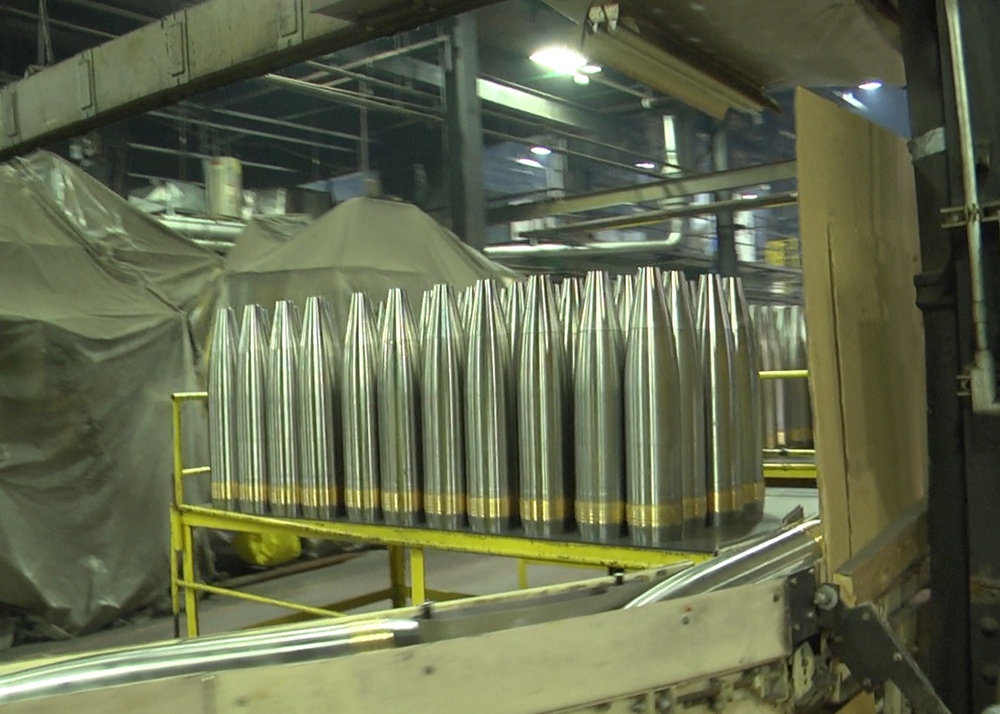
Egypt and Turkiye have signed a memorandum of understanding to jointly develop and produce explosives, the most concrete step yet in a defense-industrial partnership that has moved from joint exercises to shared production lines over the past seven months.
What Happened
Two Egyptian state-owned military factories signed the MoU with Turkiye’s Mechanical and Chemical Industry Corporation (MKE) on September 3, 2026, on the sidelines of the First Balkan Shield Industrial Expo and Summit in Sarajevo, Bosnia and Herzegovina. The signatories were Heliopolis Company for Chemical Industries (Military Factory 81) and Helwan Company for Engineering Industries (Military Factory 99), both under Egypt’s Ministry of Military Production, and MKE, Turkiye’s state-owned explosives, ammunition and small-arms manufacturer.
Egypt’s Minister of State for Military Production, Salah Soliman Gembalat, said the agreement “opens new opportunities for industrial partnership” with Turkish counterparts, describing it as consistent with directives to build strategic alliances with friendly nations. A Turkish deputy defense minister at the signing said Egyptian-Turkish relations “were developing” and praised Egypt’s defense manufacturing capabilities. Neither side has disclosed investment figures, production volumes, technology-transfer terms or an implementation timetable, and no binding production contract has been announced. The document is, for now, a framework for cooperation rather than a funded project.
The Product and the Program
The MoU covers “co-production and development of defense products,” with explosives named as the immediate focus. Heliopolis Company for Chemical Industries (Factory 81) is Egypt’s principal state producer of military explosives and propellants; Helwan Company for Engineering Industries (Factory 99) manufactures ammunition components and precision engineering products. MKE brings decades of experience across small-arms ammunition, explosives, propellants and the Tolga short-range air defense system, and has recently expanded its export footprint, including a large-scale ammunition sale to Ukraine.
The September MoU builds directly on a broader framework agreed in February 2026, when Turkiye and Egypt signed a $350 million defense cooperation package during President Recep Tayyip Erdogan’s visit to Cairo. That package split roughly into a $130 million arms component — MKE’s export of the Tolga air defense system to Egypt — and a $220 million industrial component covering construction of a 155mm long-range artillery ammunition factory in Egypt plus new production lines for 7.62mm and 12.7mm small-arms ammunition, run through a planned joint-venture company. Turkish officials have described the ambition as positioning Egypt as a regional manufacturing hub serving African and Middle Eastern buyers.
Who Is Involved
Confirmed parties are Egypt’s Ministry of Military Production (through Factories 81 and 99) and Turkiye’s MKE, operating under the political umbrella of Egypt’s Ministry of Defence and Turkiye’s Presidency of Defence Industries. No third-country partner or end customer for the jointly produced explosives has been named. Any future exports of jointly manufactured ammunition or explosives to other African or Middle Eastern states remain speculative at this stage and unconfirmed by either government.
Cooperation Timeline
The explosives MoU is the latest in a fast-moving sequence:
- February 2026: $350 million framework agreement signed in Cairo, covering the Tolga air defense sale and the planned 155mm ammunition factory.
- June 2026: Fifth meeting of the Egyptian-Turkish Military Cooperation Committee.
- July 2026: Turkish Defense Minister Yasar Guler and Egyptian counterpart Lt. Gen. Ashraf Salem Zaher signed two letters of intent in Ankara — one on broader military cooperation, one specifically establishing parameters for defense-industry cooperation — alongside the Golden Eagle 2026 joint exercise in Egypt. Officials did not disclose whether that framework covered arms sales, technology transfer or joint manufacturing.
- September 3, 2026: The Heliopolis/Helwan-MKE explosives MoU signed in Sarajevo.
The relationship also includes the first joint Egyptian-Turkish naval drill in 13 years, held in the Eastern Mediterranean in September 2025, ending a decade of estrangement rooted in the 2013 rupture between Cairo and Ankara.
Global Competitors
Egypt currently sources ammunition and explosives production know-how and equipment from multiple partners, including Germany’s Rheinmetall and Belgium- and France-linked European consortia for artillery propellant and shell lines, alongside older Soviet- and US-legacy production standards inherited from decades of mixed-fleet procurement. South Korea’s Poongsan and Hanwha, as well as European players such as KNDS and Nammo, compete globally for the same category of 155mm shell and propellant contracts that Egypt’s new Turkish-backed factory is intended to serve. A Turkish-Egyptian joint venture would compete for the same African and Middle Eastern ammunition markets that Turkish firms like MKE and Roketsan already court independently.
Why It Matters
For Egypt, localizing explosives and ammunition production reduces dependence on a fragmented, multi-source legacy supply chain built around US, Soviet/Russian, European and Chinese equipment standards, and supports the Ministry of Military Production’s long-standing goal of expanding Egypt’s own defense-export base. For Turkiye, the deal extends MKE’s export reach into North Africa at a moment when Ankara is competing with Russia, France and China for defense-industrial influence in Cairo — all three of which also have active or pending contracts with Egypt’s armed forces. The agreement is also a marker of how far Egyptian-Turkish relations have recovered since 2013: from severed diplomatic ties to joint naval drills, reciprocal ministerial visits and now shared production of military explosives, in under three years of active re-engagement.
What Happens Next
MKE has indicated that further steps in bilateral defense-industry cooperation could be announced around Egypt’s El-Alamein International Airshow, scheduled for September 8-10, 2026, where Russia’s Rostec is separately set to unveil new Su-57E-related systems. The airshow follows closely on Egypt’s request for 24 additional Dassault Rafale jets, underscoring how Cairo is simultaneously courting Turkish, Russian and French suppliers as it modernizes and diversifies its defense-industrial base. Whether the September MoU converts into a signed production contract, a joint-venture charter, or firm investment figures will be the test of whether this framework moves beyond the letters of intent that have characterized the relationship since July.
FAQ
What did Egypt and Turkiye actually sign?
A memorandum of understanding between two Egyptian state factories (Heliopolis Chemical Industries and Helwan Company for Engineering Industries) and Turkiye’s MKE to cooperate on developing and producing explosives. It is a framework agreement, not a funded production contract.
Is this the same as the $350 million Türkiye-Egypt defense deal?
No. The $350 million package was agreed in February 2026 and covers a separate Tolga air defense sale plus a planned 155mm ammunition factory. The September MoU is a newer, narrower agreement focused specifically on joint explosives development, though both fall under the same broader bilateral defense-industrial push.
Will Egypt build a new ammunition factory with Turkish help?
A 155mm artillery ammunition factory in Egypt, along with 7.62mm and 12.7mm production lines, was part of the February 2026 framework, run through a planned joint-venture company. Construction status and timelines have not been publicly confirmed by either government.
Why is Turkiye expanding defense-industrial ties with Egypt now?
The two countries restored full diplomatic relations in 2023 after a decade-long rupture, and have since rebuilt ties through joint exercises, ministerial visits and now industrial cooperation, partly as Ankara seeks to expand defense exports and partly as both sides seek to balance other regional partnerships, including Turkiye’s ties with Greece, Cyprus and Israel.
Who is MKE?
MKE (Mechanical and Chemical Industry Corporation) is Turkiye’s state-owned defense manufacturer, producing small arms, ammunition, explosives, propellants and systems such as the Tolga short-range air defense system, with a growing export portfolio that includes recent ammunition sales to Ukraine.
Sources
- Middle East Observer, “Egypt-Turkey Defence Reset Shifts from Exercises to Joint Production,” September 4, 2026 — primary account of the Sarajevo MoU signing and the companies involved.
- Middle East Monitor, “Egypt, Türkiye agree to cooperate on defence industries,” September 3, 2026 — official quotes from Egypt’s Minister of State for Military Production and a Turkish deputy defense minister.
- The Defense Post, “Türkiye, Egypt Sign $350M Defense Pact to Boost Arms and Joint Production,” February 9, 2026 — details of the February 2026 framework, the Tolga air defense sale and the planned 155mm ammunition factory.
- Al-Monitor, “Türkiye, Egypt expand military ties with cooperation frameworks: What to know,” July 2026 — timeline of the July 2026 letters of intent and broader bilateral military cooperation history.
- Defence Türkiye, “Turkiye and Egypt Sign Letter of Intent on Defense Industry Cooperation” — confirmation of the July 2026 defense-industry framework signed by Haluk Gorgun and Lt. Gen. Ashraf Salem Zaher.