Air Defense
S-300
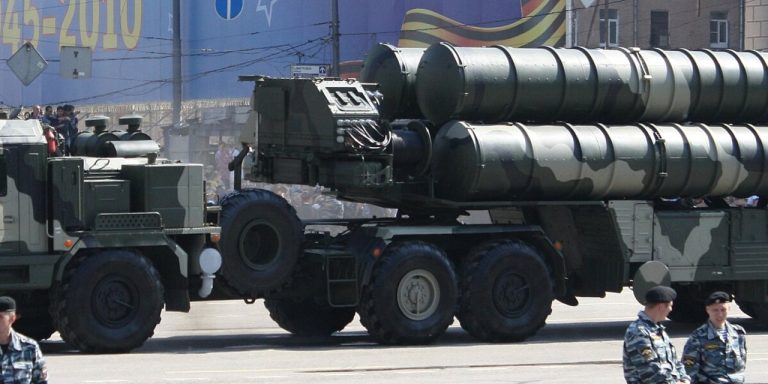
The S-300 is a Soviet and Russian long-range surface-to-air missile family developed by NPO Almaz and NIEMI, now part of Almaz-Antey. In service since 1978 and widely exported, it remains a backbone of air defence in Russia, Ukraine and many partner countries.
 Russia|Almaz-Antey (NPO Almaz / NIEMI)
Overview
Development began in the late 1960s, and the first S-300PT entered service in 1978. The family split into the truck-mounted S-300P for the air defence forces and the tracked S-300V for the army, later upgraded as the S-300V4. The widely exported S-300PMU-2 Favorit fires the 48N6E2 missile out to 200 km against aircraft, at altitudes of 10 m to 27 km and speeds near Mach 6. One battalion can engage 36 targets with up to 72 missiles, according to the manufacturer.
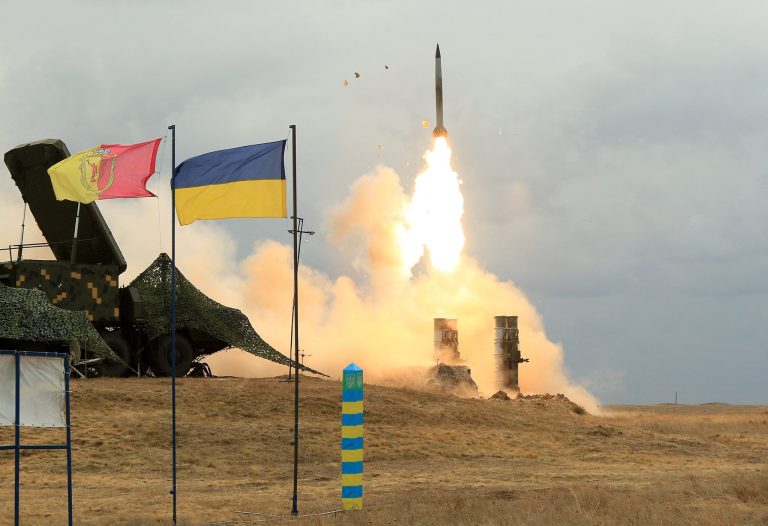
The S-400 succeeded it in Russian service from 2007, but large numbers of S-300s remain active. Operators include Russia, Belarus, Kazakhstan, Algeria, Egypt, Iran, China, Vietnam, Greece and Ukraine, where the S-300 is central to air defence. Russia has also fired S-300 missiles at Ukrainian ground targets. Reported losses include Armenian systems destroyed by Azerbaijani drones in 2020 and Iranian batteries reportedly struck by Israel in 2024, although Iran disputed the extent of the damage.

Key Specifications
Variants
Early truck-mounted version of the S-300P branch, used by Soviet and later Russian air defence forces and by Armenia.
Most widely exported version, firing the 48N6E2 missile to about 200 km against aircraft, operated by countries such as China, Iran and Algeria.
Upgraded army version on a tracked chassis with stronger anti-ballistic capability and a range of about 400 km with the 9M82MD missile.
Operators
Russia Belarus
 Kazakhstan
 Armenia
 Azerbaijan
 Algeria
 Iran
 China
 Vietnam
 Egypt
 Venezuela
 Greece
 Bulgaria
 Ukraine
Frequently Asked Questions
How much does an S-300 cost?
There is no fixed price for the S-300; an S-300PMU-2 battalion is reported to cost several hundred million dollars. Iran’s deal for four to five battalions was put at about $800 million in press estimates.
What is the range of the S-300?
The S-300PMU-2 can hit aircraft at up to 200 km and ballistic missiles at about 40 km, at altitudes from 10 m to 27 km. The army’s S-300V4 reaches about 400 km with the 9M82MD missile.
Which countries have the S-300?
S-300 operators include Russia, Belarus, Kazakhstan, Armenia, Azerbaijan, Algeria, Egypt, Iran, China, Vietnam, Venezuela, Greece, Bulgaria and Ukraine. Greece’s system originally belonged to Cyprus and is based on Crete.
S-300 vs Patriot: which is better?
The S-300PMU-2 offers longer range against aircraft, up to 200 km, while the Patriot PAC-3 MSE is stronger against ballistic missiles thanks to its hit-to-kill interceptors. Ukraine operates both, relying on the Patriot mainly against ballistic threats.
What is the difference between S-300 and S-400?
The S-400 is the S-300’s successor, adding the 40N6 missile with a range of up to 380–400 km, improved radars and a wider choice of interceptors. It entered Russian service in 2007, while S-300P production has ended.
Does Türkiye have the S-300?
No, Türkiye has never operated the S-300. Cyprus’s 1997 S-300 order triggered a crisis with Türkiye, and the systems were moved to Crete instead. Türkiye later bought the newer S-400 from Russia.