Air Defense
HQ-9
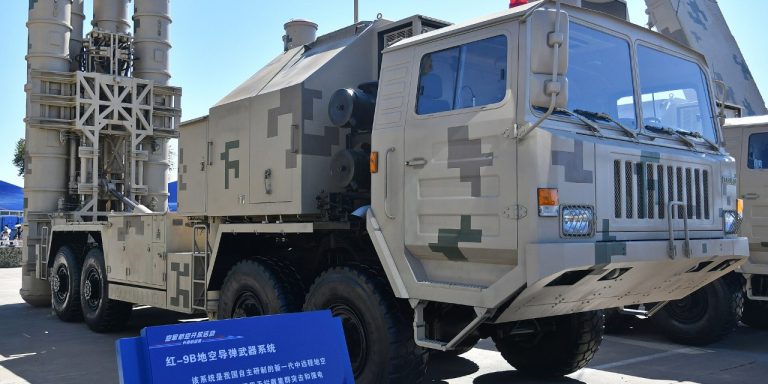
The HQ-9 (Hongqi-9) is a Chinese long-range surface-to-air missile system developed under CASIC and exported as the FD-2000. The backbone of China’s ground-based air defence, it also arms Chinese destroyers and is in service with Pakistan.
 China|CASIC (China Aerospace Science and Industry Corporation)
Overview
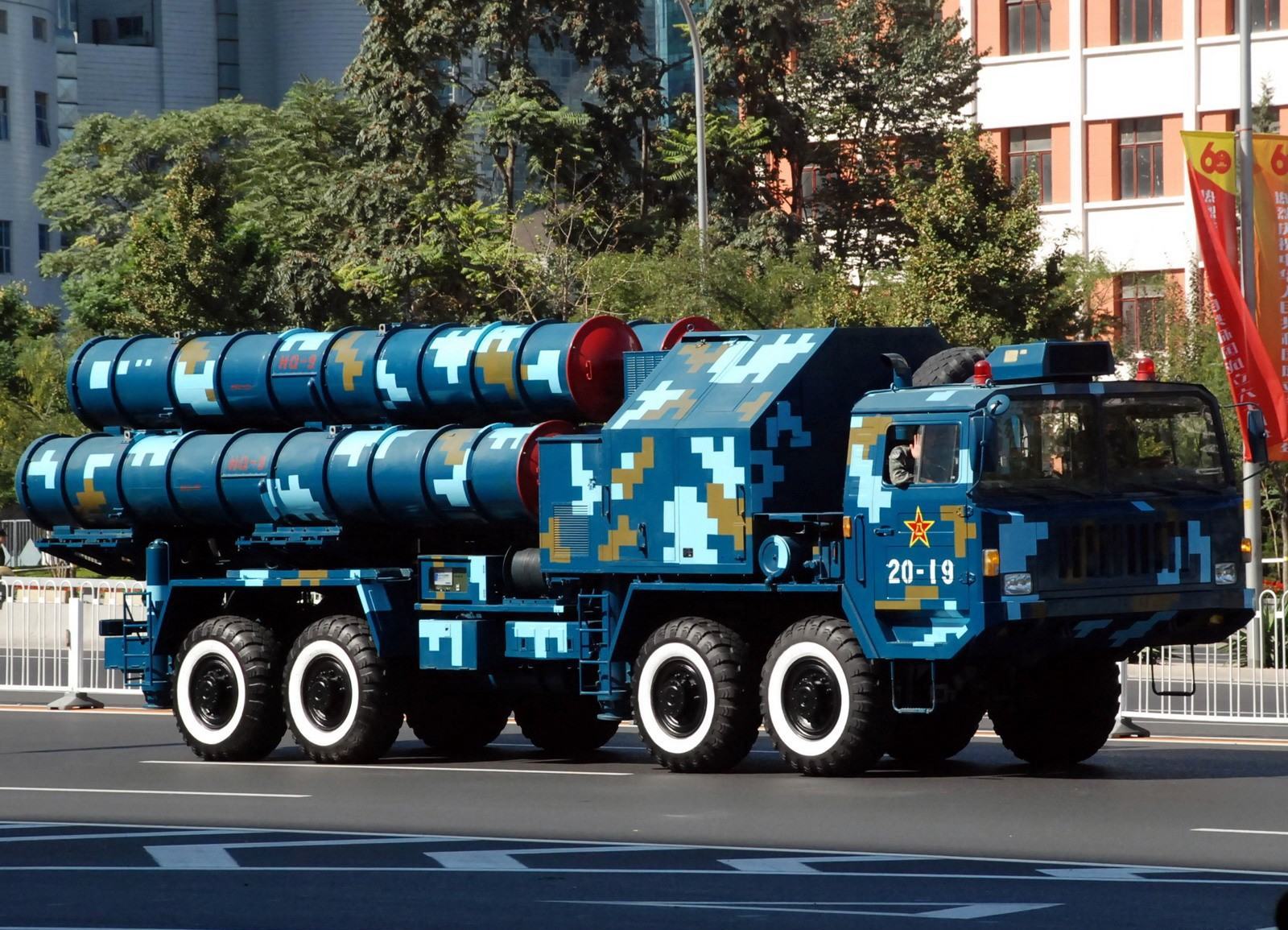
Developed in the 1980s and 1990s and widely reported to draw on S-300 and Patriot-era technology, the HQ-9 entered PLA service around 2001. Its missile is about 6.8 m long, carries a 180 kg warhead and flies faster than Mach 4, using track-via-missile guidance with active radar seekers on later versions. Range grew from about 120–125 km on the original to around 200–260 km on the HQ-9B. A battery uses an HT-233 phased-array radar and four-canister launchers on 8×8 trucks.
IISS estimated the PLA Air Force at about 196 HQ-9 and 96 HQ-9B launchers in 2024, and the system has been deployed on disputed South China Sea islands. The naval HHQ-9 arms Type 052C/D destroyers and Type 055 cruisers. Pakistan inducted the HQ-9/P in 2021, and Morocco and Turkmenistan also operate versions. India said it struck HQ-9 elements during Operation Sindoor in 2025, which Pakistan denied. Türkiye selected the FD-2000 in 2013 but cancelled in 2015.
Key Specifications
Variants
Original version with a range of about 120–125 km, offered to export customers as the FD-2000.
Extended-range version reaching about 200–260 km, used by the PLA and exported to Pakistan as the HQ-9BE.
Naval version fired from vertical launch cells on Type 052C and Type 052D destroyers and Type 055 cruisers.
Operators
China Pakistan
 Morocco
 Turkmenistan
Frequently Asked Questions
How much does the HQ-9 cost?
The HQ-9’s unit price is not public. The main reference point is Türkiye’s 2013 T-LORAMIDS bid, reported at about $3.4 billion for the whole FD-2000 programme, a figure covering far more than a single battery.
What is the range of the HQ-9?
The original HQ-9 has a range of about 120–125 km, while the HQ-9B reaches roughly 200–260 km. Its ceiling is about 27 km, although some sources give up to 50 km for the HQ-9B.
Which countries use the HQ-9?
China, Pakistan, Morocco and Turkmenistan operate HQ-9 versions. Egypt and Azerbaijan were reported in 2025 to have acquired the HQ-9B or HQ-9BE, but these are media and parade reports, not officially confirmed contracts.
HQ-9 vs S-400: which is better?
The S-400 is generally regarded as more capable, mainly because its 40N6 missile reaches up to about 400 km against roughly 260 km for the HQ-9B. The HQ-9 family, however, is fielded in large numbers by the PLA and also has a naval version.
Did India destroy HQ-9 in Pakistan?
India said it neutralised Pakistani air defence radars and launchers, including HQ-9 elements, during Operation Sindoor in May 2025. Pakistan rejected those claims and said its air defences performed effectively; independent verification is limited.
Why did Türkiye cancel the HQ-9 deal?
Türkiye picked China’s FD-2000 for its T-LORAMIDS programme in 2013 but cancelled the selection in November 2015 after NATO interoperability concerns and disputes over technology transfer. It later bought the S-400 and developed SİPER domestically.