Avio, the Italian Rocket Motor Maker Behind Vega-C and Ariane 6
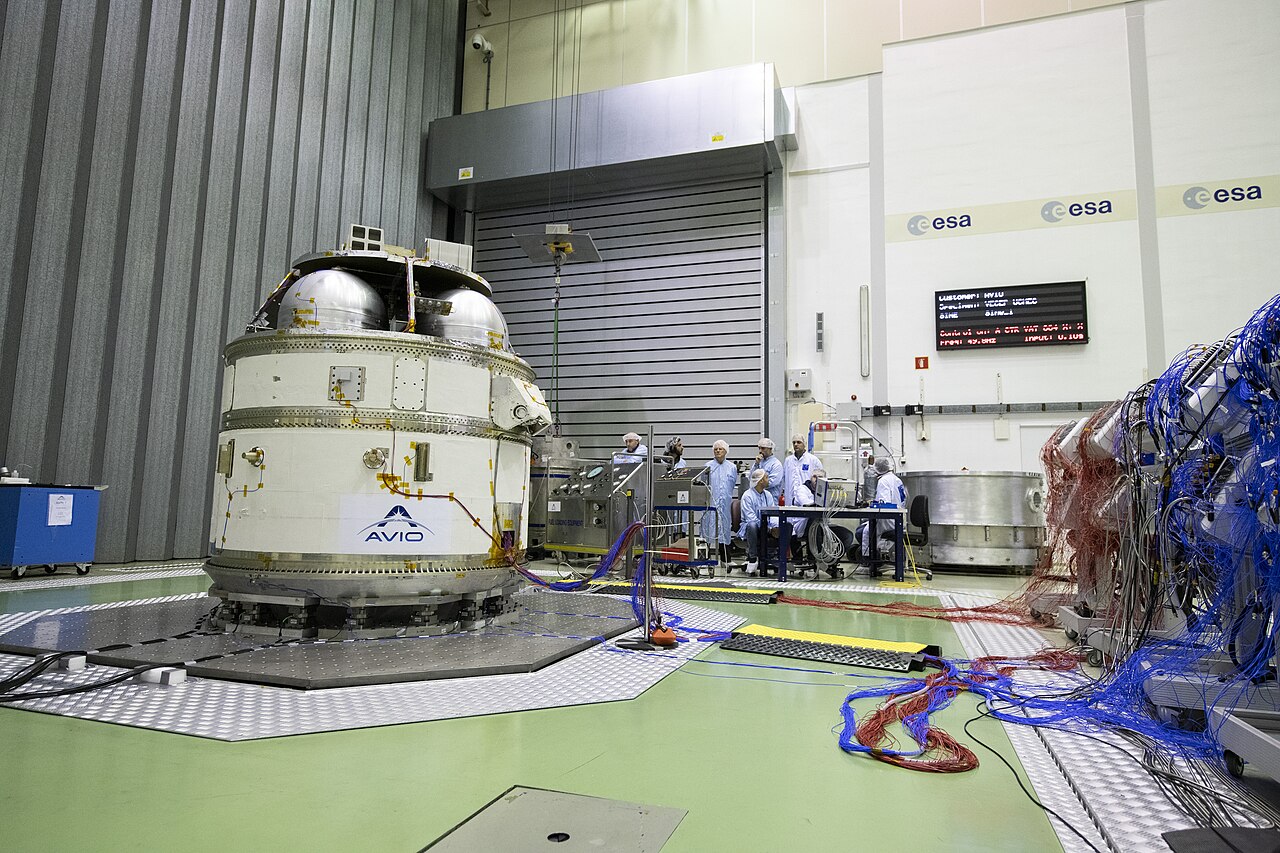
Avio is Italy’s solid rocket motor specialist, the Colleferro-based company whose P120C motor, holding roughly 142 tonnes of propellant, powers both the Vega-C launcher and the boosters of Ariane 6. Its roots go back more than a century, and a US expansion announced in 2026 is now pulling it deeper into the Western missile and munitions supply chain.
Avio at a glance
| Item | Detail |
|---|---|
| Full name | Avio S.p.A. |
| Headquarters | Colleferro, near Rome, Italy |
| Heritage | Traces its roots to 1908; today’s space-focused company emerged after the 2013 sale of its aero-engine arm to General Electric |
| Listing | Borsa Italiana, since 2017 |
| Largest shareholder | Leonardo (roughly 29%, reported), alongside a large free float |
| Main fields | Solid and liquid propulsion for launchers, tactical and strategic missile motors |
| Other sites | French Guiana (motor casting at Kourou through the Regulus venture with ArianeGroup), France, Poland and the United States |
Who owns Avio
Avio’s lineage starts with Fiat Avio, the Turin-based aircraft engine maker that was sold on in stages during the 2000s, with Finmeccanica, today’s Leonardo, staying on as a shareholder. In 2013 the commercial aero-engine business went to General Electric, and what remained, the space propulsion company, listed in Milan in 2017 through a special purpose acquisition vehicle.
Today Avio is a listed company with Leonardo as its reference shareholder, in the range of 29 percent, and a large free float. Avio also holds a majority of ELV, the joint company that develops the Vega launchers, with the Italian Space Agency as the minority partner. That structure gives Italy’s space industry something rare in Europe: a launcher prime that is not French or German.
What does Avio make
| Product | Role |
|---|---|
| P120C | Common solid motor, first stage of Vega-C and booster of Ariane 6 (two on Ariane 62, four on Ariane 64) |
| Zefiro 40 | Second stage of Vega-C |
| Zefiro 9 | Third stage of Vega and Vega-C |
| AVUM+ | Liquid-fueled upper stage for orbit insertion |
| M10 engine | Methane-oxygen engine in development for the Vega-E upper stage |
| Tactical motors | Solid rocket motors for missile and munitions programs, a growing defense line |
The pattern is consistent: Avio builds propulsion, often the most technically demanding and hardest-to-replace part of a rocket. Large solid motors are cast from propellant in a single pour, cured for days and inspected with X-ray methods; very few companies in the world can do that at 140-tonne scale.
Avio P120C and Vega-C
The P120C is the keystone product. Developed so that one motor could serve two launchers, it lowers unit cost through volume, the same logic behind Ariane 6’s design. Vega, the small launcher that first flew in 2012, grew into Vega-C, which debuted in July 2022 with a more powerful first stage and second stage. A December 2022 failure, traced to the Zefiro 40 motor’s nozzle throat insert, grounded the rocket for two years before it returned to flight in December 2024.
That episode showed both Avio’s exposure and its strength. The setback was a component problem, not a design collapse, and the company completed a redesign and requalification while Ariane 6, which relies on the P120C, entered service. For Europe’s goal of independent access to space, Avio is now one of the few suppliers without a direct non-European alternative.
Avio defense business and US expansion
Avio has long used its rocket-motor know-how for military customers, and the market has turned in its favor. Western militaries are draining interceptor and missile stockpiles, and solid rocket motor capacity is one of the tightest bottlenecks, which is why newcomers such as X-Bow and Ursa Major are scaling up.
The most concrete sign is Avio’s US push. As we reported, the company broke ground on its first US solid rocket motor plant in Virginia, a bid to sell American customers motors made on American soil. The company has also said it is targeting tactical motors for European programs, a segment where Nammo and others already compete, see our Nammo profile for the Norwegian rival.
Avio revenue and outlook
Avio’s revenue has run at several hundred million euros a year in recent years, reported, with launchers and space propulsion still the bulk and defense growing fastest from a smaller base. The company has raised fresh capital to fund US expansion and new production capacity, a sign that management sees defense propulsion as a multi-year growth story rather than a side line.
The risks are straightforward: a small number of big programs, exposure to launcher schedules, and the capital intensity of casting and testing ever larger motors. Success depends on Vega-C and Ariane 6 flying regularly, and on converting defense interest into long-term contracts.
Avio frequently asked questions
What does Avio do?
It designs and builds solid and liquid rocket propulsion, including the motors of Vega-C and the boosters of Ariane 6.
Who owns Avio?
Avio is listed on Borsa Italiana; Leonardo is the reference shareholder with roughly 29 percent, according to reported filings.
Where is Avio based?
Colleferro, near Rome, with operations in French Guiana, France, Poland and, from 2026, the United States.
What is the P120C motor?
A large solid rocket motor with about 142 tonnes of propellant, used as the first stage of Vega-C and as the booster of Ariane 6.
Is Avio building a plant in the United States?
Yes, it broke ground on a solid rocket motor plant in Virginia, as reported earlier this autumn.
- Avio S.p.A. public company information and investor materials
- European Space Agency Vega-C and Ariane 6 program information
- Wikipedia – Avio (accessed October 2026)
- Defence & Tech reporting on Avio USA