Anduril Says Its First Satellite Can Track Spacecraft in Earth’s Shadow
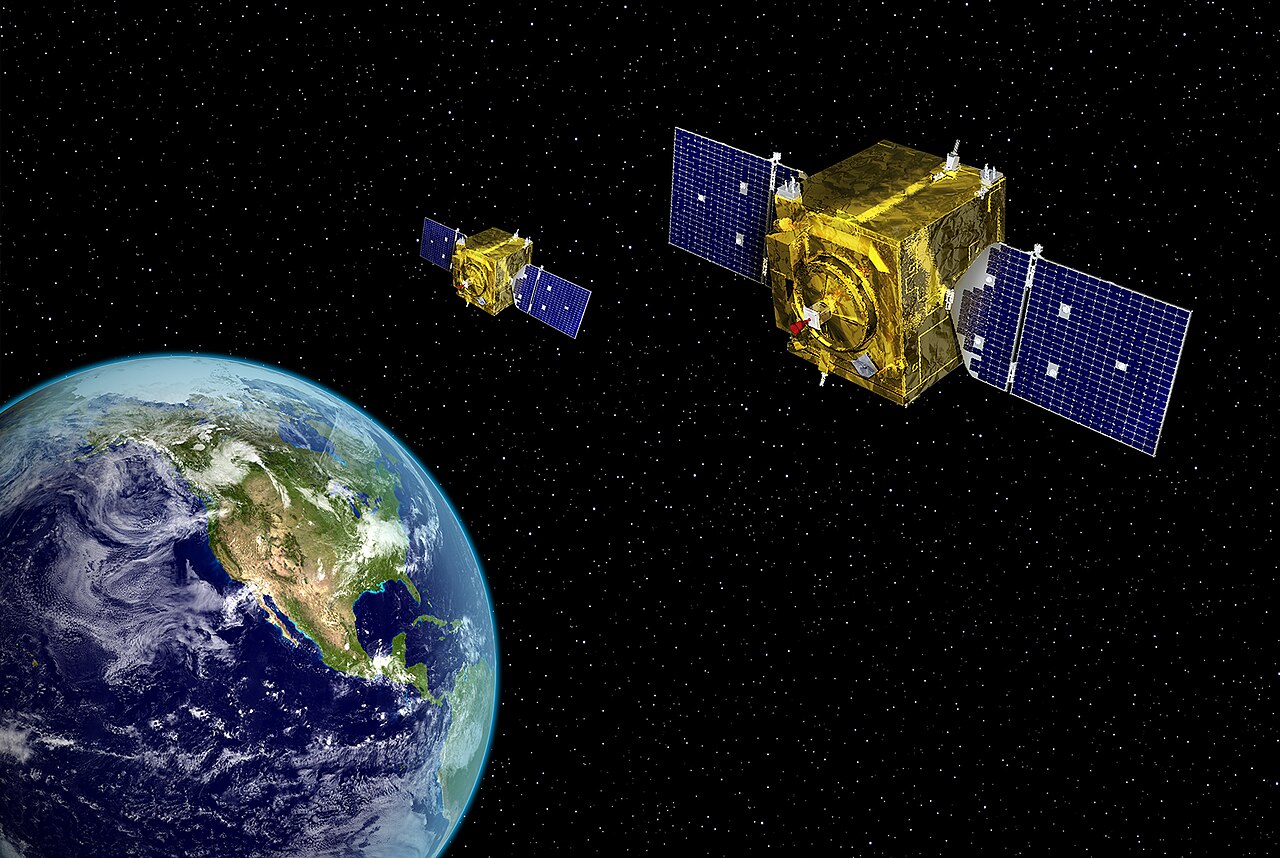
Anduril Industries has disclosed that its first satellite, ANDURIL-216, is a space domain awareness demonstrator carrying a company-built long-wave infrared sensor designed to track spacecraft while they pass through Earth’s shadow. Company executives described the mission in interviews published on November 10.
The satellite launched in July on a SpaceX rocket and rides on a bus supplied by Apex. Anduril paid for the hardware and software itself, with no government contract behind the build, Via Satellite reported.
What ANDURIL-216 Is Doing in Orbit
| Item | Detail |
|---|---|
| Satellite | ANDURIL-216 (A-216), known inside the company as Lectronimo |
| Operator | Anduril Industries |
| Mission | Space domain awareness demonstration |
| Launch | July 2026, SpaceX rideshare |
| Orbit | About 590 km |
| Bus | Apex |
| Payloads | One long-wave infrared sensor, two electro-optical sensors |
| Funding | Internal; no government contract |
| Disclosed | November 10, 2026 |
The spacecraft circles about 590 kilometres above Earth and spends roughly a third of each orbit in darkness, according to Ars Technica. That geometry is the point of the experiment. Satellites that are not lit by the Sun are hard to follow with visible-light cameras, and a spacecraft that manoeuvres while in shadow can be lost altogether.
Adam Thurn, who runs Anduril’s orbital systems unit, said eclipses can last a third of an orbit and that the infrared sensor is meant to maintain custody of an object across the full orbital period. Anduril first reported calibrated images from all three imaging payloads in August, and said then that it had used its Lattice software to commission and task the satellite.
Infrared Against the Eclipse Gap
A long-wave infrared sensor picks up the heat a spacecraft gives off instead of the sunlight it reflects. Gokul Subramanian, Anduril’s senior vice president and head of its space business, told Via Satellite the sensor has low solar exclusion, meaning it can keep working when pointed close to the Sun.
| Feature | Electro-optical sensor | Long-wave infrared sensor |
|---|---|---|
| What it detects | Sunlight reflected by the target | Heat emitted by the target |
| Target in Earth’s shadow | Can lose track | Designed to keep tracking, Anduril says |
| Pointing near the Sun | Not addressed by the company | Low solar exclusion, Anduril says |
| On ANDURIL-216 | Two sensors from third parties | One sensor built by Anduril |
The company released an infrared picture of the Moon above Earth’s horizon taken by the instrument. It has not published imagery of a manoeuvring satellite captured in eclipse, and no outside party has confirmed the tracking performance. Subramanian said the sensor can produce both unresolved detections and detailed images, and could inspect another satellite if it came close enough, Ars Technica reported.
Three Anduril Payloads on an Apex Bus
The infrared sensor is one of three in-house products on board. SpaceNews described them as three new satellite payload systems that Anduril has now tested in orbit.
| Payload | Developer | Role |
|---|---|---|
| Long-wave infrared sensor | Anduril | Tracks objects through eclipse |
| Mission compute module | Anduril | Fuses infrared and visible-light data and produces tracks on board; slotted-card design for third-party software |
| Dynamic payload power module | Anduril | Conditions power for payloads; built to interface with any satellite bus |
| Two electro-optical sensors | Third parties | Visible-light imaging |
Thurn said the compute module was developed with national security missions in mind and allows quick, autonomous decisions at the edge. Anduril describes it as over-provisioned with processing power and able to run frontier AI models. Subramanian called the power module “key to unlocking flexibility” and said it helps lower prices because systems are no longer one-off designs.
This is not the company’s first hardware in space. Anduril supplied an electro-optical payload and Lattice for Apex’s first demonstration satellite in 2024, the first time Lattice ran in orbit.
Selling Data Instead of Satellites
“You can’t fight in space if you can’t see in space,” Subramanian said. He described A-216 as a way to build the team, skills and facilities Anduril needs for government missions. More than 350 people now work on space at the company.
Anduril does not intend to open its own satellite production line. It plans to buy buses from outside manufacturers, is not tied to a single supplier, and wants to act as a systems integrator for the government. Ars Technica reported that the focus is on collecting space domain awareness data to sell to the US military, and that the system is tuned for low Earth orbit but could work in other orbits and in cislunar space. No customer for A-216’s data has been named.
Tracking other nations’ satellites has become a shared concern among Western space forces, a theme that also runs through Europe’s military satellite programmes and Saab’s recent mission system for allied space operations. A self-funded demonstrator suggests Anduril is betting that buyers will pay for tracking data as a service; that reading is analysis, not a company statement.
Anduril Industries Company Profile
| Item | Detail |
|---|---|
| Headquarters | Costa Mesa, California |
| Founded | 2017 |
| CEO | Brian Schimpf |
| Revenue | About $2 billion (2025) |
| Space workforce | More than 350 (2026) |
| Known programmes | Lattice software, YFQ-44A collaborative combat aircraft, Altius drones, Sentry towers |
The company’s aircraft work has drawn more attention than its space unit, most recently when Shield AI’s Hivemind flew two Anduril CCA jets in formation.
ANDURIL-216 FAQ
What is ANDURIL-216?
It is Anduril’s first integrated satellite, a space domain awareness demonstrator launched in July 2026 on a SpaceX rocket and built on an Apex bus.
Why does an infrared sensor matter for tracking satellites?
Visible-light sensors rely on reflected sunlight, so they can lose a spacecraft in Earth’s shadow. A long-wave infrared sensor detects heat and can, Anduril says, keep tracking through eclipse.
Who paid for the satellite?
Anduril funded the space hardware and software internally, with no government contract for the build, according to Via Satellite.
Will Anduril build its own satellites?
No. Executives said the company will buy buses from other manufacturers and integrate its own sensors, computer and power module.
Has the tracking claim been independently verified?
Not publicly. Anduril has released an infrared image of the Moon but no imagery of a manoeuvring satellite tracked in eclipse.
- Via Satellite / Defense Daily – “First Anduril Satellite On Orbit is for Space Domain Awareness” (November 10, 2026): satellitetoday.com
- SpaceNews – “Anduril unveils satellite technology for space surveillance” (November 10, 2026): spacenews.com
- Ars Technica – report on the ANDURIL-216 infrared sensor demonstration (November 2026), as relayed by UA.NEWS
- Defense Daily – “Anduril’s First Satellite On Orbit With Imaging Payloads” (August 14, 2026)
- Wikipedia – Anduril Industries (company data)