F-35 Problems: Readiness, Sustainment Costs and Delayed Upgrades
The F-35’s biggest problems today are on the ground, not in the air: too few jets are ready to fly, keeping them flying costs far more than planned, and the upgrade meant to keep the aircraft ahead of its rivals is years late. Those are the conclusions of the US government’s own auditors and testers, not of the programme’s critics.
None of it means the aircraft performs badly in combat, where its record is strong. It does mean the United States and its partners are getting less use out of a very expensive fleet than they paid for. This article sets out the evidence.
Readiness: fewer than half are mission capable
A mission capable aircraft can fly at least one of its assigned missions. A fully mission capable one can fly all of them. The Government Accountability Office (GAO) reported in June 2026 that both rates for the US F-35 fleet had fallen sharply.
| Measure | 2021 | 2025 |
|---|---|---|
| Mission capable | 67% | 44% |
| Fully mission capable | 38% | 25% |
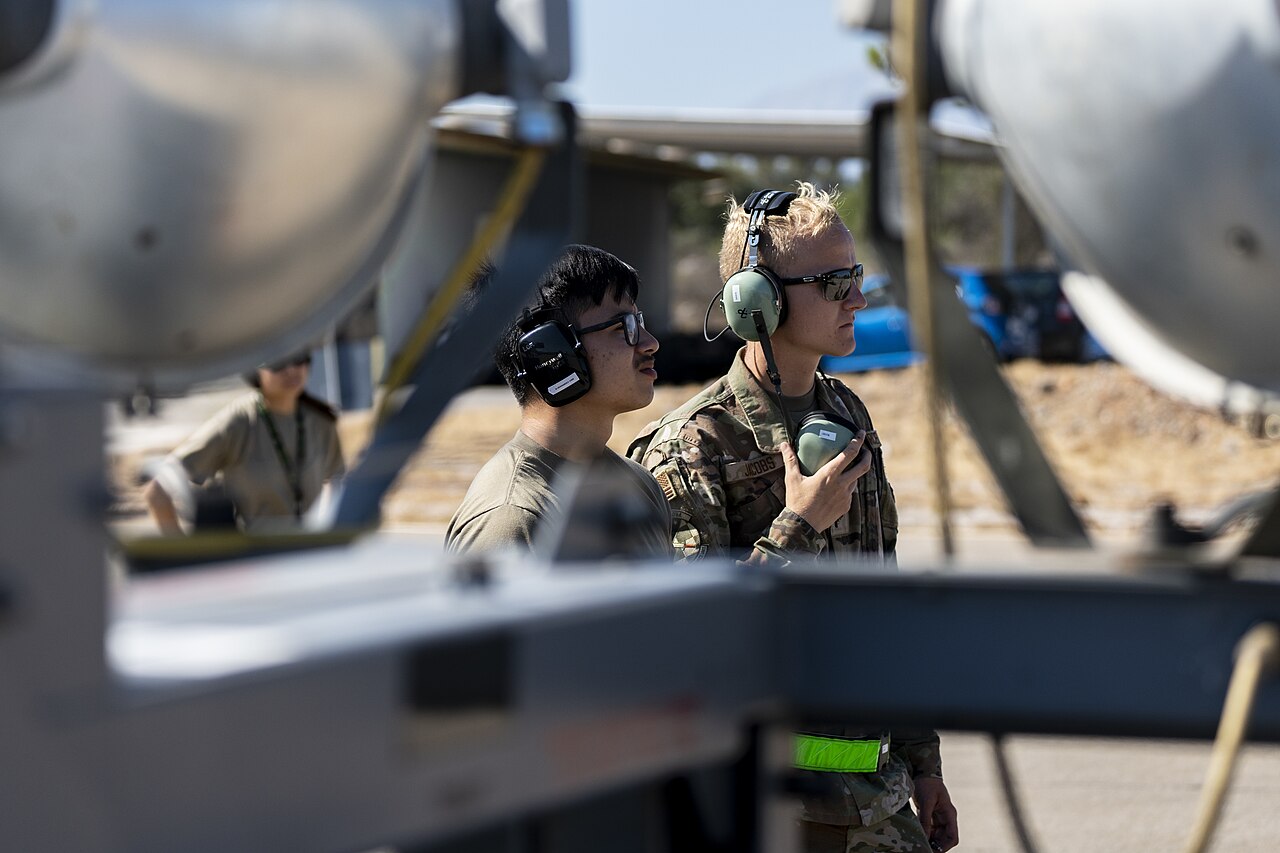
In practice, on an average day in 2025 more than half of American F-35s could not perform any of their missions, and three in four could not perform all of them. The causes are familiar: a shortage of spare parts, too little repair capacity at depots and long waits for components to come back from repair.
Sustainment: the $1.6 trillion bill
Buying the jets is the smaller part of the cost. GAO puts the price of operating and maintaining the US fleet until 2088 at about $1.6 trillion, which takes the whole programme past $2 trillion. An F-35A costs roughly $42,000 for each hour it flies, as we set out in how much an F-35 costs.
The services have responded by planning to fly less. Even so, GAO found that by the mid-2030s there will be a gap of more than $1 billion a year between what the aircraft cost to run and what the services say they can afford. The Pentagon’s plan to reset the support system needs $13.7 billion more than previously budgeted through fiscal 2031.
The auditors also criticised how the contractor is paid. They found that hundreds of millions of dollars in incentive fees paid since 2020 had been tied to performance levels that did not match what the services need, and that industry still lacks the capacity to supply some critical parts.
Upgrades: TR-3 and Block 4 are years late
The second problem is modernisation. Block 4 is a package of new weapons, sensors and electronic warfare functions, and it depends on new computing hardware called Technology Refresh 3. We cover both in Block 4 and TR-3 explained.
TR-3 software was so unstable that the Pentagon refused to accept new jets for a year from July 2023. Deliveries resumed with a limited version. The Pentagon’s test office reported that 158 TR-3 aircraft had been delivered by the end of September 2025 and that none was yet cleared for combat. Some new jets are also being delivered with ballast in the nose because the APG-85 radar is not ready.
Block 4 itself has been cut back and stretched into the 2030s. Much of what was promised for this decade will arrive later, or not at all.
The engine is working too hard
The F135 engine supplies cooling air and electrical power as well as thrust. The jet’s electronics now demand more of both than the engine was designed to give, so it runs hotter and wears out faster, which adds billions to lifetime maintenance costs.
The fix is an Engine Core Upgrade and a new power and cooling system. Neither will reach the fleet before the end of the decade. The background is in our article on the F135 engine and its upgrade.
Why it matters now
Patience in Congress is wearing thin. Senior appropriators have threatened to withhold money unless readiness improves, as we reported in the F-35 funding threat. Abroad, Canada has been reviewing its order, and other buyers have questioned costs and their dependence on a US-run support system.
The run of recent accidents has added to the pressure, with investigators pointing at maintenance in several cases; see our list of F-35 crashes.
Is the F-35 a failure?
No, but it is underperforming. In combat over the Middle East the aircraft has done what it was built to do, as its combat record shows, and more than 1,375 have been delivered to 20 countries. The trouble is that a fleet with a 44 per cent mission capable rate is, in effect, less than half a fleet.
The fixes are known: more spare parts, more depot capacity, government control of technical data, and a stable software baseline. All of them take money and years.
Frequently asked questions
What are the main problems with the F-35?
Low readiness, very high sustainment costs, late software and hardware upgrades, and an engine that is being pushed beyond its design limits. All four are documented by US government auditors and testers.
What is the F-35’s mission capable rate?
GAO reported a fleet-wide mission capable rate of 44 per cent in 2025, down from 67 per cent in 2021. The fully mission capable rate was 25 per cent.
How much does it cost to maintain the F-35?
About $1.6 trillion for the US fleet through 2088, according to GAO. The F-35A costs roughly $42,000 per flight hour.
Why were F-35 deliveries halted?
The Pentagon stopped accepting new aircraft from July 2023 to July 2024 because the TR-3 software was not stable enough. Deliveries resumed with a limited software version.
Is the F-35 a bad aircraft?
Its combat performance has been good. Its problems are in availability, cost and upgrade delays, which reduce how much use operators get from it.
Will the F-35’s problems be fixed?
Plans exist for more spare parts and depot capacity, an engine upgrade and new software, at a cost of $13.7 billion more than previously planned through fiscal 2031. Most of the improvements are not expected before the end of the decade.
- US Government Accountability Office – F-35 sustainment and readiness report, GAO-26-108113: gao.gov
- Defence Industry Europe – US defense budget: F-35 procurement in the fiscal 2027 request: defence-industry.eu
- Lockheed Martin – F-35 Lightning II programme data: f35.com