How Many Submarines Does Turkey Have? Reis Class and MİLDEN
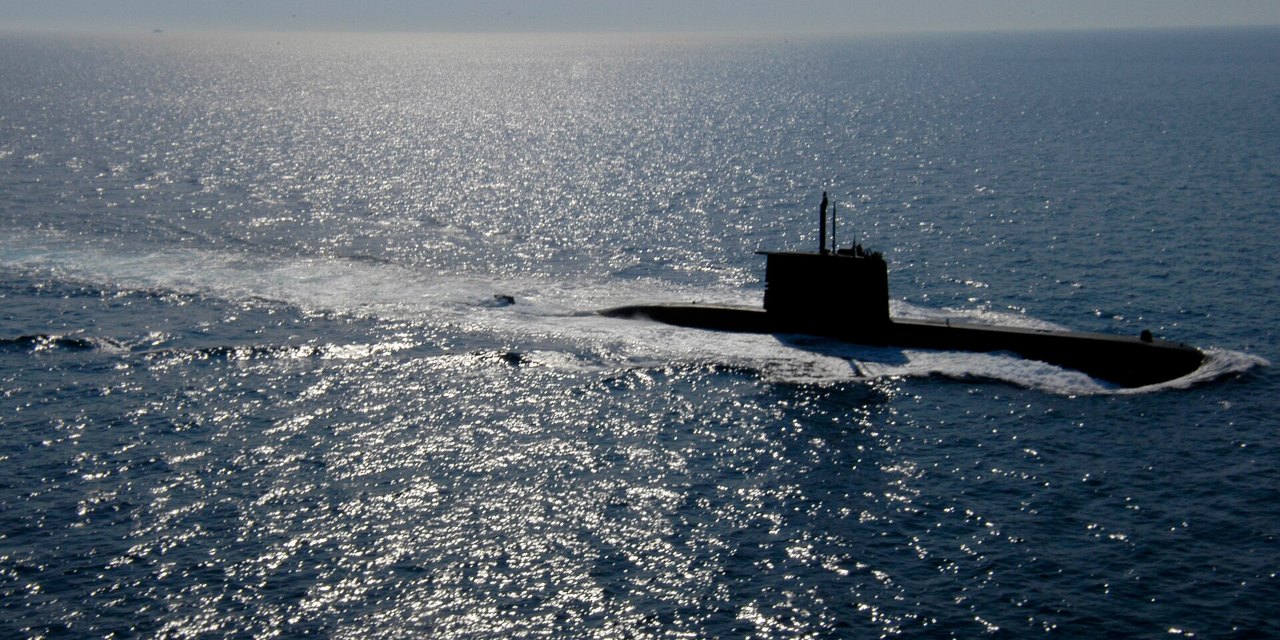
Turkey has 14 submarines, more than any other European member of NATO. All are diesel-electric boats of German design, and all but one were built at the Gölcük naval shipyard on the Sea of Marmara. Twelve are versions of the Type 209, the most widely exported submarine of the Cold War. Two are new Reis-class boats that can stay under water for weeks without surfacing, and four more are being built.
This guide lists the fleet class by class, explains what makes the Reis class different, and looks at the Turkish-designed submarine that is meant to follow it.
How many submarines does Turkey have?
Fourteen, in four classes. The oldest entered service in the 1970s and the newest in November 2025.
| Class | Design | Boats | Entered service | Notes |
|---|---|---|---|---|
| Reis | Type 214TN | 2 | 2024–2025 | Air-independent propulsion; four more building |
| Gür | Type 209T2/1400 | 4 | 2003–2007 | Being fitted for Akya and Atmaca |
| Preveze | Type 209T1/1400 | 4 | 1994–1999 | Mid-life upgrade with Turkish combat system |
| Atılay | Type 209/1200 | 4 | 1970s–1980s | To be replaced by the Reis class |
None is nuclear-powered and none carries nuclear weapons. Their job is to control the Aegean, the eastern Mediterranean and the Black Sea, enclosed and often shallow waters where a quiet conventional submarine is hard to find. The surface fleet they work with is described in our guide to Turkey’s warships.
The Reis class: Turkey’s newest submarine
The Reis class is the Turkish version of the German Type 214. The contract, worth about €2 billion, was signed on 2 July 2009 and covered six boats to be built at Gölcük from German-supplied sections, with Turkish companies providing a growing share of the electronics and weapons. The programme ran years late. The first boat, TCG Piri Reis, was commissioned on 24 August 2024 and the second, TCG Hızır Reis, on 27 November 2025. The third, TCG Murat Reis, was launched on 29 May 2025. President Erdoğan has said all six should be in service by 2029.
| Item | Figure |
|---|---|
| Displacement | 1,860 tonnes surfaced; 2,013 tonnes submerged |
| Length | 68.35 m |
| Speed | 10 knots surfaced; 20 knots submerged |
| Range | 12,000 nautical miles at 6 knots on the surface |
| Propulsion | Diesel-electric with fuel-cell air-independent propulsion |
| Torpedo tubes | 8 × 533 mm |
| Weapons | Akya, Mk 48 and DM2A4 torpedoes; Atmaca missiles; mines |
| Crew | 27 |
What is air-independent propulsion?
A conventional submarine runs under water on batteries. When they run down it has to come close to the surface, raise a snorkel and start its diesel engines to recharge, usually every few days. That is the moment it is easiest to detect. Air-independent propulsion, or AIP, gives the boat a second source of electricity that needs no outside air. In the Reis class this is a set of hydrogen fuel cells, which are almost silent. They do not make the boat fast, but they let it patrol slowly for about three weeks without snorkelling. For a navy that operates close to home in waters crowded with sensors, that matters more than speed.
Torpedoes and missiles
Turkish submarines have used American Mk 48 and German DM2A4 torpedoes for decades. The Turkish replacement is Akya, a heavyweight torpedo made by Roketsan that is guided by a fibre-optic wire and its own sonar. It passed its acceptance firing from TCG Preveze.
The same boat fired the submarine-launched version of the Atmaca anti-ship missile for the first time in a test announced on 12 March 2025. The missile leaves the torpedo tube in a capsule, breaks the surface and flies to its target at a range of more than 220 km. Eight Preveze and Gür-class boats are being fitted to fire both weapons, using a Turkish combat management system called MÜREN. The Atmaca family is described in our guide to Turkey’s missiles. A land-attack cruise missile, Gezgin, is planned.
MİLDEN: the Turkish-designed submarine
After the Reis class Turkey intends to stop building foreign designs. MİLDEN, short for National Submarine, is a boat of more than 80 metres and about 2,700 tonnes on the surface, a third larger than the Reis class, with a crew of 40. Its propulsion combines fuel cells, a methanol reformer that produces hydrogen on board and lithium-ion batteries. Turkish reports put its endurance at more than 50 days.
It has eight torpedo tubes and, unlike any earlier Turkish submarine, a vertical launcher for missiles. Work began at Gölcük in December 2025, and the first hull section was shown to the public in August 2026. Six boats are planned, the first named Atılay. The builder, ASFAT, says it aims to deliver the first before 2030; entry into service in the early 2030s is the more common estimate.
Will Turkey build a nuclear submarine?
Turkish admirals have said in public that a nuclear-powered submarine is a long-term goal, and the project has been referred to as NUKDEN. No contract, design or timetable has been published. Turkey has no naval reactor programme and its first civilian power station, at Akkuyu, was built by Russia. A nuclear submarine would be a project of decades, and for now it is an ambition, not a plan.
How strong is Turkey’s submarine force?
In numbers it is the largest in European NATO. France and Britain operate fewer boats, though all of theirs are nuclear-powered and far more capable individually. The closer comparison is Greece, which has four Type 214s of its own and a handful of older Type 209s. Turkey has more boats, a shipyard that has built submarines without a break since about 1980, and its own torpedoes and missiles coming into service. Its weakness is age: the four Atılay boats are about forty years old, and the Reis class is arriving more slowly than planned.
Frequently asked questions
How many submarines does Turkey have?
Fourteen in October 2026: two Reis class, four Gür, four Preveze and four Atılay. Four more Reis-class boats are under construction.
Does Turkey have nuclear submarines?
No. All Turkish submarines are diesel-electric. Naval officers have spoken of a nuclear-powered boat as a long-term goal, but there is no announced programme schedule.
What is the Reis-class submarine?
It is the Turkish version of the German Type 214, built at Gölcük. It displaces about 2,000 tonnes submerged and uses fuel cells to stay under water for about three weeks.
Can Turkish submarines fire missiles?
Yes. They carry the American Harpoon, and the Turkish Atmaca was first fired from a submarine in March 2025. It has a range of more than 220 km.
What is MİLDEN?
The National Submarine project: a Turkish-designed boat of about 2,700 tonnes with air-independent propulsion and a vertical missile launcher. Six are planned.
Where are Turkish submarines built?
At Gölcük Naval Shipyard on the Sea of Marmara, which has built German-designed submarines since about 1980.
- Wikipedia – List of active ships of the Turkish Naval Forces: en.wikipedia.org
- Wikipedia – Reis-class submarine: en.wikipedia.org
- Naval News – Turkish Navy test-fires submarine-launched Atmaca for the first time (March 2025): navalnews.com
- Quwa – ASFAT reveals MİLDEN submarine specifications (2026): quwa.org
- The National Interest – Turkey could be the next submarine powerhouse (August 2024): nationalinterest.org