
Russia’s Center-2026 Drills Rehearse Seizing Land Near Kazakhstan
Russia’s quadrennial Center-2026 strategic exercise, which ran from September 28 to October 3 across the Chelyabinsk region and the Caspian Sea, rehearsed a scenario in which a coalition force “repelled aggression” from a Central Asian neighbor and then crossed into that territory to “liberate” it and establish a “security zone,” according to the Russian Ministry of Defense. Moscow did not name the simulated adversary, but multiple defense outlets and analysts say the geography described — a border adjoining the South Ural region, with Caspian Sea access — most closely matches Kazakhstan, a Collective Security Treaty Organization (CSTO) ally that has spent recent months diversifying its arms purchases toward China.
What Happened
Center-2026, the latest in Russia’s rotating series of quadrennial strategic command-staff exercises (alongside Zapad, Vostok and Kavkaz), concluded on October 3 after six days of drills centered on the Chebarkul training ground in Chelyabinsk region, with additional activity across a reported eleven training grounds and the Caspian Sea. The Russian Ministry of Defense said the exercise tested the armed forces’ ability to “repel aggression on the Central Asian front and ensure security in the Caspian region.”
Briefing President Vladimir Putin, Deputy Defense Minister Yunus-Bek Yevkurov described a two-phase scenario: in the first phase, a “coalition force repelled the main strike in the South Ural direction” and “stabilized the situation”; in the second, beginning October 2, that force “conducted offensive operations to liberate the occupied territory and establish a security zone in the adjacent territory,” according to the Defense Ministry’s own account, reported by the Ukrainian outlet Militarnyi and corroborated by Mezha.net. Russia’s Caspian Flotilla separately practiced repelling an amphibious landing.
The Defense Ministry put the scale at roughly 47,000 personnel, 2,000 pieces of equipment, 90 aircraft and 77 ships and support vessels — smaller than the 128,000 troops reported for Center-2019 and the roughly 95,000 for Center-2015, a reduction several outlets tied to the demands the war in Ukraine continues to place on Russia’s active force. Foreign contingents from Belarus, China, Kyrgyzstan, Mongolia, Pakistan and Tajikistan reportedly took part alongside Russian units, though the size and role of each contingent has not been independently detailed.
Crucially, the Russian Ministry of Defense’s own scenario description does not name Kazakhstan, or any other country, as the simulated adversary or occupied territory. The Kazakhstan inference comes from Militarnyi, Mezha.net and other regional outlets reasoning from geography: the “South Ural direction” borders northern Kazakhstan, and the Caspian Flotilla’s involvement points toward a state with Caspian coastline, a description Kazakhstan fits better than any other Central Asian CSTO member. No independent satellite imagery, leaked exercise map or on-the-record Russian statement has been published confirming that identification, and it has not been independently verified by Defense & Tech. Kazakhstan’s government had not issued a public statement on the exercise’s scenario as of publication.
The Exercise and the Hardware
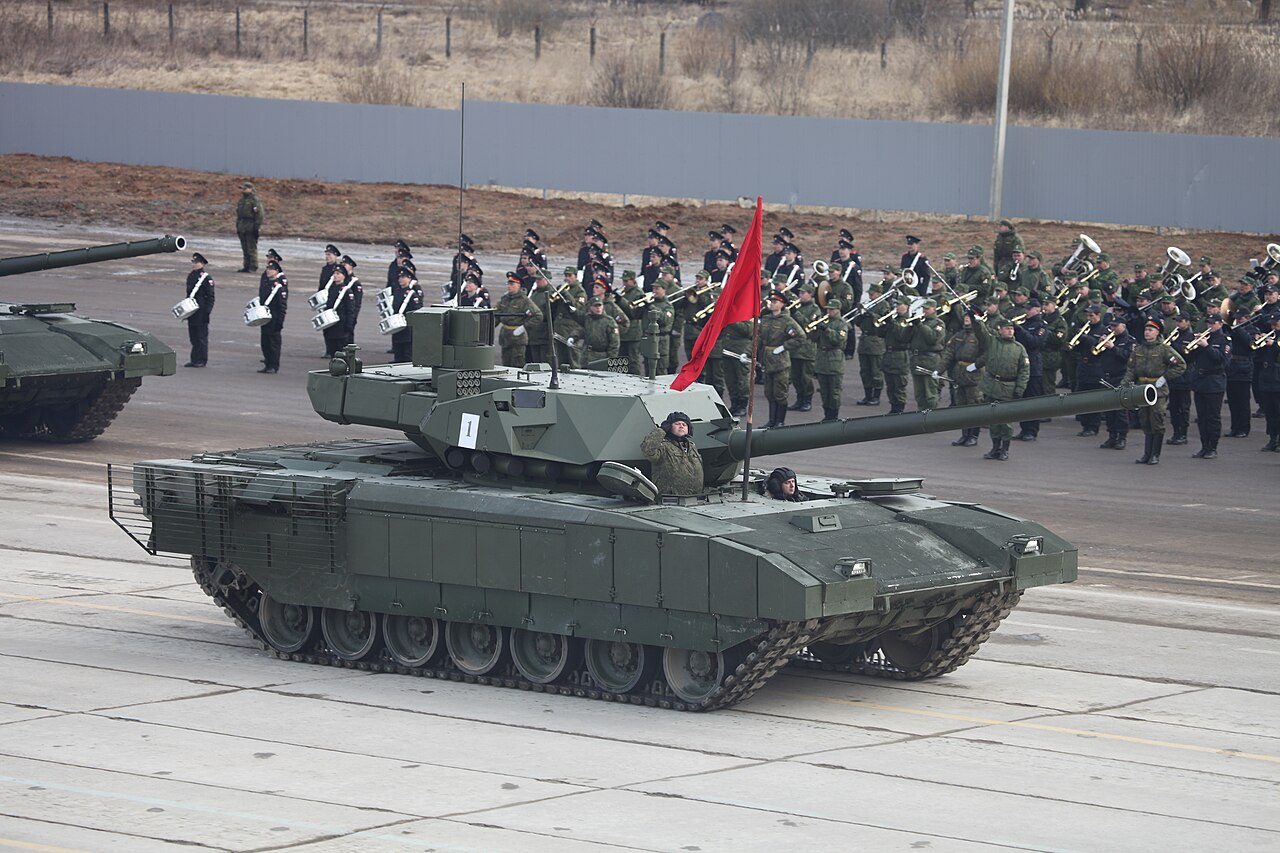
Equipment reportedly fielded during Center-2026 included T-14 Armata main battle tanks, alongside armored vehicles, artillery, drones and at least four long-range aviation aircraft. The Armata platform, Russia’s most advanced tank design, has seen limited production and an uneven combat record in Ukraine since its 2015 unveiling; its appearance in a marquee strategic exercise is consistent with Moscow’s practice of showcasing newer platforms during the Center/Zapad/Vostok/Kavkaz cycle even where fielded numbers remain small.
The exercise’s Caspian component, run by Russia’s Caspian Flotilla, rehearsed anti-landing operations — a mission set relevant to a body of water bordered by Russia, Kazakhstan, Turkmenistan, Azerbaijan and Iran, and one where Moscow has steadily built up naval infrastructure over the past decade.
Who Took Part
Beyond host nation Russia, foreign participation was reported from Belarus, China, Kyrgyzstan, Mongolia, Pakistan and Tajikistan — a mix of CSTO allies (Belarus, Kyrgyzstan, Tajikistan), Shanghai Cooperation Organisation partners (China, Pakistan, Mongolia) and states with longstanding bilateral security ties to Moscow. Kazakhstan’s own forces were not reported among the participants, though Kazakhstan is a CSTO member and routinely takes part in other joint drills, including the CSTO’s own Rubezh-2026 exercise held on Kazakh soil in September.
Why It Matters
The exercise lands amid a visible cooling in Kazakhstan’s defense-procurement relationship with Russia. In July, Putin signed executive orders instructing the Russian government to “amend military-technical cooperation agreements” with both Kazakhstan and Uzbekistan, without disclosing specifics; analysts have linked the move to Moscow’s effort to preserve leverage over two Central Asian states that have begun shopping for Chinese hardware, including a Kazakh Shaanxi Y-9E transport aircraft and reported talks over Hongdu K-8 Karakorum trainers. Against that backdrop, a strategic exercise whose official scenario revolves around “liberating” territory in a location analysts link to Kazakhstan — even one Moscow has not named outright — is likely to be read in Central Asian capitals as a pointed signal, regardless of whether that was the Russian General Staff’s intent.
For Kazakhstan specifically, the exercise does not change its formal security posture: Astana remains a CSTO member and continues to host joint Russian-led drills. But it adds to a pattern — also visible in Russia’s push to revise bilateral defense-technical agreements and in Kazakhstan’s own parallel outreach to Chinese suppliers — of a Central Asian state hedging its security relationships rather than relying on Moscow alone. For CSTO as a bloc, a scenario built around one member state as the setting for a “liberation” operation, however carefully Moscow avoided naming it, sits awkwardly next to the organization’s stated purpose of collective defense among its members.
What Happens Next
No Central Asian government had responded on the record to the Kazakhstan identification as of publication, and it remains an inference by regional defense outlets rather than a confirmed fact. Future indicators worth watching include whether Kazakhstan’s Ministry of Defense or Foreign Ministry comments on Center-2026 at all, whether Moscow publishes further detail on the exercise’s scenario maps, and whether the dispute over revising the Russia-Kazakhstan and Russia-Uzbekistan military-technical agreements that Putin ordered in July produces a public outcome in the coming months.
FAQ
Did Russia officially say Kazakhstan was the target of the Center-2026 scenario?
No. The Russian Ministry of Defense described a generic Central Asian adversary without naming a country. The Kazakhstan identification comes from regional defense outlets reasoning about the exercise’s geography and has not been officially confirmed by Russia or Kazakhstan.
What is the Center exercise series?
Center (Tsentr) is one of four regional strategic command-staff exercises Russia rotates annually — alongside Zapad (West), Vostok (East) and Kavkaz (Caucasus) — each focused on a different military district and held roughly every four years in its full form.
How big was Center-2026 compared to past iterations?
Russia’s Defense Ministry put this year’s exercise at about 47,000 personnel, well below the roughly 128,000 reported for Center-2019 and 95,000 for Center-2015, a drop several outlets attribute to the strain the war in Ukraine continues to place on Russia’s available forces.
Which countries sent troops to Center-2026?
Reported foreign participants included Belarus, China, Kyrgyzstan, Mongolia, Pakistan and Tajikistan, alongside host nation Russia. Kazakhstan’s forces were not reported as participants.
Is this connected to Kazakhstan’s recent defense purchases from China?
It coincides with a period in which Kazakhstan has been diversifying military procurement toward China and Russia has moved to revise its military-technical cooperation agreements with Astana, but no direct causal link between those developments and the Center-2026 scenario has been established.
Sources
- Militarnyi, “Russia Conducts Exercises Simulating Occupation of Central Asian Country,” October 3-4, 2026 — militarnyi.com — primary account of the Russian Defense Ministry’s briefing and Yevkurov’s quoted scenario description.
- Mezha.net, “Russia Rehearses Retaking Territory and Creating a Security Zone in Center-2026 Drills Near Kazakhstan,” October 2026 — mezha.net — independent corroboration of exercise scale, participants and scenario wording.
- Caspianpost, “Russia, China Stage Military Exercises in Central Asian Country,” October 2026 — caspianpost.com — regional reporting on foreign participation.
- Defense & Tech, “China Deepens Military Aviation Ties With Kazakhstan as Russia Moves to Revise Defense Pacts,” September 6, 2026 — defenseandtech.com — background on Putin’s July executive orders on Kazakhstan/Uzbekistan military-technical agreements and Kazakhstan’s Chinese procurement.
- Defense & Tech, “CSTO’s Rubezh 2026 Drills Test Russian Ulan Buggies, 115 Drones in Kazakhstan,” September 30, 2026 — defenseandtech.com — context on Kazakhstan’s parallel participation in CSTO’s own September exercise.