
Finland’s First F-35As Land at Rovaniemi, Opening Fifth-Gen Era

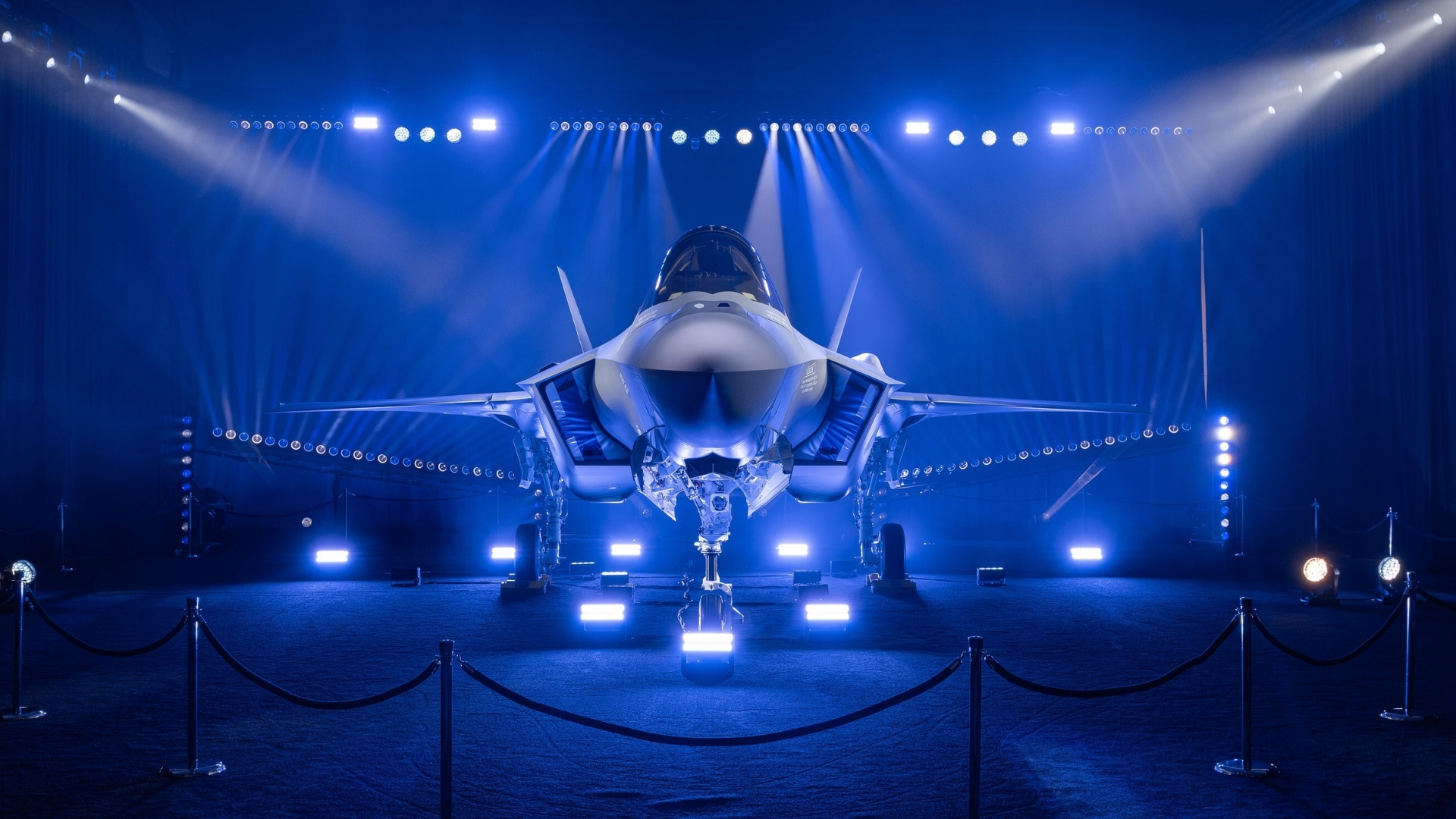
Finland’s first two F-35A Lightning II fighters touched down at Rovaniemi on 18 September 2026, ending a four-year wait between contract signature and the moment the aircraft finally reached Finnish soil. The jets, carrying tail numbers JF-510 and JF-512, crossed into Finnish airspace shortly after 5:20 p.m. local time and landed at the Lapland Air Wing about twenty minutes later, escorted on the final leg by F/A-18 Hornets from the force they are eventually meant to replace.
It was a deliberately symbolic handover. The Hornet fleet that has carried Finnish air defence since the mid-1990s flew alongside the aircraft that will take over from it, over an air base 830 kilometres north of Helsinki and roughly 250 kilometres from the Russian border.
A Three-Day Crossing From Fort Worth
The transatlantic ferry flight began at Lockheed Martin’s production plant in Fort Worth, Texas, and was staged through Lajes Air Base in the Azores, where the aircraft paused on 15 September. Two KC-135 Stratotankers from the U.S. Air Force’s 100th Air Refuelling Wing provided tanker support across the Atlantic.
Three aircraft were expected. Only two arrived: JF-511 remained at Lajes with an unresolved technical issue and will follow once engineers clear it. That is an unremarkable outcome for a first long-range ferry of a new type, but it is a reminder that the initial months of any fifth-generation fleet are spent building the support apparatus as much as flying the aircraft.
Sixty-Four Aircraft, Two Bases
Finland’s programme of record covers 64 F-35As, numbered JF-501 through JF-564 — the largest single fifth-generation fleet planned in northern Europe. The buy emerged from the HX fighter competition, in which the F-35 beat the Eurofighter Typhoon, Dassault Rafale, Boeing F/A-18E/F Super Hornet and Saab Gripen E, with Helsinki announcing its selection in December 2021.
Eight Finnish aircraft remain at Ebbing Air National Guard Base in Arkansas, where Finnish pilots and maintainers have been training alongside the U.S. Air Force. That training pipeline is scheduled to wrap up in early 2028, which is also when the Lapland Air Wing is due to reach initial operational capability and when deliveries begin to the Karelia Air Wing at Rissala in eastern Finland.
Until then, the Hornet fleet keeps flying. Finland plans to run both types in parallel through roughly 2030, when the F-35A force is expected to reach full operational capability and the F/A-18C/D is retired. Running two fast-jet fleets simultaneously is expensive and manpower-intensive, but it avoids the capability gap that several European air forces have endured during generational transitions.
Built for the Arctic, and for Dispersal
Rovaniemi is not an accidental choice for the first operational base. The Lapland Air Wing sits inside the Arctic Circle and has spent decades practising cold-weather operations, road-base dispersal and rapid deployment from austere strips — the doctrine Finland built during the Cold War and never abandoned. Applying that doctrine to a low-observable aircraft with demanding maintenance and mission-data requirements is the harder engineering problem, and it is one Finland has been working on since before the aircraft arrived.
Major General Timo Herranen, describing the aircraft’s role, called the F-35 “a force multiplier and a battlefield quarterback,” pointing to its sensor fusion and data-sharing rather than to kinematic performance. That framing matters for a force whose fighters are expected to operate as sensors and network nodes across a very large, sparsely populated area of responsibility.
What It Changes in the High North
Finland joined NATO in April 2023, and the F-35 buy predates that decision — it was made while Helsinki was still formally non-aligned. The effect, however, is to knit Finland into an increasingly uniform northern fleet. Norway and Denmark already operate the F-35A; Belgium, the Netherlands, Poland and the United Kingdom fly the type further south; Sweden, which joined NATO in March 2024, continues with Gripen. The result is a Nordic air picture in which Finnish, Norwegian and Danish aircraft share a common mission-data and sustainment architecture.
For Russia’s Northern Fleet and the Kola Peninsula basing complex, that changes the surveillance and strike geometry in the Barents and Baltic approaches. Finnish F-35s based at Rovaniemi and Rissala sit closer to those facilities than any other allied fifth-generation fleet.
Industrially, Finland negotiated assembly and sustainment work into the deal: Patria is building F-35 forward fuselage sections at Halli, and Finland is to host engine assembly and maintenance capacity in-country — a hedge against depending entirely on overseas depots during a crisis.
None of that is operational yet. What arrived at Rovaniemi on 18 September was two aircraft and the beginning of a seven-year transition. But it is the point at which the programme stops being a contract and becomes an air force.
Sources
- The Aviationist — “Finland’s F-35s Touch Down on Home Soil for the First Time,” 19 September 2026
- Lockheed Martin / F-35 Joint Program Office — Finland programme pages and rollout release for Finland’s first F-35A (JF-501)
- Army Recognition — “Finland’s First F-35As Arrive in the Country as NATO’s Fifth-Generation Network Expands Across the High North”
- Finnish Air Force (Ilmavoimat) — HX programme and Lapland Air Wing statements