AH-1Z Viper Specs, Weapons, Variants and Operators
The AH-1Z Viper is Bell’s four-blade, twin-engine attack helicopter for the US Marine Corps, with a top speed near 411 km/h and a 20 mm chin gun backed by Hellfire and rocket loads. It is the modernized descendant of the Vietnam-era Cobra, rebuilt around a new rotor and cockpit, and it now serves several export customers as well.
What is the AH-1Z Viper
The AH-1Z is a two-seat attack helicopter built by Bell Textron, part of Textron, at its Texas plants. It grew out of the Marine Corps’ H-1 upgrade program, which converted older AH-1W Super Cobras into Zs and paired them with the UH-1Y Venom utility helicopter so that both share most of their dynamic components.
The change that matters most is the composite four-blade rotor, which lifts payload, raises speed and cuts the workload of maintaining two separate fleets afloat. The Marines fly the Viper from amphibious ships as their dedicated attack and escort helicopter, and export orders are now extending its production line well into the 2030s.
AH-1Z Viper specifications
| Parameter | Value |
|---|---|
| Manufacturer | Bell Textron (USA) |
| Crew | 2 (pilot and copilot/gunner) |
| Main rotor | Four-blade composite, diameter about 14.6 m |
| Engines | 2 x General Electric T700-GE-401C, about 1,800 shp each |
| Max takeoff weight | About 8,400 kg |
| Maximum speed | About 411 km/h (220 knots), reported |
| Cruise speed | About 296 km/h |
| Range | About 685 km on internal fuel |
| Service ceiling | About 6,100 m |
| Gun | 20 mm M197 three-barrel cannon, chin turret |
AH-1Z Viper weapons and sensors
Four stub-wing stations carry the load. Typical options include AGM-114 Hellfire anti-tank missiles, the Joint Air-to-Ground Missile now entering service, laser-guided APKWS rockets, unguided Hydra 70 rockets and AIM-9 Sidewinder missiles for self-defense. The 20 mm cannon handles soft targets at close range. Compared with the anti-tank reach described in our ATGM generations explainer, the Viper’s standoff comes from its sensor rather than a long-range missile.
That sensor is a Lockheed Martin Target Sight System in a nose turret, combining forward-looking infrared, a television camera and a laser designator. The glass cockpit shows a common picture with the Venom and feeds data through the Marines’ tactical datalinks. The helicopter can also guide weapons fired by other aircraft.
AH-1Z Viper operators
| Operator | Notes |
|---|---|
| United States Marine Corps | Launch customer; the Z replaced the AH-1W fleet under the H-1 program |
| Bahrain | Ordered 12 through US foreign military sales; first export customer |
| Czech Republic | Eight AH-1Z plus UH-1Y utility helicopters; deliveries began in the mid-2020s |
| Nigeria | Approved FMS case for 12; contract milestones and first deliveries reported |
| Other prospects | Interest and approvals reported from several Asian and Gulf countries; status varies |
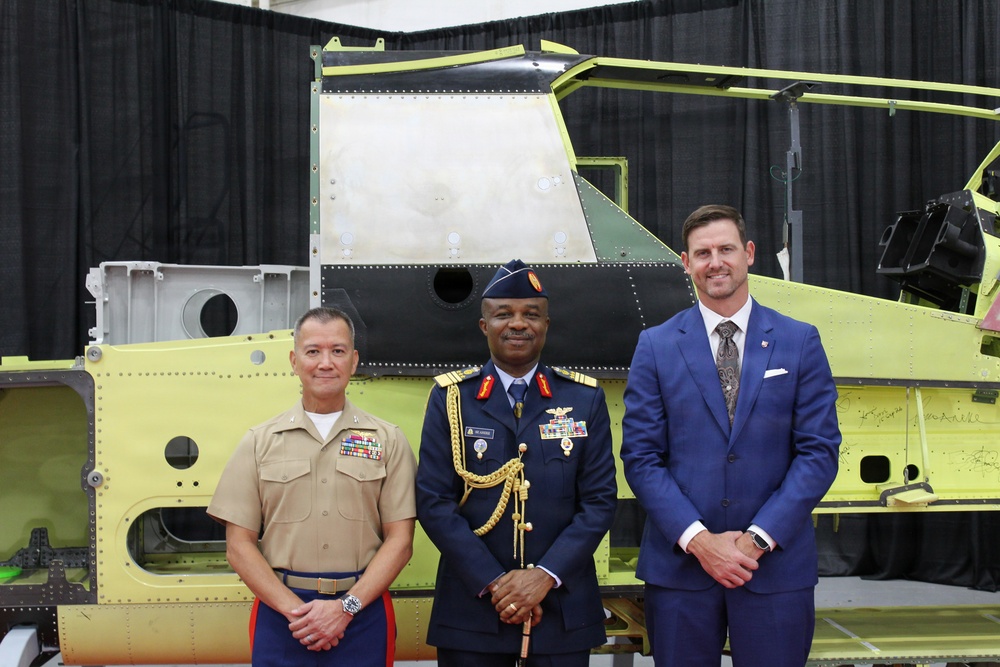
The Marines’ fleet has served aboard amphibious ships, with Viper detachments deploying alongside F-35B fighters and MV-22 tiltrotors in expeditionary units. Nigeria’s order, marked by a beam-signing ceremony at Bell’s Amarillo plant, is the clearest recent example of the type’s export reach.
AH-1Z vs AH-64 Apache
The Viper is lighter, smaller and cheaper than the AH-64 Apache, and it is built for a salt-laden shipboard environment, folding its blades and tail for storage. The Apache carries more ordnance, has the Longbow millimeter-wave radar, and dominates land-based armies. In our top 10 attack helicopters ranking, the Viper sits behind the Apache mostly on networking depth, not airframe quality.
Variants and development history
The Z designation marks the fourth generation of the Huey-derived H-1 family. Bell flew the first prototypes in the early 2000s after an earlier plan for a simple upgrade grew into a near-total redesign, and the program endured cost growth and schedule slips before full-rate production. The Marines treat the Viper and Venom as a single fleet, which simplifies spares and training on deployed ships.
Since then the aircraft has received software upgrades, new radios, and integration of newer precision weapons. Export configurations differ mainly in communications, survivability equipment and the weapons cleared for sale, so buyers should not assume the US Marine Corps standard.
AH-1Z Viper frequently asked questions
What is the difference between the AH-1Z and AH-1W?
The Z has a new four-blade composite rotor, stronger engines, a glass cockpit and a modern targeting sensor, giving it higher speed, payload and range than the older W.
How fast is the AH-1Z Viper?
Its maximum speed is reported at around 411 km/h, with a cruise speed near 296 km/h.
How much does an AH-1Z cost?
Reported unit cost is in the range of roughly $30 million, varying with equipment and support packages.
Who uses the AH-1Z Viper?
The US Marine Corps, Bahrain and the Czech Republic, with Nigeria among the newer customers.
Does the AH-1Z carry air-to-air missiles?
Yes, it can carry AIM-9 Sidewinder missiles for self-defense.
- Bell Textron AH-1Z product literature
- US Department of Defense and Defense Security Cooperation Agency announcements
- Wikipedia – Bell AH-1Z Viper (accessed October 2026)
- Defence & Tech reporting