Eurofighter Typhoon Specs, Variants, Weapons and Operators
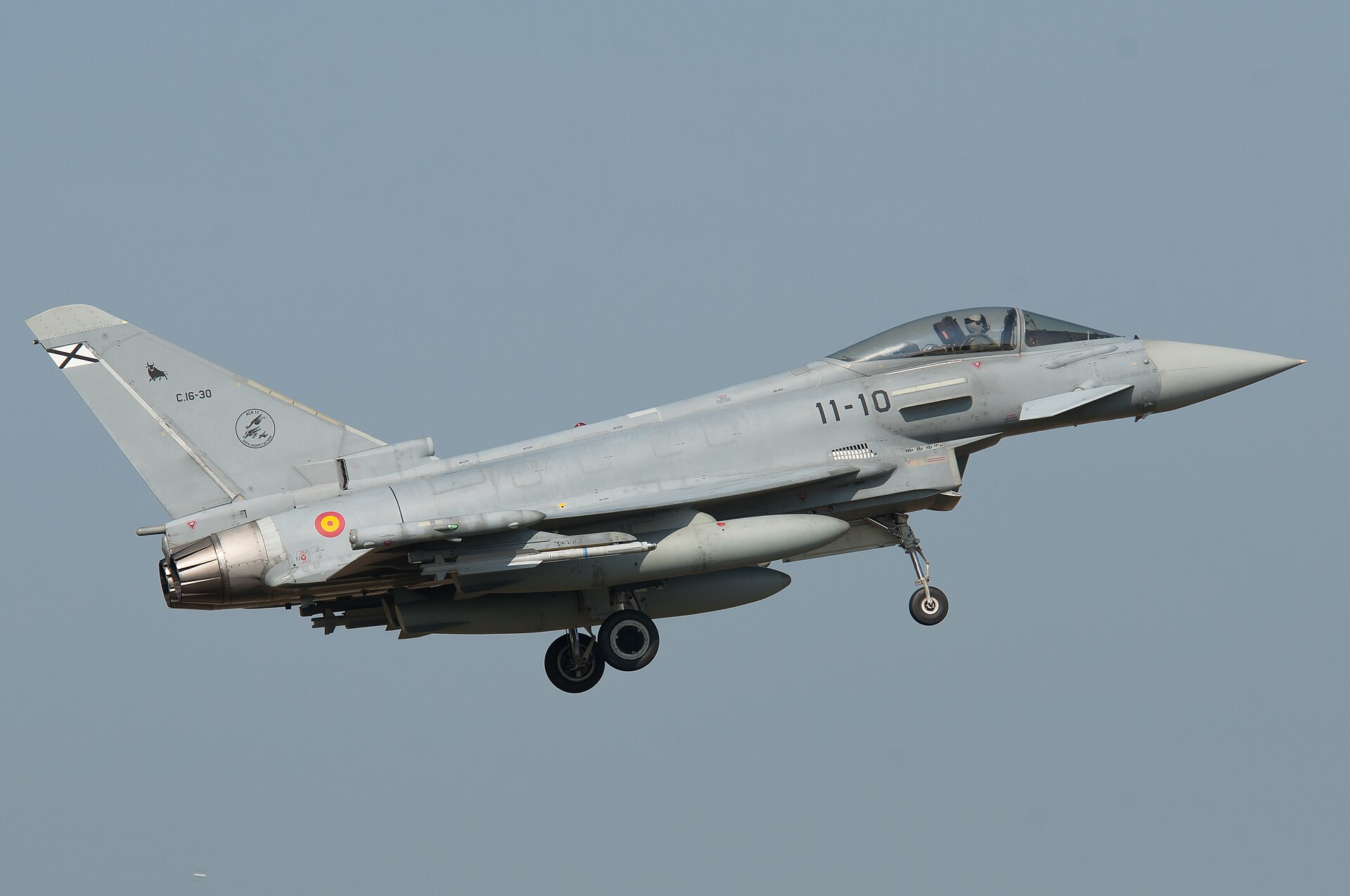
The Eurofighter Typhoon is a twin-engine, Mach 2 multirole fighter built by a four-nation consortium, with more than 700 ordered and a new AESA radar that is extending its career into the 2040s. Developed by the UK, Germany, Italy and Spain, the Typhoon entered service in 2003 and remains the backbone of several European and Gulf air forces.
What is the Eurofighter Typhoon
The Typhoon grew out of a 1980s project to replace Cold War fighters such as the Tornado and F-4. France left the program and built the Rafale instead, while the UK, Germany, Italy and Spain proceeded with a shared design. The prototype flew in 1994 and the aircraft entered service in 2003. Work is shared between BAE Systems, Airbus and Leonardo, and assembly lines sit in each partner country.
The airframe is a delta-wing, canard-equipped design that is aerodynamically unstable, a feature that helps it turn sharply and accelerate in combat. The pilot flies it through a quadruplex digital flight control system. The aircraft has limited stealth features, relying instead on speed, agility and a heavy weapon load. A fair comparison with its French rival is in our Rafale vs Typhoon guide.
Eurofighter Typhoon specifications
| Parameter | Value |
|---|---|
| Crew | 1 (two-seat T variants for training) |
| Length | About 15.96 m |
| Wingspan | About 10.95 m |
| Maximum takeoff weight | About 23,500 kg |
| Engines | Two Eurojet EJ200 turbofans, about 90 kN each with afterburner |
| Maximum speed | About Mach 2 |
| Service ceiling | About 19,800 m |
| Combat radius | About 1,300 km on air-to-surface missions, depending on loadout |
| Weapon stations | 13 hardpoints, up to about 9,000 kg |
| Gun | One 27 mm Mauser BK-27 cannon |
Typhoon radar and weapons
Early Typhoons use the mechanically scanned CAPTOR-M radar. The major upgrade is the CAPTOR-E AESA radar, known as ECRS Mk1, which is being retrofitted to some fleets and delivered on new aircraft for Germany, Spain and others. A more advanced ECRS Mk2 version, which adds electronic attack functions, is in development for the UK. An AESA set improves detection range and jamming resistance, as explained in how AESA radar works.
The Typhoon’s signature air-to-air weapon is the Meteor, a ramjet-powered missile made by MBDA with a range that MBDA describes as well beyond 100 km. Other weapons include the AIM-120 AMRAAM, ASRAAM and IRIS-T missiles, the Storm Shadow and Taurus cruise missiles, Brimstone and Paveway IV precision weapons. The mix varies by customer.
Typhoon variants and tranches
| Tranche | Period | Main changes |
|---|---|---|
| Tranche 1 | 2003 onward | Air-to-air focus, limited ground attack |
| Tranche 2 | About 2008 onward | Improved avionics, multirole capability |
| Tranche 3A | About 2013 onward | Better computing, provisions for AESA and new weapons |
| Tranche 4 | Recent orders | AESA radar, updated systems for Germany, Spain and others |
| Two-seat T variants | Throughout | Trainers that can also fight |
Germany and Spain are also adding dedicated electronic warfare variants, including Germany’s Eurofighter EK. Tranche 1 aircraft are being retired by some nations or sold to other users, and the UK has been trimming older jets as part of its fleet plans.
Who flies the Typhoon
The four partner nations are the main operators, along with Austria, Saudi Arabia, Oman, Kuwait and Qatar. Turkey agreed in 2025 to buy 20 new Typhoons, a reported multi-billion-dollar deal that also included used aircraft from Qatar and Oman. Additional orders from Germany, Italy and Spain have kept the production line open, while recent sales talks with other air forces have been reported. The total order book above 700 aircraft makes it one of the best-selling European fighters.
Cost is the other consideration. Unit prices depend heavily on the configuration and the customer, and published estimates run from roughly 100 million dollars for recent export deals upward, so they should be read as broad ranges. Operating costs are also higher than for single-engine rivals because two engines need maintenance. Supporters argue that the Typhoon’s long service life, European supply chain and ability to carry a large weapon load justify that price.
Typhoon combat record
The Typhoon flew strike missions over Libya in 2011 and later took part in coalition operations against Islamic State in Iraq and Syria. Saudi aircraft have operated over Yemen. European Typhoons regularly intercept Russian aircraft near NATO airspace and have been used in air policing over the Baltic states. Combat experience is smaller than the F-16’s, and the Typhoon has not faced a modern peer air force.
Eurofighter Typhoon frequently asked questions
Who makes the Eurofighter Typhoon?
A consortium of BAE Systems, Airbus and Leonardo, representing the UK, Germany, Spain and Italy.
How fast is the Typhoon?
About Mach 2 at altitude.
How many Typhoons have been ordered?
More than 700, according to the consortium.
Is the Eurofighter Typhoon stealthy?
It has some radar signature reduction but is not a stealth fighter like the F-35.
Which engine does the Typhoon use?
Two Eurojet EJ200 turbofans.
- Eurofighter GmbH and partner company literature
- SIPRI Arms Transfers Database
- Wikipedia – Eurofighter Typhoon (accessed October 2026)
- Defence & Tech reporting