High-Power Microwave Weapons Explained, How HPM Kills Drone Swarms
High-power microwave weapons use a burst of radio-frequency energy in the 1 to 300 GHz range to fry or scramble electronics, and they are the first directed-energy systems designed to stop an entire drone swarm with a single shot. Unlike lasers, which burn one target at a time, microwave weapons flood a cone of airspace, trading range and precision for area coverage and near-zero cost per shot.
What is a high-power microwave weapon
A high-power microwave weapon, or HPM, is a directed-energy system that emits a short, intense pulse of microwave radiation through an antenna. The pulse induces currents in electronic circuits, which can cause temporary upset such as rebooting and lost control, or permanent damage by burning out semiconductors.
Publicly, the military definition is loose, but peak powers in the hundreds of megawatts are commonly described for pulsed systems. Newer solid-state designs use arrays of gallium-nitride amplifiers, the same family of technology explained in our guide to GaN radar, which lets an HPM steer its beam electronically and run without the bulky, single-shot pulsed-power tubes of older devices.
How do microwave weapons work
Every electronic device is surrounded by conductors that act as unintended antennas: wires, circuit-board traces, sensor inlets. A strong microwave field couples energy into these paths. Engineers split the effects into two routes.
Front-door coupling means energy enters through a deliberate antenna, such as a radio receiver or radar, and overloads its input stage. Back-door coupling means energy leaks through seams, cables and apertures in the housing. A small drone with a plastic body and exposed wiring is especially vulnerable, which is why HPM is marketed primarily for counter-drone defense.
The approach matters because drones increasingly resist conventional tools. A fiber-optic FPV drone has no radio link to jam, as explained in our piece on fiber-optic drones, but it still carries electronics that a microwave pulse can disrupt. Likewise, autonomous swarms described in our swarm explainer are hard to shoot one by one.
HPM weapons vs lasers and jammers
| Method | Targets at once | Typical strength | Typical weakness |
|---|---|---|---|
| High-power microwave | Many, inside a cone | Area coverage, low cost per shot, works on autonomous drones | Shorter range, needs large power, shielded targets resist |
| Laser | One at a time | Precise, long range, low cost per shot | Weather, dwell time, slow against swarms |
| Radio-frequency jamming | Many, if frequency is known | Cheap, non-destructive | Useless against fiber-optic or fully autonomous drones |
| Guns and interceptors | One per round or missile | Proven, kills at range | High cost or ammunition limits against cheap drones |
The technologies complement rather than replace each other. Jammers handle the cheap and common threats, lasers deal with individual high-value targets, and HPM is held as the answer for saturation attacks. Commercial developers such as DroneShield emphasize layered architectures for that reason.
Which HPM systems exist today
| System | Developer / country | Status and notes |
|---|---|---|
| Leonidas | Epirus, United States | Solid-state GaN array; Army and other service contracts; vendor reports neutralizing dozens of drones in one pulse |
| Phaser | Raytheon, United States | Truck-mounted HPM tested against drone swarms; marketed to US and allied customers |
| THOR | Air Force Research Laboratory, United States | Transportable system designed for base defense against drone swarms |
| CHIMERA | Air Force, United States | Long-range counter-electronics HPM concept |
| RFDEW | United Kingdom, industry team | Radio frequency directed energy weapon trialed by British forces; low per-shot cost claimed |
| Ranets-E | Russia | Russian-advertised ground HPM; capabilities are manufacturer claims and unverified |
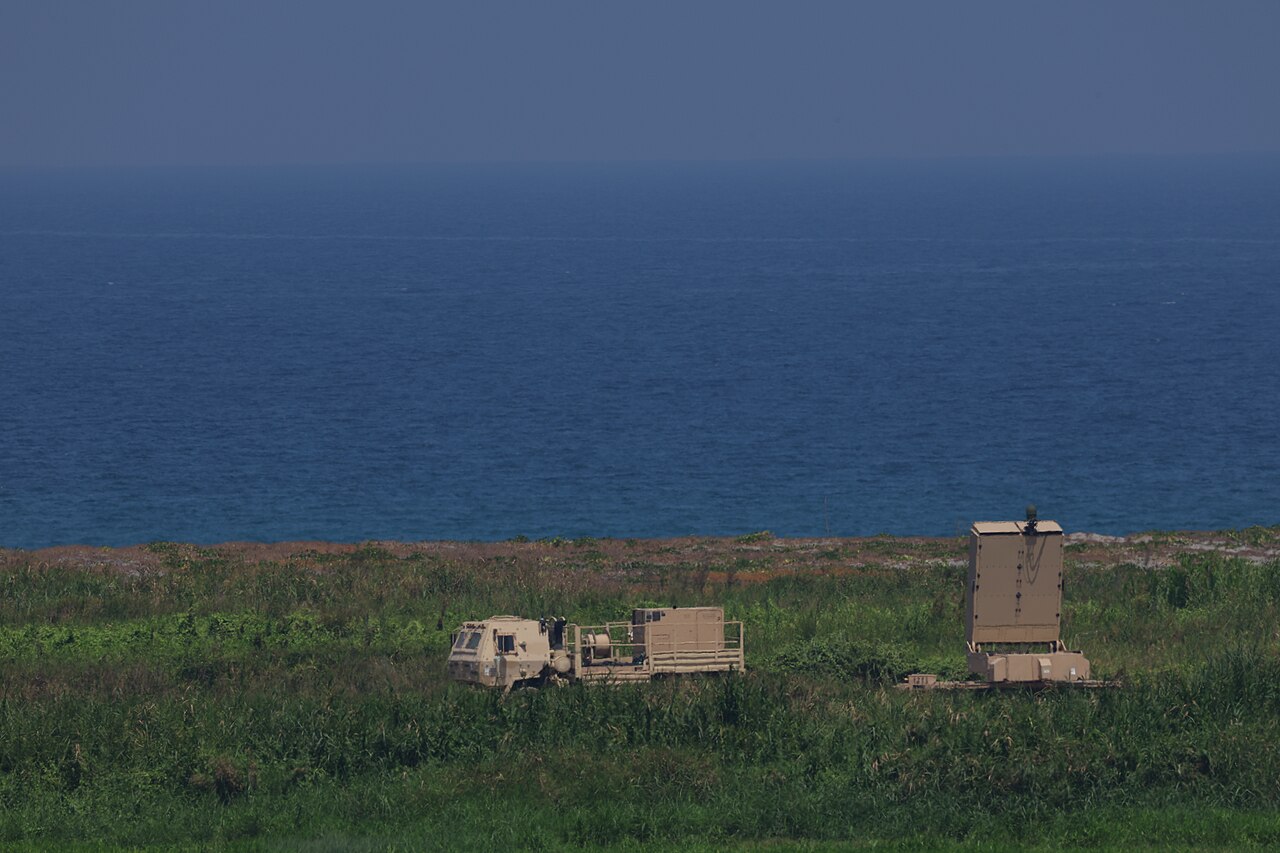
The American ecosystem is the most mature. Epirus and its Leonidas system anchor the US Army effort, and imagery published by the US military shows HPM units staged for exercises in the Philippines. The UK’s RFDEW trial in 2024 produced the widely quoted claim of per-shot costs below a pound, a government figure rather than an independent measurement.
What are the limits of microwave weapons
Physics caps range. Microwave energy spreads out and weakens with distance, so effective ranges against small drones are generally described in the hundreds of meters to a few kilometers depending on power, and most public figures are vendor claims. Power and cooling demands are real too, and large trailers or trucks are still needed for the most capable systems.
Countermeasures exist. Shielded, hardened electronics, metal enclosures and fiber-optic internal wiring can reduce susceptibility, and military drones and missiles are often hardened already. Friendly electronics must be protected from the defender’s own beam as well. Finally, unlike a laser that leaves visible damage, verifying a microwave kill is difficult, a problem the developers of these systems are working on with test instrumentation.
High-power microwave frequently asked questions
What is a high-power microwave weapon?
A directed-energy device that emits intense microwave pulses to disrupt or destroy electronics, used mainly against drones and other electronic threats.
Can microwave weapons stop drone swarms?
Developers say yes, because the beam covers a cone of airspace. Claims of dozens of drones per pulse come from vendor demonstrations and are not independently verified.
Are microwave weapons dangerous to people?
Military HPM systems are designed against electronics, but high-intensity fields can be hazardous, so safety distances and operating rules apply.
What is the difference between HPM and EMP?
An EMP is a broad, brief pulse, often from a nuclear or special device. HPM is directed, repeatable and uses a defined microwave frequency band.
Which countries have HPM weapons?
The United States leads in public programs, with the United Kingdom, Russia and China also reported to be developing systems.
- US Air Force Research Laboratory and US Army public information on HPM programs
- Wikipedia – Directed-energy weapon (accessed October 2026)
- Epirus and Raytheon product literature (manufacturer claims)
- UK Ministry of Defence statements on the RFDEW trial
- Defence & Tech reporting on counter-drone technology