Glock, the Austrian Pistol Maker That Conquered Police Holsters
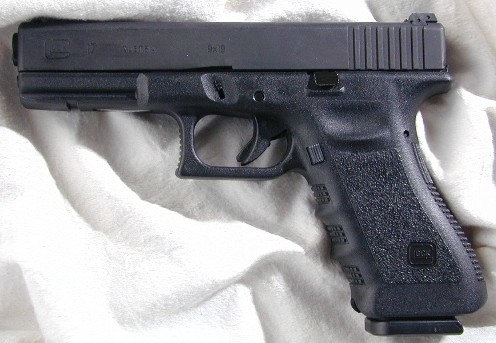
Glock is the Austrian pistol maker whose polymer-framed handguns arm roughly two-thirds of American police officers, a market share figure cited so often it has become industry shorthand for dominance. Founded in 1963 as a curtain-rod and knife workshop near Vienna, the company redefined the service pistol in 1982 and has defended that position, largely unchanged in concept, for four decades.
Glock at a glance
| Item | Detail |
|---|---|
| Full name | Glock Ges.m.b.H. |
| Headquarters | Deutsch-Wagram, Austria |
| Founded | 1963 by Gaston Glock; first pistol designed 1981-1982 |
| Ownership | Privately held by the Glock family |
| Revenue | Not disclosed; the company publishes no consolidated figures |
| Key products | Glock 17, 19, 26, 45 and MOS optics-ready pistols in 9x19mm and other calibers |
| Production | Austria plus a US plant in Smyrna, Georgia |
The product is famously conservative. Every Glock is a striker-fired, polymer-framed pistol with the Safe Action trigger system and no external manual safety, a formula set in 1982 and refined across five generations rather than replaced. That consistency is a selling point for institutional buyers: armorers, spare parts, holsters and training transfer across models and decades.
How Glock won the world’s holsters
Gaston Glock had never designed a firearm when Austria’s army tendered for a new pistol in 1980. He consulted Europe’s best engineers, ignored tradition, and delivered a pistol with 34 parts, a polymer frame and legendary tolerance for abuse. Austria adopted it as the P80 in 1983, Norway followed, and the timing was perfect: American police were abandoning six-shot revolvers after high-profile shootouts, and Glock offered double the capacity, less maintenance and aggressive trade-in pricing. By the mid-1990s the pistol that Austrian bureaucrats numbered 17 was the default answer to the question of what a cop carries.
Which militaries use Glock pistols
| Country | Model | Notes |
|---|---|---|
| Austria | Glock 17 (P80) | Original 1983 adoption |
| United Kingdom | Glock 17 Gen4 | Replaced the Browning Hi-Power as the L131A1 from 2013 |
| France | Glock 17 Gen5 | Roughly 75,000 pistols ordered from 2020 as the PA G1 |
| United States | Glock 19 variants | Widely used by special operations units; lost the Army’s 2017 MHS contest to SIG Sauer |
| Norway, Netherlands, Portugal, India and others | Various | Dozens of forces carry Glocks in service or special-unit roles |
The one that got away was the US Army’s Modular Handgun System, which in 2017 chose SIG Sauer’s P320 over the Glock 19X after a protest Glock lost. The consolation prizes have been substantial: British, French and countless special operations contracts, where the Glock 19’s compact reliability keeps it a fixture even in arsenals that formally adopted something else.
Glock in the police market
Law enforcement remains the strategic heart of the business. In the United States the commonly cited figure is that around 65 percent of police agencies issue Glocks, including the FBI, which buys 9mm Glock 19M and 17M pistols under contracts from 2016 onward. The optics-ready MOS line and the crossover Glock 45 answered the two real shifts of the past decade, red-dot sights and a preference for compact slides on full-size grips. Competition is sharper than it was, from SIG, from European rivals, and from newer entrants like Turkey’s MKE and other value-priced makers chasing export police tenders, but no challenger has dislodged the installed base. The surrounding ecosystem matters too: NATO-standard 9x19mm ammunition from suppliers such as Nammo means a Glock agency never worries about feeding its fleet.
Ownership after Gaston Glock
Gaston Glock died in December 2023 at 94, having controlled the company almost absolutely for 60 years, through an attempted murder-for-hire by a business associate in 1999 and a bitter divorce that reshaped the holding structure. The company remains private, family-controlled and as closed about its finances as ever. The founder’s death changed remarkably little visibly, which is itself the point: Glock was built to run as a machine, and the machine keeps shipping pistols.
Glock frequently asked questions
Who owns Glock?
The company is privately held by the Glock family through Austrian holding structures, and it publishes no financial figures.
What percentage of police use Glocks?
The commonly cited figure is roughly 65 percent of US law enforcement agencies, a number Glock itself promotes; independent verification is limited.
Why did the US Army not choose Glock?
In the 2017 Modular Handgun System competition the Army selected SIG Sauer’s P320, citing price and a modular design; Glock’s protest was denied.
Which armies use Glock pistols?
Austria, the United Kingdom, France, Norway, the Netherlands, Portugal and many others issue Glocks, and US special operations units carry the Glock 19.
What does Glock 17 mean?
It was Gaston Glock’s 17th patent; the 17-round magazine capacity is a coincidence.
- Glock corporate materials and product literature
- Wikipedia – Glock and Glock Ges.m.b.H. (accessed October 2026)
- Public reporting on the UK L131A1, French PA G1 and US MHS programs
- Defence & Tech reporting on the service pistol market