
Top 10 Air Defense Systems in the World in 2026
The best air defense systems in 2026 are led by the US Patriot and its layered American stablemates, Europe’s fast-rising IRIS-T and SAMP/T, Israel excluded from this ranking under our coverage rules, Russia’s S-400 and Asia’s new entrants from China, South Korea and Turkey. This ranking weighs verified combat performance, technical reach, production momentum and export success, with full methodology below. The war over Ukraine’s cities has turned this market into the defense industry’s hottest, and it has also, for the first time in decades, produced real data about what works.
How this ranking works
| Criterion | Weight |
|---|---|
| Verified combat performance | 30 |
| Technical capability (range, targets, radar) | 25 |
| Production and sustainment momentum | 20 |
| Export adoption | 15 |
| Integration and layering | 10 |
1. Patriot PAC-3 MSE (United States)
The combat record settles it: verified intercepts of Kinzhal aeroballistic missiles, Iskanders, aircraft and cruise missiles over Ukraine, 18-plus operators, and production climbing toward 650 missiles a year with a next-generation 360-degree radar, LTAMDS, in testing. Cost remains brutal, about $4 million per interceptor, and demand outruns supply, but nothing else combines proof and scale. Full details in our Patriot guide and Patriot vs S-400 comparison.
2. THAAD (United States)
The upper-tier specialist. THAAD’s hit-to-kill interceptors engage ballistic missiles inside and outside the atmosphere, it has combat intercepts in the Gulf, and its seven US batteries plus UAE and Saudi systems give it an operational record no other exo-atmospheric system matches. It defends against a narrower threat set than Patriot, which is why the two deploy together; our THAAD guide covers the system.
3. Aegis with SM-6 and SM-3 (United States)
The sea-based layer, and increasingly a land one via Aegis Ashore. Aegis ships have shot down ballistic missiles and drones in the Red Sea at operational tempo, SM-3 has exo-atmospheric intercepts including combat use in 2024’s defense of allies, and SM-6 blurs into anti-air, anti-ship and terminal ballistic defense. Networked reach across a hundred-plus hulls makes it the most distributed system on this list; see our Aegis explainer.
4. S-400 Triumf (Russia)
The longest claimed reach in the ranking, 380-plus kilometers with 40N6, six national operators and genuine mass in Russian service. It falls to fourth on verification: its successes are asserted rather than documented, while Ukrainian strikes have destroyed multiple S-400 components, and Ukraine’s drone and missile campaigns have repeatedly penetrated its coverage. Still a system that reshapes any airspace it enters, as its full profile details.
5. SAMP/T NG with Aster 30 (France/Italy)
Europe’s sovereign long-range option, combat-blooded over Ukraine where a battery has defended Kyiv-area targets, and the only non-US Western system with a ballistic intercept in combat. The NG upgrade brings a new AESA radar and Aster 30 Block 1NT. Production rates, historically the weakness, are being tripled under Franco-Italian pressure.
6. IRIS-T SLM (Germany)
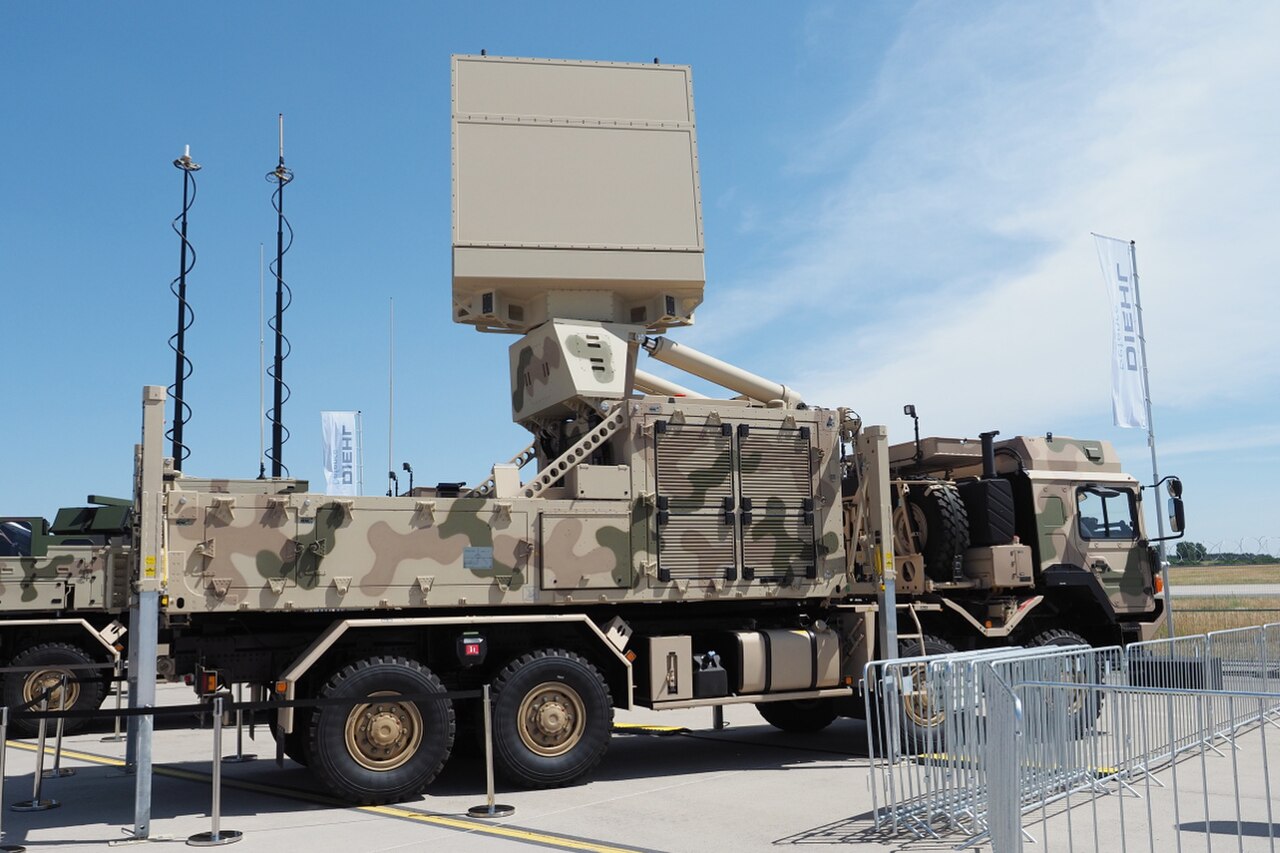
The revelation of the Ukraine war. Diehl’s medium-range system arrived in 2022 and posted reported hit rates above 90 percent against cruise missiles and drones, spawning a European buying wave from the Sky Shield initiative. Range is the limiter, about 40 kilometers, but within its envelope it has been close to airtight, and orders now stretch Diehl’s lines for years.
7. NASAMS (Norway/United States)
The West’s default medium-range buy and Washington DC’s own shield, with about 900 reported kills over Ukraine at a 94 percent claimed rate. Its AMRAAM magazine is both its genius and its constraint, as our NASAMS guide explains. Thirteen-plus operators and counting.
8. HQ-9B (China)
China’s long-range mainstay, quoted to 260 kilometers in its B variant, produced at scale for the PLA and exported to Pakistan, Morocco, Egypt, Uzbekistan and others. Technically credible and increasingly present in the Global South’s arsenals, but with no verified combat record, its May 2025 outing with Pakistan produced contested claims on both sides.
9. KM-SAM / Cheongung II (South Korea)
The fastest-rising exporter on the list. LIG Nex1’s medium-range interceptor won multi-billion-dollar deals with the UAE, Saudi Arabia and Iraq inside four years, on delivery speed and price as much as performance, and it anchors the middle tier of the Korean layered packages sweeping the Gulf. Unproven in combat, moving in volume.
10. HISAR / SIPER family (Turkey)
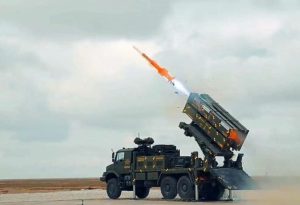
The newcomer. ASELSAN and Roketsan’s layered family, HISAR short and medium tiers in service, long-range SIPER entering it, gives Turkey a sovereign network shaped by watching both NATO and Russian systems up close, and Azerbaijan has signed as its first export destination. Ranking here reflects trajectory as much as record; the ASELSAN profile maps the industrial base behind it.
How the layers fit together
No single system on this list is bought to stand alone, and the ranking should be read as a menu, not a podium. A modern national network stacks them: exo-atmospheric interceptors like THAAD and SM-3 at the top, Patriot-class systems against ballistic and high-end air threats, IRIS-T and NASAMS-class systems handling cruise missiles and aircraft in the middle, and guns, short-range missiles and increasingly lasers underneath against drones, with one command network fusing their radars. Ukraine’s defense of Kyiv is the textbook case, running donated systems from four countries as one layered whole, and it is the template Gulf and European buyers now specify from day one.
What changed since 2024
Three shifts moved this year’s ranking. Combat data hardened: two more years of Ukraine engagements separated systems with verified records from systems with brochures. Production became a ranking factor in its own right, because a system you cannot receive until 2032 defends nothing, which lifted Korean and European fast producers. And the drone-saturation problem pushed every vendor toward cheaper interceptors and directed energy, the layer where the next list may look very different.
Systems to watch
Just outside the ten: the US Army’s IFPC Enduring Shield and its second-interceptor race, Europe’s laser programs moving from trial to fielding, and the directed-energy counter-drone push that could rewrite the economics of the bottom layer within this decade. The missing name, Russia’s S-500, stays off the list until something verifiable emerges from its limited deployment.
Frequently asked questions
What is the best air defense system in the world?
On verified combat performance and scale, the US Patriot PAC-3 MSE leads in 2026, with THAAD and Aegis completing the American layered top three.
Is the S-400 better than Patriot?
It claims longer range at lower cost, but Patriot’s intercepts are verified in combat while the S-400’s record is contested; the full comparison is linked above.
Which air defense system performed best in Ukraine?
Patriot against ballistic threats; IRIS-T SLM and NASAMS posted the highest reported hit rates against cruise missiles and drones.
What air defense does Ukraine use?
A mix including Patriot, IRIS-T SLM, NASAMS, SAMP/T and legacy S-300 systems, resupplied through packages like the recent $2.68 billion US sale.
Why is no Israeli system ranked?
Israeli-headquartered companies and their products fall outside this site’s coverage scope by editorial policy.
- Defence & Tech system guides linked throughout
- Wikipedia entries for each listed system (accessed October 2026)
- Public reporting on Ukraine air defense performance (operator-reported figures labeled as such)
- Manufacturer data for range and capability claims