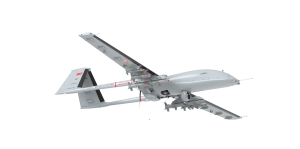

What Are Loitering Munitions? How Kamikaze Drones Work, Cost and Are Regulated

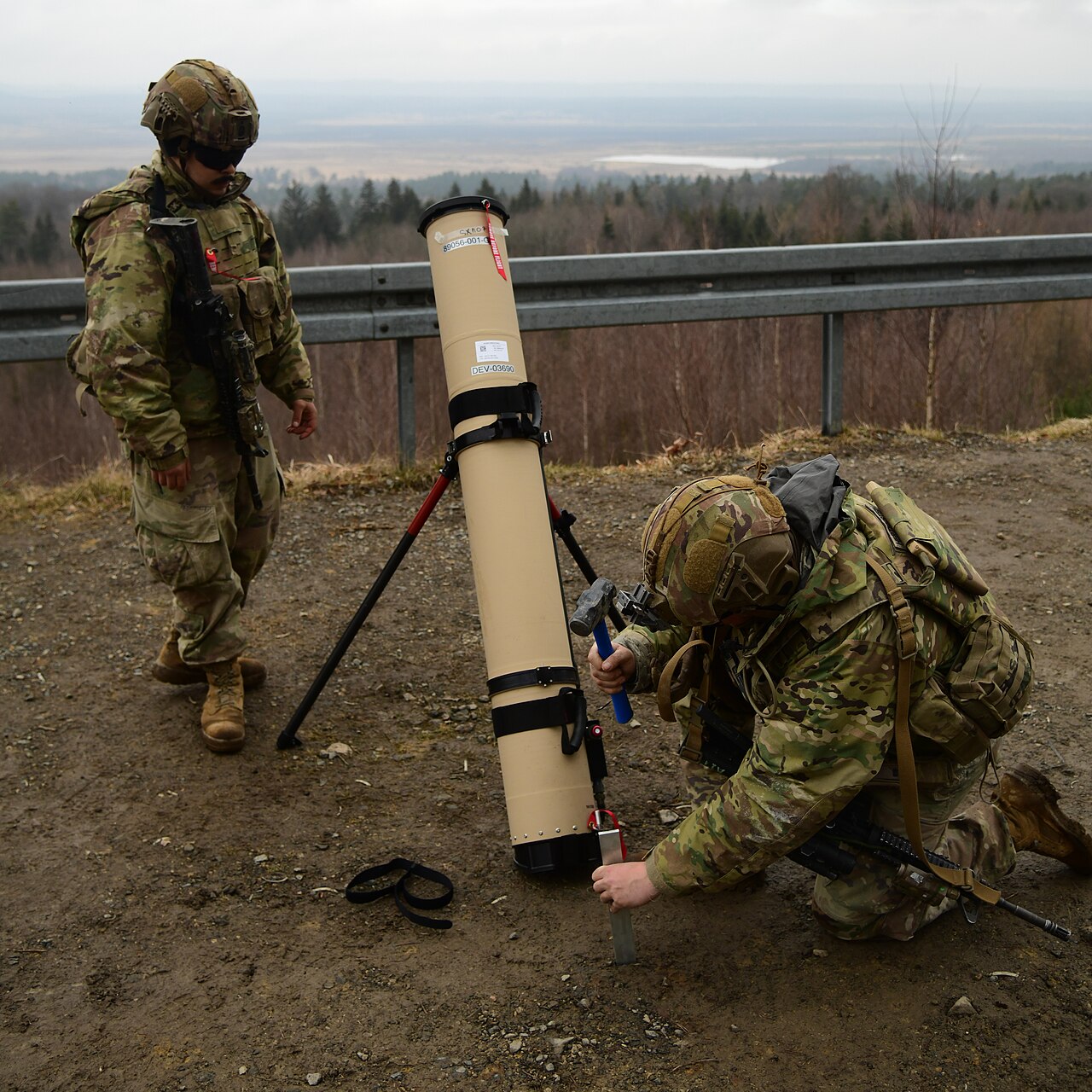
A loitering munition is an expendable, uncrewed weapon that flies to a target area, circles while an operator or onboard software searches for a target, then dives into it and detonates. Often called a kamikaze drone, it sits between a guided missile and a reusable armed drone, and systems such as the AeroVironment Switchblade, Turkey’s STM Kargu and Poland’s Warmate now sell in the thousands.
The concept moved from niche to mainstream during the war in Ukraine, where both sides use loitering munitions and cheap first-person-view (FPV) attack drones every day. The debate over how much autonomy such weapons should have is now before the United Nations.
What Is a Loitering Munition?
Wikipedia defines a loitering munition as a self-destructive unmanned vehicle carrying a warhead that loiters, under a human operator using electro-optical sensors and a data link, until a target is designated, then crashes into it and detonates. One-way attack drones fly a programmed route to a fixed point.
| Item | Detail |
|---|---|
| Also called | Kamikaze drone, suicide drone, one-way attack drone, attack UAS |
| Warhead | Roughly 0.5 kg to 50 kg, depending on size and class |
| Typical targets | Vehicles, artillery, air defenses, command posts |
How Do Loitering Munitions Work?
A soldier launches the weapon, often from a tube, and it flies toward a target area. A camera streams video to a tablet or controller while the weapon circles. When the operator selects a target, the munition dives. Some models can abort, which a missile cannot do. The AeroVironment Switchblade 600, for example, is launched from a tube and unfolds its wings in flight, according to Stars and Stripes.
Endurance and range set the mission: the Kargu quadcopter manages about 30 minutes at 10 km, while the Iranian-designed Shahed-136 is credited with about 2,500 km.
What Is the Difference Between Loitering Munitions, Missiles and Armed Drones?
A cruise or guided missile flies fast to a known point and cannot wait. An armed drone such as a Reaper is designed to be recovered and used again. A loitering munition is the hybrid: it can wait and look, and it is destroyed when it strikes. It costs less per shot than a missile and does less than a large drone.
| Feature | Loitering munition | Guided missile | Armed drone |
|---|---|---|---|
| Reusable | No | No | Yes |
| Human decision late in flight | Usually yes | Rarely (fire-and-forget) | Yes |
| Cost per shot (typical) | Thousands to about $100,000 | Tens of thousands to millions | Costs amortised over many sorties |
Which Loitering Munitions Are in Service Today?
| System | Origin | Range and endurance | Warhead and notes |
|---|---|---|---|
| AeroVironment Switchblade 300 | United States | ~10 km, ~15 minutes | Grenade-class warhead; about $80,000 per unit (2023 estimate) |
| AeroVironment Switchblade 600 | United States | ~40 km, 40+ minutes | Javelin-derived anti-armor warhead; $70,000–$100,000 estimated |
| Anduril Bolt-M | United States | 20+ km, ~40 minutes | Man-portable, 6–7 kg; 600+ ordered by US Marines |
| Anduril Altius (Area-I) | United States | Up to 450 km, 4 hours (loitering variant) | Tube-launched fixed wing |
| Rheinmetall FV-014 | Germany | Up to 100 km, up to 70 minutes | 5 kg shaped charge; demonstrated Feb 2026 |
| STM Kargu-2 | Turkey | ~10 km, ~30 minutes | Quadcopter, 7 kg; Turkey, Azerbaijan and Peru listed as users |
| WB Group Warmate | Poland | 30 km, 60 minutes (original) | 1.4 kg warhead; Warmate 2 reaches 240 km with a 5 kg warhead |
| ZALA Lancet-3 | Russia | ~40 km, ~40 minutes | 3 kg warhead; used by Russia in Ukraine |
| Shahed-136 / Geran-2 | Iran (Russian-built version) | ~2,500 km | 50 kg warhead; one-way attack drone |
The Switchblade line is covered in our AeroVironment company profile. The Marine Corps is buying Bolt-M under its Organic Precision Fires-Light programme, with a $23.9 million contract for more than 600 systems delivered from February 2026 to April 2027, per The Defense Post.
How Much Do Loitering Munitions Cost?
Prices vary by a factor of several hundred. Stars and Stripes cited an estimated $70,000 to $100,000 per Switchblade 600, against about $3,000 for a 155 mm artillery round. The Switchblade 300 was put at $80,000 in 2023 by The Defense Post. The ZALA Lancet is estimated at 3 million rubles, about $35,000 to $37,000. Wikipedia lists a $193,000 export price for the Shahed-136 and a domestic estimate of $10,000 to $50,000.
Production is scaling. Stars and Stripes put AV capacity at about 240 Switchblades a month, with a target of 1,200 after a second line opens in Salt Lake City. Wikipedia lists South Korea (nearly 200) and India (100 units) as Warmate buyers; see Pakistan’s HIT drone factory for another new production line.
How Are Loitering Munitions Used in Ukraine?
Ukrainian forces use FPV drones as improvised loitering weapons, as well as Switchblade 600 and the Polish Warmate, according to Inside Unmanned Systems. Russia has used the ZALA Lancet-3 against artillery and vehicles and launches the Iranian-designed Shahed-136, which it produces as the Geran-2. Wikipedia cites tracking data of 1,163 recorded Lancet strikes by late February 2024. These are reported claims, given for context.
Wikipedia notes that Ukraine’s use of the Switchblade 300 declined as Russian electronic warfare improved, and that Ukraine’s security service stopped using Altius in 2024 because of vulnerability to jamming. Stars and Stripes says the manufacturer claims to have addressed jamming.
How Do You Counter a Loitering Munition?
Defence is layered. Electronic warfare comes first: RUSI has described the truck-mounted Russian Shipovnik-Aero as its most important tactical counter-UAS system, and Ukraine uses jammers such as Bukovel-AD and handheld guns. Autocannon handle what survives. For larger one-way drones, Ukraine says it intercepts between 65% and 85% of Shahed-type drones, per Wikipedia, while RUSI has cited Ukrainian claims of 50% to 70%. Lasers are newer; the US Army has bought its first production laser weapon.
Recent examples on this site include the DroneShield domestic counter-drone award, the Army’s $7 billion counter-drone contract and the radar suppliers on the same Army contract. See also the Marine Corps purchase of Anduril Pulsar-L jammers and the Kratos Defense company profile for another US uncrewed-systems maker.
Are Loitering Munitions Regulated?
No treaty bans them. The debate concerns autonomy. A UN report on Libya described a Kargu-2 that had allegedly “hunted down” forces in 2020, according to Wikipedia’s summary,. The Group of Governmental Experts under the Convention on Certain Conventional Weapons has met since 2016 and, in its March 2026 session, worked on a definition of a lethal autonomous weapon as a system that can identify, select and engage a target without intervention by a human operator. A final report goes to the CCW review conference in November 2026.
On 1 December 2025 the UN General Assembly adopted a resolution on autonomous weapons by 164 votes to 6, with 7 abstentions. The United States and Russia were among those voting no.
Loitering Munitions FAQ
What is a loitering munition?
An expendable uncrewed weapon that flies to a target area, circles while an operator or software finds a target, then dives into it and explodes.
What is the difference between a loitering munition and a drone?
An armed drone is reused; a loitering munition is destroyed in the attack, like a missile that can wait.
Is a Shahed-136 a loitering munition?
It is usually classed as a one-way attack drone that flies a pre-programmed route, although the terms overlap.
How much does a Switchblade cost?
Reported estimates are about $80,000 for the Switchblade 300 and $70,000 to $100,000 for the Switchblade 600. AeroVironment has not published unit prices.
Who makes the Kargu?
STM, a Turkish defence company. The Kargu-2 is a 7 kg quadcopter with about 30 minutes of endurance, per Wikipedia.
Can loitering munitions be jammed?
Yes. Jamming has reduced the effectiveness of several types in Ukraine, which is why makers add alternate navigation and data links.
Are loitering munitions banned?
No. The UN is discussing rules for autonomous weapons under the CCW, but there is no binding ban.
- Wikipedia – Loitering munition, AeroVironment Switchblade, STM Kargu, WB Electronics Warmate, ZALA Lancet, HESA Shahed 136, Rheinmetall FV-014, Anduril Altius
- The Defense Post – US Marines select Anduril Bolt-M; US Army orders Switchblade 600
- Stars and Stripes – Armor unit tests Switchblade drones (13 July 2026)
- Inside Unmanned Systems – Drone war accelerates over Ukraine
- UN General Assembly – Resolution A/RES/80/57; CCW GGE on LAWS