
Ukraine War Escalates


 React
React
The war in Ukraine is experiencing a severe escalation on the ground as hopes for a negotiated settlement fade. Following a meeting between Russian Foreign Minister Sergey Lavrov and U.S. Secretary of State Marco Rubio that yielded no concrete signals to end the conflict, both sides have significantly intensified their military operations. Ukraine has struck deep into Russian territory, while Moscow targeted Kyiv with a rare daytime ballistic missile barrage.
The realization that a diplomatic resolution to the Ukraine war has been postponed indefinitely became evident after the high-level talks between Lavrov and Rubio. On the battlefield, the intensity of clashes has surged. Ukrainian President Volodymyr Zelensky, who launched a campaign earlier this month to “force Russia into a 40-day peace,” has amplified deep strikes inside Russia. As part of this strategy, warehouses belonging to the e-commerce giant Wildberries were targeted once again. Following previous strikes near Moscow and Stavropol, two depots in St. Petersburg—Russia’s second-largest city—were hit. Reports suggest the resulting damage now accounts for half of the company’s total assets.
Missile Factory Struck and Strategic Port Blockaded
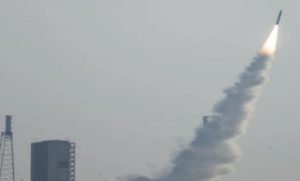
Ukraine’s deep-strike capabilities have not been limited to civilian logistics; critical military infrastructure is also in the crosshairs. A factory in Kirov, responsible for manufacturing components for Russian missiles, was struck by a “Flamingo” cruise missile despite being located approximately 1,300 kilometers from the Ukrainian border. Local Russian authorities reported that the explosion killed 6 workers and injured 26 others.
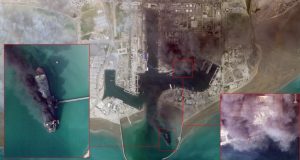
Simultaneously, Ukrainian unmanned aerial vehicles (UAVs) and unmanned surface vehicles (USVs) operating in the Sea of Azov and the Black Sea have effectively blockaded the strategic Port of Novorossiysk. The Russian Ministry of Defense was reportedly forced to halt all nighttime vessel traffic from the port due to the heightened threat environment.
Severe Retaliation from Russia
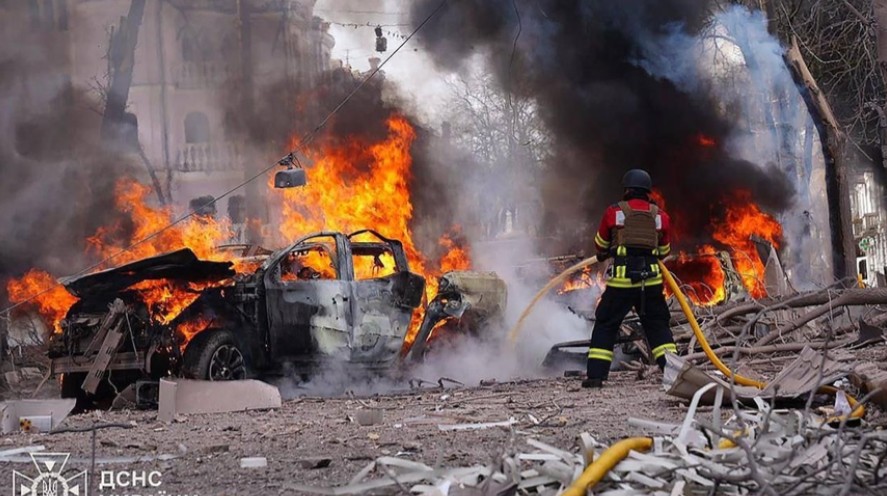
Russia has responded to these deep strikes with immense firepower. Following the attacks in St. Petersburg, the Ukrainian capital of Kyiv was bombarded with 10 ballistic missiles in an unusual daytime assault. Mayor Vitali Klitschko announced that the strikes caused severe damage across four districts of the city.
Furthermore, the Russian Aerospace Forces dropped 3-ton aerial bombs on the city of Sloviansk in the Donetsk region, resulting in 5 fatalities and 30 injuries. The strategic port cities of Odesa and Izmail in the Danube Delta were also subjected to heavy Russian drone strikes. The Russian Ministry of Defense claimed to have successfully destroyed Ukrainian naval drone production facilities in Izmail. The fallout from these strikes extended into neighboring Romania; President Nicușor Dan confirmed that a Russian drone violating Romanian airspace was intercepted and neutralized by F-16 fighter jets.
Lavrov Accuses the U.S. of Stalling
On the diplomatic front, Russian Foreign Minister Sergey Lavrov leveled harsh accusations against U.S. Secretary of State Marco Rubio during their meeting in the Philippines. Arguing that Washington has failed to fulfill its commitments to push Ukraine toward peace, Lavrov stated:
“We are being told that the roadmap agreed upon by Putin and Trump at the Alaska Summit is no longer valid. In this case, one must admit who failed to keep their promises. It seems the U.S. has stalled us once again. Russia is determined to achieve its designated objectives in Ukraine on the battlefield if they cannot be reached at the negotiating table.”
Demographic Disparities in Russian Casualties: The Toll on Turkic Republics
Meanwhile, the human cost of the protracted war continues to mount, revealing stark demographic disparities. According to the latest joint report by Mediazona and BBC Russian Service, compiled from open-source data, the number of visually confirmed Russian military fatalities in the invasion of Ukraine has reached 233,199. While the actual death toll is estimated to be significantly higher due to reporting delays and unrecoverable remains, the regional distribution of these casualties highlights a striking inequality. Data indicates that the heaviest human burden is being borne by the autonomous Turkic republics within the Russian Federation.
Major Metropolitan Areas Absent from the Frontlines
Bashkortostan has become the first region in Russia to surpass the 10,000-casualty mark, with 10,100 confirmed deaths. The neighboring Turkic republic of Tatarstan follows closely in second place with 8,800 fatalities. While the majority of those killed since 2023 consist of “volunteers” who signed military contracts after the invasion began, severe economic hardship and coercive recruitment policies in these specific regions are cited as primary drivers of this trend.
In sharp contrast, casualty figures from Russia’s wealthiest metropolitan centers remain remarkably low, with Moscow recording 3,600 deaths and St. Petersburg 2,300. This widening gap underscores a highly disproportionate allocation of the military burden onto ethnic minority republics.
React