
What is the Australian and New Zealand Army Corps (ANZAC)?


 React
React
In the annals of global military history, few acronyms carry the profound geopolitical and cultural weight of ANZAC. Standing for the Australian and New Zealand Army Corps, it was originally a simple administrative designation for a combined expeditionary force during the First World War.
However, by the time the guns fell silent in 1918, the ANZACs had not only earned a reputation as some of the most formidable shock troops on the Allied front, but they had also birthed the independent national identities of Australia and New Zealand.
The Formation: 1914–1915
When the British Empire declared war on Germany in August 1914, both Australia and New Zealand—then self-governing dominions of the British Empire—immediately pledged military support. Tens of thousands of young volunteers sailed for Europe.
While training in the shadow of the Pyramids in Egypt in early 1915, British command decided to group the Australian Imperial Force (AIF) and the New Zealand Expeditionary Force (NZEF) under a single operational command. General William Birdwood took command of this new Mediterranean Expeditionary Force unit, officially designating it the Australian and New Zealand Army Corps. A clerk supposedly coined the acronym “A.N.Z.A.C.” for use on rubber stamps, and a legend was born.
The Crucible of Gallipoli
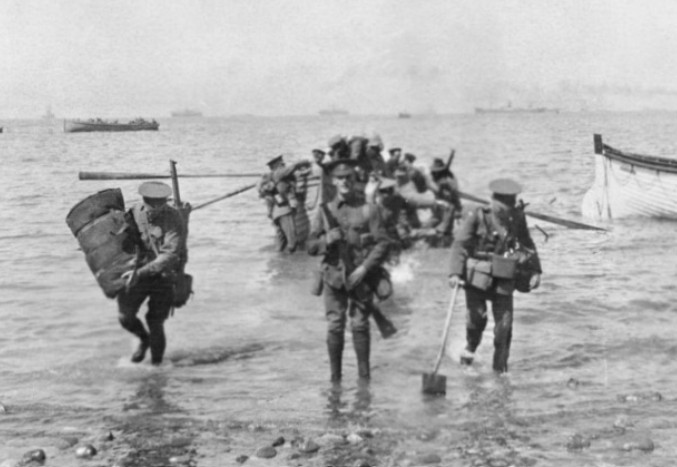
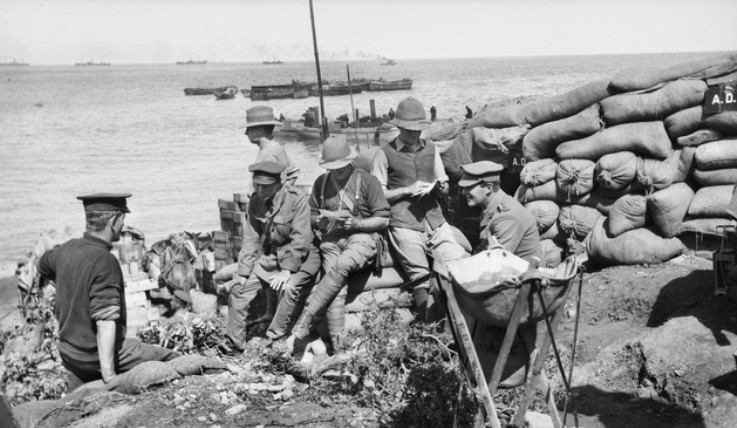
The defining moment of the ANZAC legend began at dawn on April 25, 1915. As part of a grand British-French naval and ground strategy to knock the Ottoman Empire out of the war and open a sea route to Russia, the ANZACs were ordered to execute an amphibious assault on the Gallipoli Peninsula.
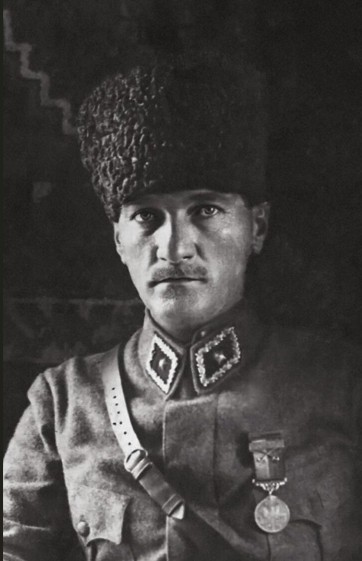
The landing was a strategic nightmare. Due to navigational errors and fierce, well-commanded Ottoman resistance (led by the legendary Mustafa Kemal, later Atatürk), the ANZACs were pinned down on a narrow, exposed beachhead flanked by steep ravines. What was intended to be a rapid advance turned into an agonizing eight-month stalemate of trench warfare.
By the time the Allied forces successfully evacuated in December 1915, over 8,000 Australian and 2,700 New Zealand soldiers had been killed. While Gallipoli was a catastrophic military failure for the British command, the raw courage, endurance, and egalitarian “mateship” displayed by the colonials birthed the “ANZAC Spirit”—a cultural touchstone that proved to the world, and to themselves, that Australia and New Zealand were distinct nations capable of bleeding for their own flags.
Beyond Gallipoli: The Western Front and the Middle East
Following the evacuation of Gallipoli, the ANZAC corps was expanded and geographically split:
-
The Western Front: The infantry divisions were shipped to the meat grinder of France and Belgium. At battles like the Somme, Passchendaele, and Villers-Bretonneux, ANZAC troops were repeatedly utilized as elite spearhead forces to break fortified German lines, suffering horrific casualty rates in the process.
-
The Middle East: The ANZAC Mounted Division (the famous Light Horsemen) remained in the Middle East, conducting highly successful, sweeping mobile cavalry campaigns against Ottoman forces across the Sinai and Palestine.
The Modern Legacy
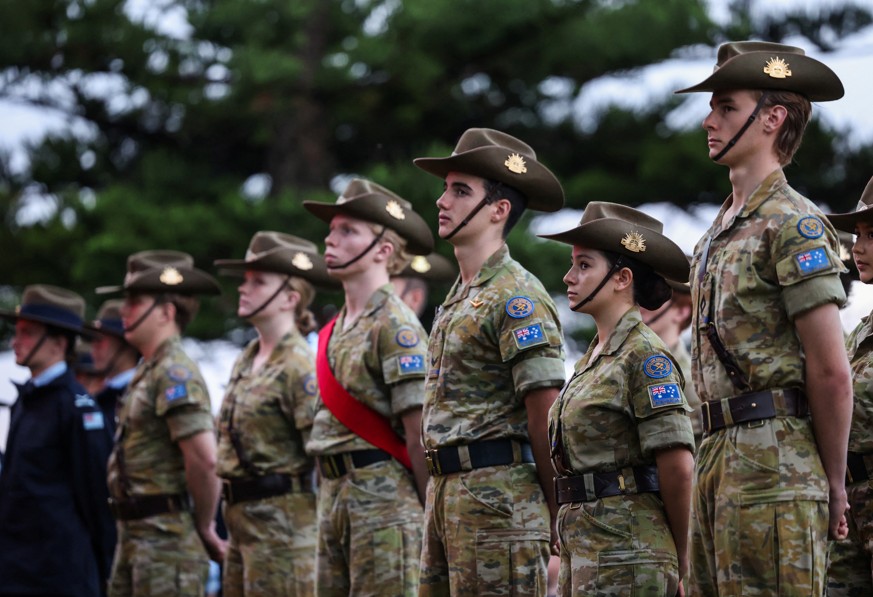
The original Australian and New Zealand Army Corps was disbanded shortly after World War I. However, the term ANZAC became a protected word in both countries. Today, ANZAC Day (April 25) is the most solemn national day of remembrance in both Australia and New Zealand, honoring all those who have served and died in military operations.
From a defense perspective, the blood shed at Gallipoli forged an unbreakable alliance. Today, the Australian Defence Force (ADF) and the New Zealand Defence Force (NZDF) maintain one of the closest operational relationships on the planet, continuing to deploy jointly on peacekeeping and combat missions worldwide under the enduring shadow of the ANZAC legacy.
React