

What is a Ground-Launched Small Diameter Bomb (GLSDB)? The 150km Precision Game-Changer

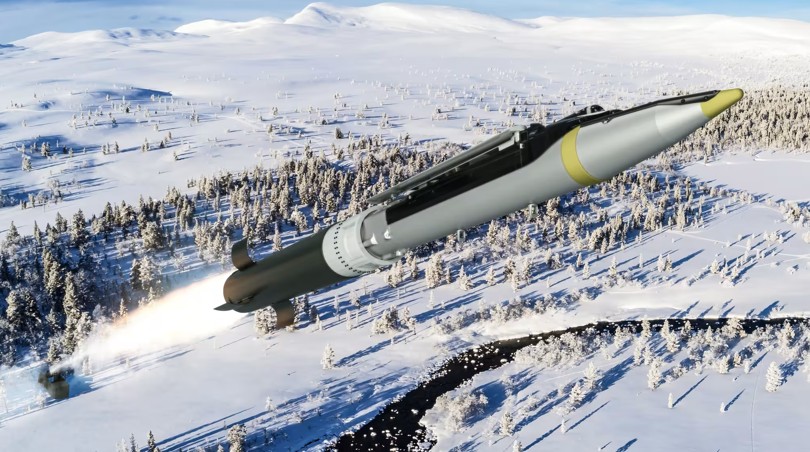

In the modern theater of war, long-range precision artillery is the ultimate currency. However, precision usually comes with an astronomical price tag. To solve the problem of striking distant targets without bankrupting military budgets, defense contractors Boeing and the Swedish aerospace company Saab engaged in a brilliant piece of “Frankenstein engineering.”
The result is the Ground-Launched Small Diameter Bomb (GLSDB).
But what exactly is a GLSDB, and how does it manage to double the range of existing artillery systems while remaining highly cost-effective?
The Anatomy of a Hybrid Weapon
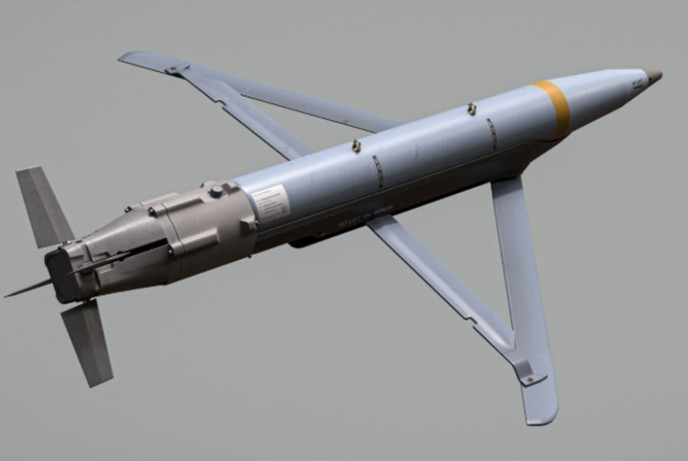
The GLSDB is not a completely new missile built from scratch. Instead, it is an ingenious marriage of two proven, highly abundant, and relatively cheap legacy technologies:
-
The Muscle (M26 Rocket Motor): During the Cold War, the U.S. produced hundreds of thousands of unguided M26 artillery rockets for the M270 Multiple Launch Rocket System (MLRS). Following treaties banning cluster munitions, these motors were destined to be destroyed. The GLSDB repurposes these decommissioned solid-rocket boosters to provide the initial launch thrust.
-
The Brain (GBU-39 SDB): The payload is the GBU-39 Small Diameter Bomb, a 250-pound, highly accurate, air-dropped glide bomb utilized by the U.S. Air Force for decades. It is equipped with GPS/INS guidance, advanced anti-jamming capabilities, and a multi-purpose penetrating blast-fragmentation warhead.
By attaching a specialized interstage adapter, engineers mounted the GBU-39 bomb onto the M26 rocket motor. The weapon can be fired from the existing M270 MLRS or the highly mobile M142 HIMARS.
How it Works: The Flight Profile
The operational mechanics of a GLSDB are drastically different from a traditional ballistic artillery rocket (like the standard GMLRS). The flight sequence occurs in distinct phases:
-
Phase 1: Boost. Upon launch from a HIMARS, the M26 rocket motor ignites, propelling the weapon high into the atmosphere at a steep angle, achieving high altitude and supersonic speed.
-
Phase 2: Separation. Once the rocket motor burns out and reaches its apex, the interstage adapter releases the bomb. The heavy, empty M26 booster falls away.
-
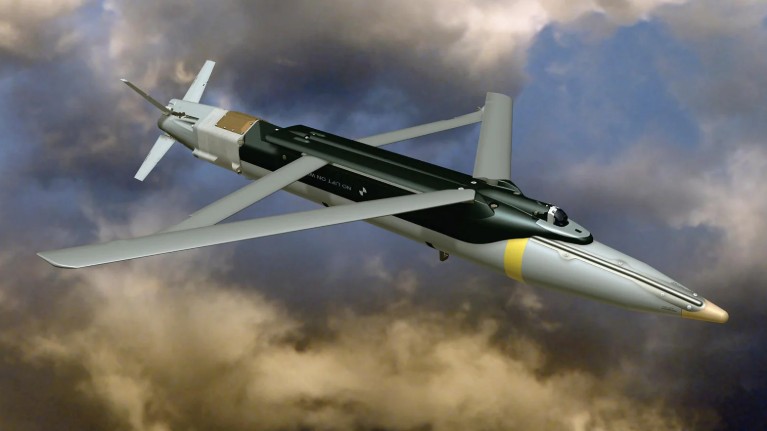
Phase 3: Glide. Free from the booster, the GBU-39 flips over, and its diamond-shaped “DiamondBack” wings instantly deploy. The weapon transitions from a ballistic rocket into an unpowered aircraft.
-
Phase 4: Terminal Guidance. Utilizing its aerodynamic lift and GPS/INS navigation, the bomb glides silently toward its target. It can strike moving or stationary targets with a Circular Error Probable (CEP) of less than 1 meter.
The Strategic Advantages
The GLSDB offers unprecedented tactical advantages for ground forces:
-
Extended Range: While a standard GMLRS fired from a HIMARS reaches about 70-80 kilometers, the gliding capability of the GLSDB allows it to strike targets up to 150 kilometers (93 miles) away, pushing enemy logistics nodes far behind the front lines.
-
360-Degree Engagement: Because it glides, the GLSDB does not follow a predictable parabolic arc. It can be programmed to launch forward, deploy its wings, and then turn around to strike a target behind the launch vehicle, or maneuver around mountains to hit targets hiding on reverse slopes.
-
Cost-Effectiveness: A single GLSDB is estimated to cost around $40,000. In comparison, an ATACMS missile, which offers longer range but follows a traditional ballistic trajectory, costs well over $1 million per unit.
The GLSDB represents a paradigm shift in asymmetric warfare, proving that you don’t always need to invent a new technology to dominate the battlefield; sometimes, you just need to combine the right existing ones.