

Kalashnikov vs. M-16: The Rivalry That Defined Modern Warfare



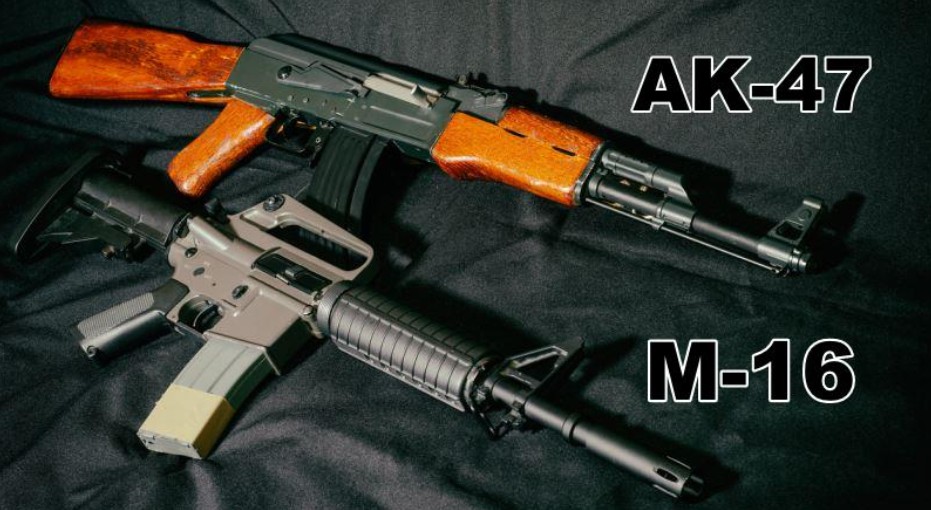
SMALL ARMS ANALYSIS – In the history of infantry warfare, no two silhouettes are as recognizable as the Kalashnikov AK-47 and the M-16. For over six decades, these rifles have faced off on every continent, from the jungles of Vietnam to the deserts of the Middle East. As we move through 2026, the debate continues: which philosophy is superior—the rugged reliability of the East or the surgical precision of the West?
1. The Engineering Philosophy
The fundamental difference between these two legends lies in their intended user.
-
The Kalashnikov (AK-47/AK-74): Mikhail Kalashnikov designed his rifle for the Soviet conscript. It is “soldier-proof.” With loose tolerances, it is designed to function in mud, sand, and ice without frequent cleaning. It uses a long-stroke gas piston system that is violent but incredibly reliable.
-
The M-16 (AR-15 Platform): Eugene Stoner designed a high-tech tool for the professional soldier. Built with aerospace-grade aluminum and polymers, it was light and incredibly accurate. Its direct impingement gas system (in early models) was cleaner-shooting but required disciplined maintenance to prevent jamming.
2. Ballistics: 7.62mm vs. 5.56mm
The rivalry is also a battle of calibers.
| Metric | AK-47 (7.62x39mm) | M-16 (5.56x45mm NATO) |
| Effective Range | ~350 meters | ~550 meters |
| Recoil | Moderate/Heavy | Low/Controllable |
| Stopping Power | High (Heavy projectile) | High (Tumbling/Fragmentation) |
| Weight of Ammo | Heavier (Less rounds per soldier) | Lighter (More rounds per soldier) |
The AK-47’s 7.62mm round is a “barrier blind” powerhouse, excellent at punching through cover. The M-16’s 5.56mm round is designed for high-velocity lethality, creating massive internal damage through fragmentation while allowing the soldier to carry twice as much ammunition.
3. Ergonomics and Modularity
This is where the M-16 platform (and the modern M4) takes a significant lead in defense news rankings.
-
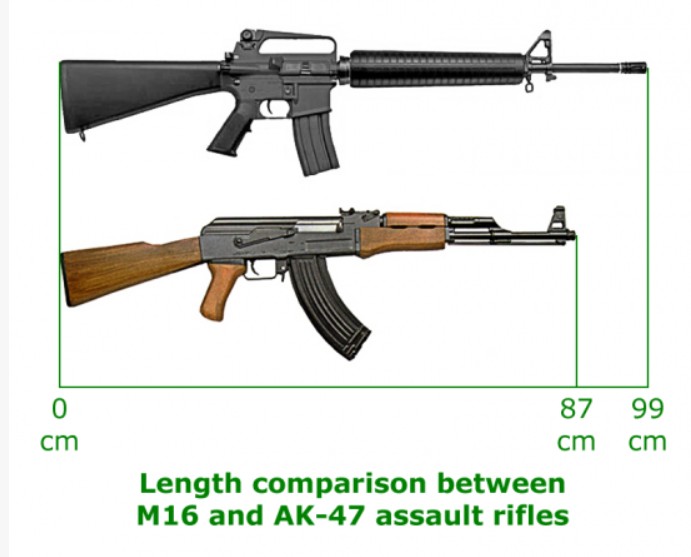
The M-16/M4: It is the “LEGO” of rifles. The Picatinny rail system allows for the easy attachment of optics, lasers, and grips. Its controls (safety, magazine release) are intuitive and accessible without moving the firing hand.
-
The AK-47: Traditionally “rough.” The safety lever is loud and clunky, and the optics mounting was difficult until the advent of the AK-12 and AK-200 series. However, modern Russian iterations have finally adopted Western-style modularity.
4. Logistics and Cost
-
Production: With over 100 million units produced, the AK series is the most manufactured firearm in history. Its cost-to-performance ratio is unbeatable for developing nations.
-
Maintenance: The AK can survive a year of neglect; the M-16 requires a cleaning kit and a trained eye. In terms of long-term fleet maintenance, the AK is significantly cheaper to keep operational in low-resource environments.
5. The 2026 Evolution: The NGSW Shift
As of 2026, the M-16/M4 family is facing its biggest transition yet with the U.S. Army’s XM7 (Next Generation Squad Weapon). This shift to the 6.8mm caliber aims to combine the AK’s stopping power with the M-16’s precision. On the other side, Russia’s AK-12 has undergone multiple “field-correction” updates following recent conflicts to improve its durability and sight alignment.
The Verdict: Which is Better?
-
Choose the Kalashnikov if: You are operating in extreme environments with limited support, or you need a weapon that “just works” regardless of the conditions. It remains the king of the irregular warfare domain.
-
Choose the M-16/M4 if: You are a professional operator who values precision, weight reduction, and the ability to customize your weapon for specific mission profiles (night vision, suppressed fire, etc.).
Ultimately, the AK vs. M-16 debate is a testament to two different ways of looking at a soldier. One sees a rugged survivor; the other sees a precision instrument. Both have earned their place in the pantheon of defense technology.
Editor’s Note: This analysis covers the historical variants and the 2026 modernization efforts of both platforms. For a deep dive into the new 6.8mm XM7, see our “Future Infantry” archives.