
Defense News Alert: Sweden Invests €800 Million to Bolster Air Defense Amid Rising Regional Crises



STOCKHOLM – Positioned at the epicenter of shifting European security dynamics, the Swedish government has officially announced a massive 8.7 billion kronor (€800 million / $916 million) investment to drastically strengthen its air and drone defense capabilities. The move comes as Stockholm accelerates its military modernization to safeguard critical infrastructure and urban centers against an increasingly volatile regional environment.
The new defense package focuses on high-tech radar systems, anti-aircraft artillery, and advanced electronic warfare platforms, marking one of Sweden’s most significant air defense commitments in modern history.

Strengthening the National Core
Swedish Defense Minister Pål Jonson stated that “investing in air defense capabilities is more important than ever,” emphasizing the government’s high priority on protecting Sweden against airborne threats. This latest procurement is part of a broader ground-based air defense expansion, known as the GUTE II system, which aims to protect military units, mobilization capacity, and essential public services such as nuclear power plants and railway hubs.
The investment follows a clear directive from NATO leadership. Secretary General Mark Rutte recently highlighted that NATO allies must achieve a 400% increase in air and missile defense capacities to maintain a credible deterrent in the current geopolitical climate.
Industry Leaders: Saab and BAE Systems Bofors
To execute this rapid buildup, the Swedish Defence Materiel Administration (FMV) has signed pivotal contracts with industry giants Saab and BAE Systems Bofors. These agreements cover:
-
Advanced Sensors and Radars: Next-generation detection systems provided by Saab.
-
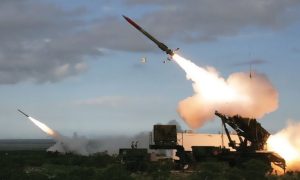
Kinetic Interception: Mobile anti-aircraft systems and “Tridon Mk2” platforms from BAE Systems Bofors.
-
Electronic Warfare (EW): Integrated systems designed to neutralize drone swarms and disrupt enemy signal intelligence.
Deliveries are expected to begin between 2027 and 2028, a timeline described as “relatively fast” given the high demand currently straining the global defense industrial base.
Defense & Tech Analysis: The “Nordic Fortress” Strategy
For defense news observers, Sweden’s move is a direct response to the “serious security situation” cited by Prime Minister Ulf Kristersson. By building a modular and robust air defense shield, Sweden is transitioning toward a “Total Defense” posture.
The focus on mobile and standalone units—each roughly the size of a company—allows for flexible deployment across the country’s vast geography. This ensures that even in the face of complex regional crises, critical infrastructure like bridges and energy plants remain shielded from the saturation tactics seen in modern conflicts. By leveraging Saab’s sensor expertise and Bofors’ kinetic power, Sweden is effectively building a “High-Tech Fortress” designed to raise the threshold for any potential aggression in the Baltic region.
Editor’s Note: This report will be updated as FMV releases further technical specifications on the GUTE II modular architecture. Defense & Tech will continue to track Sweden’s integration into the collective NATO air defense shield.