

What is a Hypersonic Missile? Why Can’t Existing Air Defense Systems Stop Them?

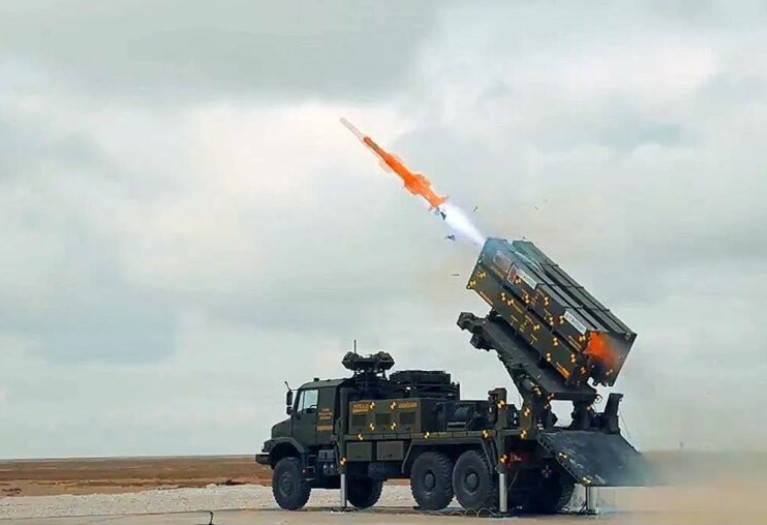

STRATEGIC ANALYSIS — For decades, the global security architecture relied on a predictable reality: if a missile is launched, it can be tracked, and if it can be tracked, it can be intercepted. In 2026, that reality has shattered. The emergence of the Hypersonic Missile has created a “technological blind spot” that has left even the most advanced Integrated Air Defense Systems (IADS) struggling for relevance.
To understand why these weapons are being called “unstoppable,” we must look beyond the speed and analyze the physics of unpredictability.
1. What is a Hypersonic Missile?
A hypersonic missile is defined by its ability to travel and maneuver at speeds exceeding Mach 5 (five times the speed of sound, or roughly 6,174 km/h). However, speed is only half the story. Unlike ballistic missiles, which fly in a predictable parabolic arc, hypersonic weapons stay within the atmosphere and change their trajectory mid-flight.
There are two primary categories of hypersonic technology dominating the 2026 battlefield:
-
Hypersonic Glide Vehicles (HGV): Launched via rocket, these vehicles “skip” off the upper atmosphere and glide at extreme speeds, maneuvering laterally to evade interceptors.
-
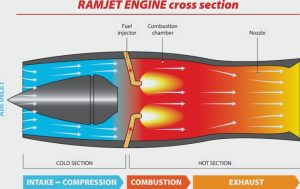
Hypersonic Cruise Missiles (HCM): Powered by Scramjet engines, these missiles maintain constant high-speed flight at lower altitudes, making them nearly invisible to long-range radars.
2. Why Existing Defenses Fail: The Three Fatal Gaps
Even systems like the Patriot (PAC-3), THAAD, or the S-400 are facing a “zero-probability” intercept scenario against hypersonic threats. Here is why:
A. The Radar Horizon Gap
Traditional ground-based radars are limited by the curvature of the Earth. Ballistic missiles fly high into space, making them visible from thousands of miles away. Hypersonic missiles fly much lower (in the “near-space” region). By the time a ground radar detects a hypersonic threat, it is already too close for a meaningful response.
B. The Maneuverability Paradox
Interceptors work by calculating an “intercept point”—predicting where the target will be based on its current path. Because a hypersonic missile can maneuver at Mach 5+, it can change its destination in a split second. The interceptor’s “brain” simply cannot compute a solution for a target that refuses to follow a fixed path.
C. The Plasma Stealth Effect
At speeds above Mach 5, the air in front of the missile is compressed so violently that it turns into plasma. This plasma shroud absorbs radio waves, acting as a natural “stealth” shield that further confuses radar tracking and locking systems.
3. Strategic Impact: The End of the Carrier Era?
The inability to stop these missiles has shifted the global balance of power. High-value assets like Aircraft Carriers and Command Centers, once protected by layers of Aegis and Patriot batteries, are now vulnerable to “saturation attacks” where even a single hypersonic hit can deliver catastrophic kinetic energy without needing a nuclear warhead.