How China Is Quietly Arming Mali, Burkina Faso and Côte d’Ivoire


China’s Drones and Air Defense Systems Are Quietly Taking Over the Sahel’s Arms Market
Over the past two years, three West African states fighting jihadist insurgencies — Mali, Burkina Faso and Côte d’Ivoire — have each added a different piece of Chinese military hardware to their arsenals: a short-range air defense vehicle, a radar-guided missile system, and an armed surveillance drone. None of these deliveries made front-page news in Western defense media. Together, they trace a pattern that Chinese state-owned arms exporters are moving beyond small arms and trucks into higher-end, higher-margin systems across a region where Western suppliers have grown more cautious and Russia is stretched thin by its war in Ukraine.
What Happened
Three separate deliveries, confirmed through official statements, government video and specialist identification over the past several months, now sit side by side as evidence of a broader export push:
- Mali has fielded Norinco’s Yitian-L short-range air defense system, mounted on Dongfeng Mengshi 4×4 vehicles and armed with TY-90 infrared-guided missiles, under a contract signed in September 2024 and delivered in batches running into early 2026, according to Janes and Army Recognition.
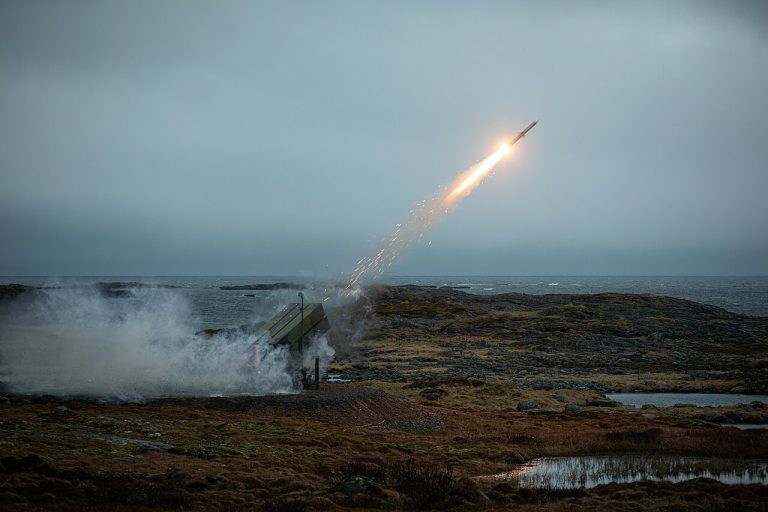
- Burkina Faso showed off a previously unseen radar-and-missile air defense system in a presidency video released September 1, 2026. Janes assessed the launcher’s canister dimensions as consistent with Norinco’s Sky Dragon 30, though Ouagadougou has not named the system officially.
- Côte d’Ivoire confirmed on August 10, 2026 that its air force operates Wing Loong II medium-altitude, long-endurance drones, shown unarmed at Bouaké Air Base, making it the second West African operator of the Chinese drone after Nigeria, per Janes and GlobalMilitary.net.
The Stockholm International Peace Research Institute (SIPRI) estimates China supplied 17% of Africa’s major arms imports between 2021 and 2025, close behind the United States (19%) and ahead of Russia (15%); in sub-Saharan Africa alone, China was the single largest supplier at 22%, a dataset cited in reporting by the South China Morning Post and picked up by Military Africa.
The Products/Systems
Yitian-L Short-Range Air Defense (Norinco)
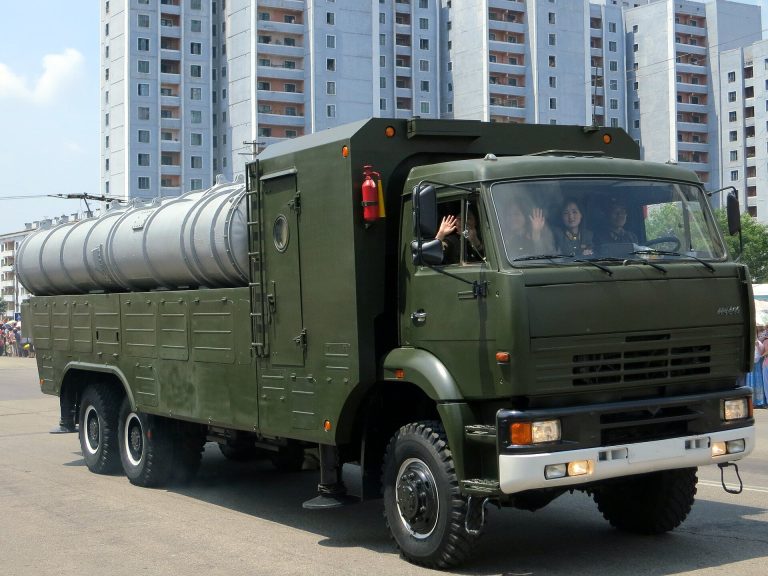
The Yitian-L, built by China North Industries Corporation (Norinco), is a lightweight short-range air defense (SHORAD) system mounted on a Dongfeng Mengshi 4×4 light tactical vehicle. It carries four TY-90 infrared-guided missiles with an engagement envelope from roughly 500 meters to 6 kilometers in range and 15 meters to 4 kilometers in altitude, according to specifications reported by Janes and Army Recognition. A folding X-band radar can detect fighter-sized aircraft out to about 18 kilometers, and the system also carries a passive thermal and laser tracking suite that lets it engage targets without emitting radar signals that an adversary could detect. Army Recognition describes it as a point-defense asset rather than an area air-defense shield, given its limited missile load. Mali’s deliveries, routed through neighboring Guinea, arrived alongside Norinco VN22 infantry fighting vehicles and the VN22B fire-support variant with a 105mm gun, according to a Military Africa report from April 2026.
Sky Dragon 30 (Norinco, unconfirmed identification)
The system shown in Burkina Faso’s September 1 video has not been officially named by the government, which described the broader acquisitions only as “surface-to-air artillery.” Janes’ assessment — based on the dimensions of the launch canisters relative to Norinco’s publicly displayed Sky Dragon 30 — places its maximum range at 30 kilometers and maximum engagement altitude at 18 kilometers, with an infrared seeker and the ability to track up to 12 targets simultaneously, drawing on Norinco’s own brochure figures from the Airshow China 2022 exhibition. The South China Morning Post reported the video was released as part of a documentary series marking the fourth anniversary of the rule of Burkina Faso’s leader, Captain Ibrahim Traoré. This is, by Janes’ account, the first radar-cued air defense system Burkina Faso’s armed forces have publicly displayed, following Norinco armored vehicles, artillery and rocket launchers delivered since 2024.
Wing Loong II (AVIC/CATIC)
The Wing Loong II is a medium-altitude, long-endurance (MALE) unmanned aerial vehicle built by the Chengdu Aircraft Industry Group under the state-owned Aviation Industry Corporation of China (AVIC), marketed internationally through the China National Aero-Technology Import and Export Corporation (CATIC). Specifications reported by Janes and manufacturer literature put its endurance at roughly 32 hours in a surveillance configuration, with up to 480 kilograms of weapons across six hardpoints. Côte d’Ivoire’s two drones were shown unarmed in the August video; no armed employment has been publicly documented. The purchase traces to a June 2024 contract that Ivorian officials said also covers three Hongdu K-8 jet trainers, though that detail currently rests on a single specialist source and has not been independently corroborated.
Who Uses It
Confirmed operators, by government statement or official video:
- Yitian-L: Mali (confirmed by deliveries and convoy footage reported by Janes).
- Wing Loong II in West Africa: Nigeria (first regional operator) and, as of August 2026, Côte d’Ivoire (second). The Wing Loong II is also operated more widely outside the region, including by Pakistan, Saudi Arabia, the United Arab Emirates and Egypt.
- Burkina Faso’s radar-missile system: operator confirmed by video; specific system identity remains an analyst assessment (Janes), not an official confirmation — treat the “Sky Dragon 30” designation as probable, not established.
All three states are members of the Alliance of Sahel States (Mali, Burkina Faso and Niger), which has leaned on both Moscow and Beijing for military support since breaking with former Western and regional partners. Military Africa’s reporting notes that Russia, through the Africa Corps successor to Wagner, tends to supply aircraft and personnel to the bloc, while China has become a larger source of wheeled armor and air defense hardware.
Export/Procurement History
Each deal follows a similar pattern: a government-to-government or state-company contract signed with limited public disclosure, followed by delivery confirmation only through convoy footage, presidency videos, or specialist OSINT identification rather than formal announcements. Mali’s Yitian-L contract was signed in September 2024; Côte d’Ivoire’s Wing Loong II and K-8 deal was signed in June 2024; the Burkina Faso system’s acquisition date has not been disclosed. None of the three governments has released contract values. SIPRI’s arms-transfer methodology, which tracks deliveries rather than contract announcements, remains the most commonly cited independent benchmark for the scale of this trade, though SIPRI itself cautions that its trend-indicator values are not directly comparable to financial figures.
Global Competitors
In the same Sahel market, Turkey’s Baykar has sold Bayraktar TB2 and Akinci drones to Mali and Burkina Faso, and Russia’s Africa Corps supplies aircraft and ground support, though Military Africa and other outlets describe Russian deliveries as constrained by the demands of the war in Ukraine. Western suppliers, including France — the former security partner for all three Sahel states before their post-coup governments cut ties — have largely withdrawn from the market. China’s systems compete primarily on price and on being sold without the political conditions that often accompany Western and some Gulf-state sales, a point several outlets attribute to Chinese and regional defense officials but that remains, in substance, a marketing claim rather than an independently verified policy difference.
Why It Matters
For the Sahel juntas, Chinese systems offer a path to rebuilding air defense and strike capability without the end-user agreements and human-rights vetting that often come with Western or even some Gulf arms deals. For China, the Sahel represents a foothold with security clients that have fewer alternative suppliers, at a moment when SIPRI’s figures show Russia’s African arms-export share declining as its own stocks and production are absorbed by Ukraine. Whether this becomes a durable Chinese position, rather than a short-term opportunity, will hinge on an unglamorous but decisive factor: sustainment. Norinco and AVIC/CATIC have no comparable track record to the decades of maintenance networks Western and Russian suppliers built in Africa, and all three systems — a vehicle-mounted SHORAD unit, a radar-guided missile battery and a MALE drone — require spare parts, trained technicians and calibration support to remain operational in Sahelian heat and dust.
What Happens Next
Three things would substantiate whether this is a lasting shift rather than a one-off sales wave: confirmation of the Burkina Faso system’s identity and of Chinese technician presence to support it; evidence the Wing Loong II is ever employed armed, rather than purely for surveillance; and whether further Sahel or wider West African states — Niger, in particular, as the third Alliance of Sahel States member — follow with comparable Chinese air-defense or drone contracts. None of these is yet confirmed, and all three systems discussed here remain recent enough that operational performance data is not publicly available.
FAQ
Is the Burkina Faso air defense system definitely the Sky Dragon 30?
Not officially. Burkina Faso’s government has not named the system; Janes identified it as consistent with Norinco’s Sky Dragon 30 based on the dimensions of its launch canisters as shown in a government video. Treat the designation as a specialist assessment, not a confirmed fact.
Is Côte d’Ivoire’s Wing Loong II armed?
The two drones shown in the August 2026 video were unarmed. The Wing Loong II can carry up to 480 kg of weapons on six hardpoints, but no armed use by Côte d’Ivoire has been publicly documented.
Which other African countries operate the Wing Loong II?
Nigeria was the first West African operator. Outside the region, confirmed or reported operators include Pakistan, Saudi Arabia, the United Arab Emirates and Egypt.
Why are Sahel states buying from China instead of Russia or Western suppliers?
Reporting cites lower cost and fewer political conditions attached to Chinese sales, alongside reduced availability of Russian equipment due to the war in Ukraine and a Western pullback following coups in Mali, Burkina Faso and Niger. These are the stated reasons found in specialist reporting, not independently verified policy comparisons.
How significant is China’s share of Africa’s arms market compared with Russia and the US?
SIPRI data for 2021–2025 puts the US at 19%, China at 17%, and Russia at 15% of Africa’s major arms imports overall; in sub-Saharan Africa alone, China leads at 22%.
Sources
- Janes, “Mali takes delivery of short-range air defence systems” — delivery and specification details for the Yitian-L.
- Janes, “Burkina Faso unveils air defence system” — identification of the Sky Dragon 30-type system from video evidence.
- Janes, “Côte d’Ivoire unveils Wing Loong II UAVs” — confirmation of drone type, base location and contract background.
- South China Morning Post, “Burkina Faso Sky Dragon 30 missiles point to China’s military export inroads,” November 2026 — context on the broader export trend and SIPRI figures.
- South China Morning Post / Report.az, “Rifles, radar: China upgrades its African arms trade as Russia and West retreat,” November 2, 2026 — regional overview and Ethiopia/Nigeria context.
- Military Africa, “China widens its arms sales to Africa as rivals pull back,” November 11, 2026 — synthesis of Mali, Burkina Faso and Côte d’Ivoire deliveries with internal sourcing.
- Army Recognition, “Mali deploys Chinese Yitian-L short-range air defense to counter rising drone threats in Sahel” — technical specifications and role assessment.
- GlobalMilitary.net, Côte d’Ivoire Air Force event log, August 2026 — operator-sequence confirmation (second West African Wing Loong II operator after Nigeria).
- DefenceWeb, “Côte d’Ivoire boosts military capabilities with new Chinese patrol vessels and drones” — independent corroboration of the Wing Loong II confirmation.
- Stockholm International Peace Research Institute (SIPRI) arms transfer data, 2021–2025, as cited in SCMP and Military Africa reporting — African arms import market shares.