Kenya Expands Israeli SPYDER Air Defense With New $46.9M Loan

Kenya Expands Israeli-Made SPYDER Air Defense Network With Second Loan
Kenya has moved to expand its newly delivered Israeli SPYDER air defense network, securing a second and substantially larger government-backed loan from Israel to continue the program into the 2026/27 financial year, according to budget documents and Kenyan media reporting. The expansion follows the mid-December 2025 delivery of Kenya’s first SPYDER battery, made by Rafael Advanced Defense Systems, and places Kenya alongside Ethiopia and Morocco as one of only three confirmed African operators of the system.
What Happened
Kenyan outlets including Eastleigh Voice and Nation Africa, citing budget documents submitted to Parliament, reported in May 2026 that Israel had agreed to channel a new loan of roughly $46.9 million (about KSh 6.06 billion) to Kenya’s Ministry of Defence starting in the 2026/27 financial year, from July 2026. Local reporting described the figure as a 79.4 percent increase over the KSh 3.4 billion (about $26 million) loan that funded the 2025/26 budget line for the air defense program. Some outlets instead framed the new financing as a $46.9 million arrangement with funds “wired directly” to the ministry, rather than a simple top-up of the earlier loan; the reporting does not cleanly reconcile the two figures, and no joint Kenyan-Israeli government statement has detailed how the loans relate to one another.
This follows the arrival of Kenya’s first confirmed SPYDER unit in mid-December 2025, when a cargo aircraft — reported by one outlet as operated by CAL Cargo Airlines — delivered what Kenyan and Israeli press described as a reinforced medium-range SPYDER battery. The delivery was reported by Military Africa, Defence Blog, Army Recognition, The Jerusalem Post and several Kenyan outlets, though none cite an on-record joint statement from Kenya’s Ministry of Defence or Rafael. A claim circulating on social media and in one Kenyan outlet that Israeli Prime Minister Benjamin Netanyahu personally “gifted” the system to President William Ruto is not corroborated elsewhere and should be treated as unverified; multiple budget-document-based reports instead describe the acquisition as loan-financed, not donated.
The Product: SPYDER Air Defense System
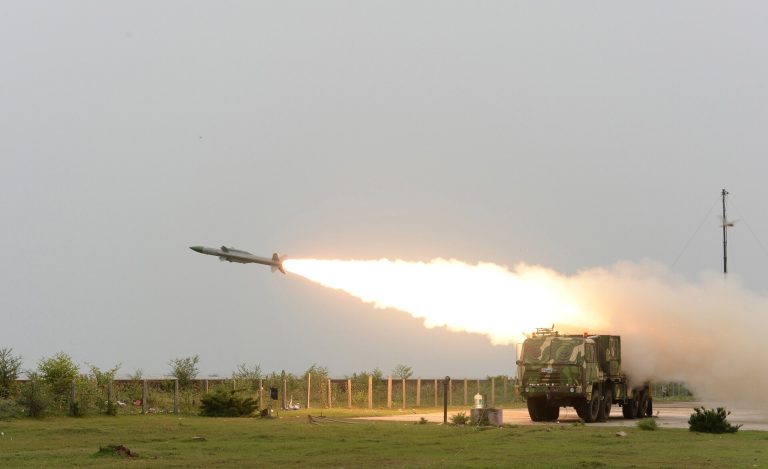
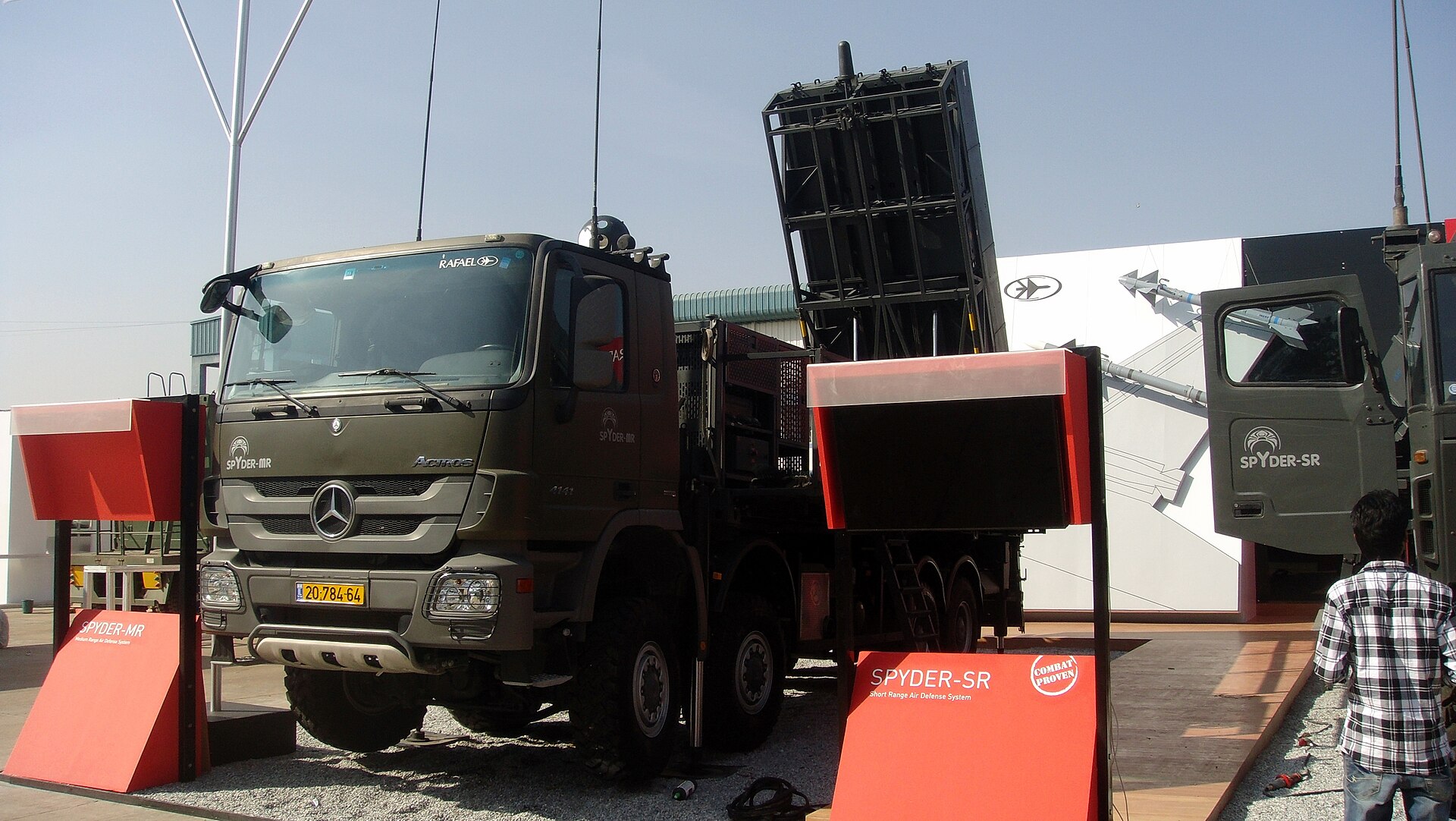
SPYDER (Surface-to-air PYthon and DERby) is a mobile, quick-reaction, low-to-medium-altitude air defense system developed by Rafael Advanced Defense Systems, with Israel Aerospace Industries supplying the launcher vehicles and ELTA Systems providing radar. The system fires Python-5 infrared-guided and Derby (and Derby-ER) active radar-guided missiles from truck-mounted launchers, and is designed to engage fixed- and rotary-wing aircraft, unmanned aerial vehicles, cruise missiles and precision-guided munitions. Rafael markets the medium-range variant, SPYDER-MR, as a networked, all-weather system that can be cued by external radars and integrated into a wider air-defense architecture.
Kenyan budget documents reportedly describe the 2025/26-funded acquisition as “one reinforced battery of medium-range surface-to-air missile system,” which would typically comprise a command post, radar unit and several missile launcher vehicles, though the exact Kenyan order of battle — number of launchers, missile types procured or radar configuration — has not been independently confirmed or published by either government.
Who Uses It
Kenya’s reported acquisition makes it one of three African SPYDER operators identified in open-source and press reporting:
- Ethiopia — The Ethiopian Air Force has operated SPYDER-MR since around 2019–2020, reportedly deployed to help protect the Grand Ethiopian Renaissance Dam alongside Russian-made Pantsir air defense systems and Ukrainian-made radar, according to Military Africa and regional reporting.
- Morocco — Identified in African defense-industry reporting as an existing SPYDER operator, though public details of Morocco’s contract and deployment are limited.
- Kenya — The newest confirmed operator, with a first battery delivered in December 2025 and further financing secured for 2026/27.
Beyond Africa, SPYDER is also operated by countries including India, Singapore, Vietnam, Georgia and Peru, among others, according to Rafael and open-source tracking of the program.
Export and Procurement History
Reporting on the financing timeline is uneven across Kenyan outlets. A 2024 report referenced a KSh 1 billion Israeli loan tied to an earlier stage of the acquisition. Budget documents presented to Kenya’s Parliament for the 2025/26 financial year then referenced a KSh 3.4 billion (~$26 million) loan, which multiple outlets connect to the battery delivered in December 2025. The 2026/27 budget documents cited by Kenyan media describe a further Israeli financing arrangement — reported variously as roughly $46.9 million or a “Sh6 billion” loan — to continue the program from July 2026. Whether these figures represent sequential tranches of a single program or separate, overlapping procurement lines is not clear from public reporting, and this article treats the loan figures as reported, not as officially reconciled totals.
Global Competitors in the African Short/Medium-Range SAM Market
SPYDER competes in the African market against Russian systems such as the Pantsir-S1/S2, which Ethiopia has also fielded, and Chinese systems including the FK-2000, reported to have appeared in Ethiopia amid the Tigray conflict. Western manufacturers, including MBDA with its VL MICA family, also market comparable short/medium-range air defense systems to African militaries, though Israeli systems have gained ground in the Horn of Africa specifically through government-to-government financing arrangements of the kind reported in Kenya’s case.
Why It Matters
The acquisition reflects two trends converging in the Horn of Africa and the wider Gulf of Aden corridor. First, Kenya Defence Forces officials and regional reporting link the purchase to a changing threat picture: Al-Shabaab’s increasing use of small drones in Somalia, alongside broader instability along the Gulf of Aden and Red Sea linked to Houthi attacks on shipping. Kenya’s air defenses have historically relied on older British-supplied Rapier systems, and SPYDER represents a modernization aimed at weapons and threats, like small UAVs and precision munitions, that legacy systems were not built to counter. Second, the deal underscores Israel’s growing use of defense-export financing — loans channeled directly to a partner’s defense ministry — as a tool for expanding its footprint in East Africa, following a similar pattern with Ethiopia.
What Happens Next
The reported 2026/27 financing is set to begin flowing to Kenya’s Ministry of Defence from July 2026, but public reporting has not yet confirmed whether it will fund a second battery, additional missile stocks for the existing unit, or associated infrastructure such as radar or command integration. Kenya’s Parliament has not published a detailed breakdown of how the funds will be spent, and neither Nairobi nor Tel Aviv has issued a joint statement confirming system specifications or basing locations. Future parliamentary budget disclosures, and any statement from Rafael or Kenya’s Ministry of Defence, would be the next points to confirm the program’s scope.
FAQ
What is the SPYDER air defense system?
SPYDER is a mobile, quick-reaction air defense system made by Israel’s Rafael Advanced Defense Systems, using Python-5 and Derby missiles to engage aircraft, helicopters, drones, cruise missiles and precision-guided munitions at low-to-medium altitude.
When did Kenya receive its SPYDER system?
Kenyan and Israeli press reported delivery of a first SPYDER battery in mid-December 2025, financed through a roughly KSh 3.4 billion ($26 million) Israeli government loan referenced in Kenya’s 2025/26 budget documents.
How is Kenya paying for the system?
Through Israeli government-backed loans channeled to Kenya’s Ministry of Defence. A second, larger financing arrangement — reported at roughly $46.9 million — was disclosed in 2026/27 budget documents to continue the program from July 2026.
Which other African countries use SPYDER?
Ethiopia, which deploys SPYDER-MR near the Grand Ethiopian Renaissance Dam, and Morocco are the other confirmed African operators identified in open-source reporting.
What threats is the system meant to counter?
Kenyan officials and regional reporting link the acquisition to the growing use of small drones by Al-Shabaab in Somalia and to broader instability along the Gulf of Aden and Red Sea shipping corridor.
Sources
- Military Africa, “Kenya receives Israeli SPYDER air defence system,” December 2025 — reports delivery timing and system description.
- Defence Blog, “Kenya buys Israeli SPYDER air defense system” — corroborates acquisition and manufacturer details.
- Army Recognition, “Kenya Receives Israeli SPYDER Air Defense to Counter Growing Drone and Air Threats” — details threat rationale.
- Kenyans.co.ke, “Kenya Acquires Israeli SPYDER Air Defence System for Ksh3.4 Billion” — budget-document figures and delivery description.
- The Jerusalem Post, article on Kenya’s SPYDER delivery — cargo delivery details and cost figure.
- Eastleigh Voice, “Israel to fund part of Kenya’s military modernisation with Sh3.4 billion loan” — budget-line reporting.
- Yeni Şafak, “Kenya secures $46.9 million Israeli financing for new air defense system” — 2026/27 financing figure.
- Military Africa reporting on Ethiopia’s SPYDER-MR deployment near the Grand Ethiopian Renaissance Dam — comparative African operator context.