Northrop Grumman Gets $1.6bn Order for PAC-3 MSE Rocket Motors as Patriot Output Rises
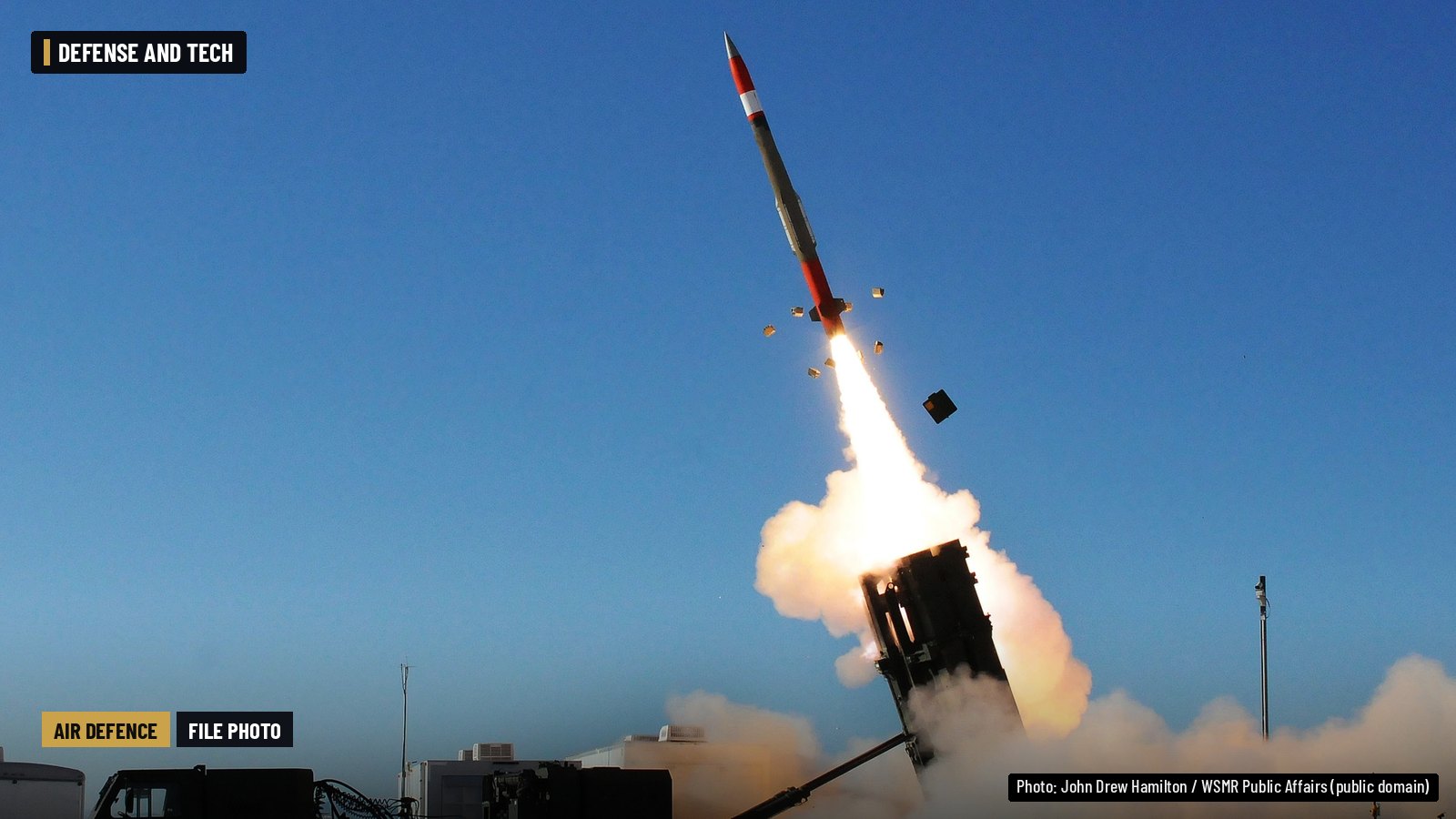
Northrop Grumman has received a $1.6 billion multi-year order to build solid rocket motors and ignition safety devices for the PAC-3 MSE interceptor, the missile Lockheed Martin makes for the US Army’s Patriot air and missile defence system. The company announced the order on 16 November 2026 in a news release.
- Northrop Grumman announced a $1.6 billion multi-year order for PAC-3 MSE solid rocket motors and ignition safety devices on 16 November 2026
- The parts go into Lockheed Martin’s PAC-3 MSE interceptors for the US Army’s Patriot programme
- The order falls under the $2 billion PAC-3 framework agreement Northrop signed in August, which makes it a second motor supplier
- Quantities, delivery rates and the period of performance were not disclosed
What the order covers
According to Northrop Grumman, the award covers the solid rocket motors and ignition safety devices that Lockheed Martin needs to produce PAC-3 MSE (Missile Segment Enhancement) interceptors. The dual-pulse motor that powers the missile is made at the company’s Allegany Ballistics Laboratory (ABL) in Rocket Center, West Virginia. Northrop says the motor gives the interceptor its manoeuvrability and extended range.
The release does not give the number of motors, the annual delivery rate, the contract type or how long the work will run. Northrop links the order to the Pentagon’s “Acquisition Transformation Strategy”, which offers suppliers longer-term demand in return for their own investment in production capacity.
A company spokesperson told Defense Daily that Lockheed Martin placed the order in mid-to-late October, that early production has already begun, and that a new facility at ABL, called Plant 5, should start producing PAC-3 MSE motors once it is fully operational in early 2028. These details come from that report, not from the release.
Part of the August framework deal
The order sits under two seven-year framework agreements worth more than $3 billion that Northrop signed with the Department of War and Lockheed Martin on 3 August 2026: $2 billion for PAC-3 MSE motors and ignition safety devices and $1 billion for THAAD interceptor components (Northrop Grumman, 3 August 2026). The Pentagon said then that Northrop would become a second source of PAC-3 motors, according to DefenseScoop and Breaking Defense; Breaking Defense reported that L3Harris had been the only supplier. Northrop has not said how much of the $2 billion framework this order uses.
“We’re answering the nation’s call with urgency and turning years of propulsion investment into expanded capacity for the warfighter,” said Ben Davies, president of Northrop Grumman Defense Systems. The company says it has committed more than $2 billion to munitions technologies and facilities since 2019, including over $1 billion for solid rocket motor production. It also says that since 2021 it has doubled motor capacity at its Utah sites, nearly tripled it at ABL and raised it by 25% at Elkton, Maryland.
What PAC-3 MSE is
PAC-3 MSE is a hit-to-kill interceptor: it destroys ballistic missiles, cruise missiles and aircraft by direct impact rather than with a blast-fragmentation warhead. Lockheed Martin is the prime contractor. In January the company signed its own seven-year framework with the Department of War to raise annual PAC-3 MSE capacity from about 600 to about 2,000 (Lockheed Martin, 6 January 2026). Lockheed says it delivered 620 PAC-3 MSEs in 2025, and chief executive Jim Taiclet said the 2,000-a-year rate should be reached by the end of 2030 (briefing transcript).
Why motors matter
Solid rocket motors have been one of the main bottlenecks in US missile production, as our explainer on the solid rocket motor shortage sets out. A second motor source is meant to reduce that risk as demand for Patriot interceptors grows. Recent examples include the proposed sale of 500 PAC-3 MSEs to Ukraine and the Army’s PAC-3 Edge Future Interceptor award. Whether the extra motors actually lift interceptor deliveries will show up in Lockheed Martin’s annual delivery figures.
Sources: Northrop Grumman news release, 16 November 2026; Northrop Grumman, 3 August 2026; Lockheed Martin, 6 January 2026; Defense Daily. Cover: DVIDS.