Australia–Philippines Defence Cooperation Arrangement Signed in Manila: What It Covers
Australia and the Philippines signed a new Australia–Philippines Defence Cooperation Arrangement in Manila on Sunday, 15 November 2026. Philippine Defence Secretary Gilberto Teodoro Jr. and Australian Ambassador Marc Innes-Brown signed it at the Eva Macapagal Cruise Terminal in Manila South Harbor, with Australian Prime Minister Anthony Albanese watching, the Philippine News Agency reported. A joint statement from Albanese and Deputy Prime Minister and Defence Minister Richard Marles said the signing followed the prime minister’s visit to the Royal Australian Navy replenishment ship HMAS Stalwart in the Philippine capital.
- Signed in Manila on 15 November 2026 by Philippine Defence Secretary Gilberto Teodoro Jr. and Australian Ambassador Marc Innes-Brown, with Prime Minister Anthony Albanese present
- It modernises a 1995 memorandum of understanding on defence cooperation
- Priority areas: maritime awareness and activities, information-sharing, strategic dialogue, planning, training, interoperability and defence infrastructure
- The full text has not been published; Canberra gave no funding figure for its new regional maritime spending
What the arrangement covers
According to the Australian government, the arrangement builds on the existing Memorandum of Understanding on Defence Cooperation and gives the two militaries “a contemporary framework” for their priority areas: enhanced maritime awareness and maritime activities, information-sharing, strategic dialogue, planning, training, interoperability and defence infrastructure development. The Philippine News Agency said the deal modernises the MOU the two countries signed in 1995.
Teodoro presented it mainly as a way to cut paperwork. He told reporters it is “the mechanism by which the SOVFA will work”, referring to the Status of Visiting Forces Agreement, which was signed in 2007 and has been in force since 2012. “It will make things much, much faster and easier… It is the anti-red tape measure of our SOVFA,” he said, adding that it would speed up coordination of maritime patrols with Australia and other like-minded countries and allow quicker disaster response (PNA).
He also linked it to the South China Sea dispute. The arrangement, Teodoro said, “will bolster our credible deterrence posture in areas where we have jurisdiction”, using Manila’s term West Philippine Sea for the waters it claims. According to CNA, he said it would help Philippine forces become familiar with Australian equipment. GMA News quoted him as saying it is different from the Enhanced Defense Cooperation Agreement with the United States, which gives US forces access to agreed Philippine bases.
Australia’s regional maritime package
In the same statement, Canberra said it would invest in its Southeast Asia Maritime Partnerships programme. The money will provide regional partners with aerial and surface drones, secure communications support and operator training, and help them improve maritime domain awareness and cyber resilience. No figure was published.
“This new Defence Cooperation Arrangement will deepen practical cooperation between our defence forces and create new opportunities to work together in support of regional security,” Marles said. Albanese said Australia wanted to work with ASEAN “to help shape a region that is peaceful, stable and prosperous”.
What has not been disclosed
Neither government has released the text. There is no public detail on new equipment transfers, on changes to Australian access to Philippine facilities, or on the size of the maritime partnership spending.
Background: a deepening partnership
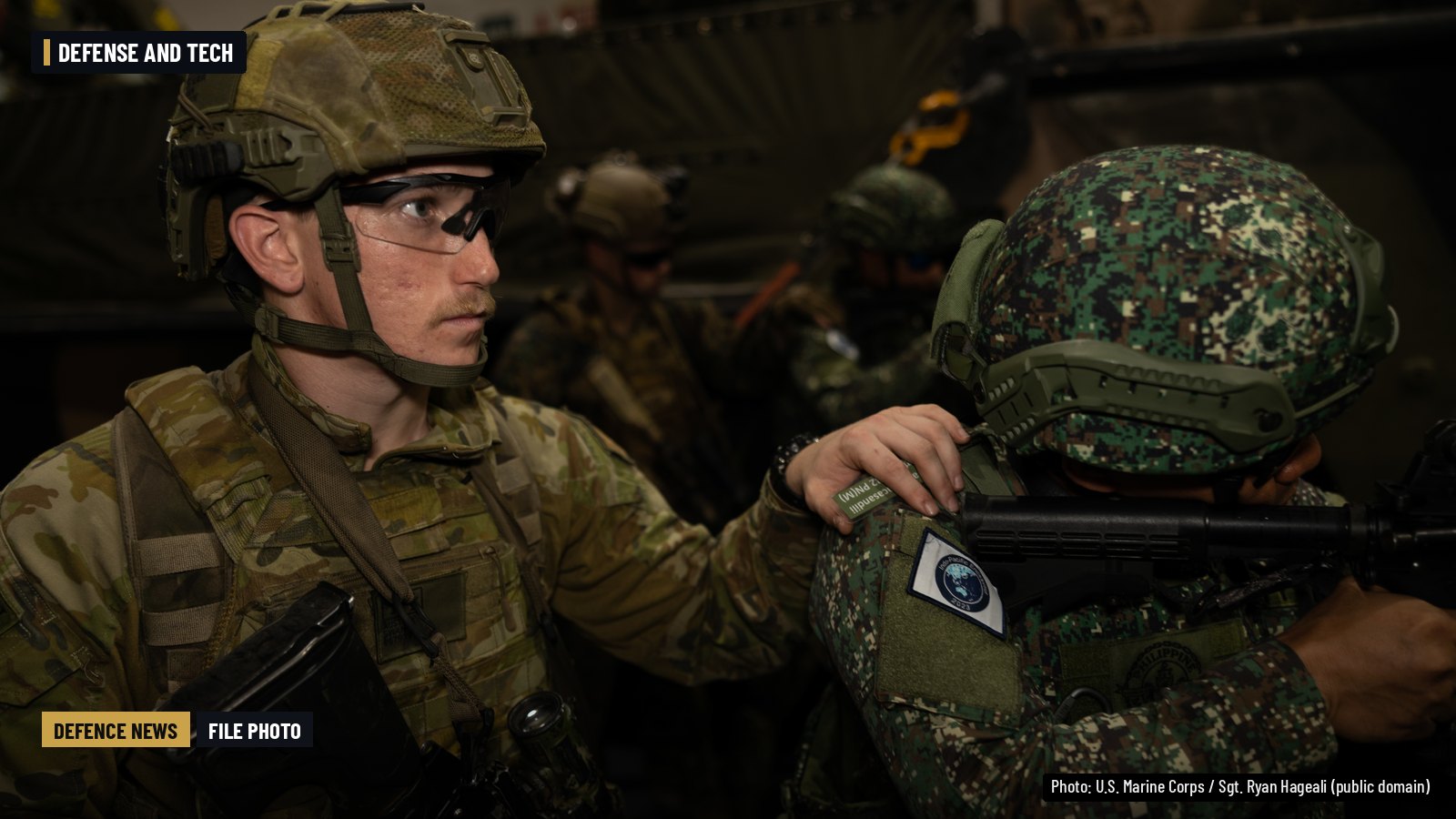
Albanese is in Manila for the 49th ASEAN Summit, according to Rappler, which also reported that Teodoro and Marles said after a bilateral meeting in August that the new arrangement would “set the contemporary bilateral defense framework”. The two countries raised ties to a strategic partnership in September 2023, Rappler noted, and they mark 80 years of diplomatic relations this year. The forces already train together regularly; Exercise Alon, for example, is a bilateral amphibious training activity between the Australian Defence Force and the Armed Forces of the Philippines.
GMA News reported that the Philippines, the United States, Japan and Australia also plan to set up a Combined Coordination Center in Manila to share information and improve interoperability. The four countries’ defence ministers last met as the so-called Squad in Cebu in October (our report).
Why it matters
The arrangement does not create new alliance obligations and no arms deal was announced. Its practical value lies in speeding up the joint patrols, exercises and training that the two navies and armies already run, at a time when Manila is seeking more partners to back its position in the South China Sea. For Australia, it adds a framework to the drone and surveillance support it is offering partners along sea lanes it relies on for trade.
Sources: Prime Minister and Defence Minister of Australia, joint media release; Philippine News Agency; Rappler; CNA; GMA News.